All products featured are independently chosen by us. However, SoundGuys may receive a commission on orders placed through its retail links. See our ethics statement.
Best On-Ear Headphones
From all the pairs we’ve tested, these are the on-ear headphones that truly stood out.
November 10, 2025

Adam is the Managing Editor at SoundGuys specializing in gaming headsets, flagship headphones, and earbuds. A lifelong fan of video games and cinema, he brings a sharp ear and passion for immersive sound to every review. Beyond hardware, Adam writes thought-provoking features and opinion pieces that explore how audio tech shapes our lives. Armed with a BA in Cognitive Science, he pairs technical insight with a love for music’s psychological uplift. At home, he still rocks his original Sennheiser MOMENTUM over-ears, switches to Bose QuietComfort Ultra on flights, and relies on Galaxy Buds2 Pro while out and about.
With so many headphone styles out there, choosing the right pair can feel overwhelming. Earbuds are great for portability, while over-ear models excel at comfort and immersion. But if you’re looking for a Goldilocks middle ground, on-ear headphones strike the perfect balance — lighter than over-ears yet more powerful than earbuds. And while some high-end models can get pricey, you don’t have to break the bank. After extensive testing, we’ve rounded up the best on-ear headphones available right now.
Compare table
Filter
- ProductVotes
- 96 total votes96 total votes
$130
8.1
6.1
7.3
7.5
8.4
7.0
8.5
7.5
9.9
9.0
8.3
- 7 total votes7 total votes
$79
6.8
4.7
7.0
5.0
8.5
6.0
7.0
5.0
9.8
7.0
7.0
- 9 total votes9 total votes
$129
6.8
3.0
0.0
6.9
6.2
7.0
7.7
7.5
9.8
7.0
7.5
- 9 total votes9 total votes
$199
6.8
6.6
0.0
6.6
4.2
5.0
7.0
9.0
10.0
7.6
8.2
- 11 total votes11 total votes
$150
6.7
0.0
0.0
6.5
6.0
8.0
7.0
7.5
9.9
8.0
7.5
- 6 total votes6 total votes
$59
6.5
3.0
0.0
6.9
7.7
6.3
7.4
5.0
9.9
6.0
7.4
- 8 total votes8 total votes
$38
6.4
3.7
0.0
6.0
7.5
5.5
7.0
5.0
9.9
8.0
7.2
- 7 total votes7 total votes
$99
6.4
3.0
0.0
6.0
7.0
6.0
7.0
5.0
10.0
8.0
7.0
- 7 total votes7 total votes
$89
6.4
5.5
0.0
7.3
7.5
7.0
7.7
5.0
9.2
7.0
3.8
- 5 total votes5 total votes
$49
6.3
1.8
0.0
8.6
8.4
8.3
8.1
7.5
8.2
0.0
7.0
- 6 total votes6 total votes
$0
6.2
0.0
0.0
7.8
7.5
7.8
8.2
7.5
8.6
0.0
8.2
- 6 total votes6 total votes
$86
5.9
0.0
0.0
7.6
7.7
8.1
8.7
4.0
8.5
0.0
8.8
Product chart
In the chart above, you can see how each of the headphones compares in terms of price and performance.
To gather information about how well each of the earbuds and headphones work, we subject each product to a number of objective tests. We use a Bruel & Kjaer 5128 acoustic measurement system to test headphones and earbuds in our SoundGuys lab. The ear canal of the artificial head was created by averaging and smoothing 3D models of individual ear canal features from the MRI scans of 40 different people.

We perform the following testing to determine the best headphones and best earbuds:
- We run sequences to determine the best fit of the headphones, and if there are any manufacturing issues with the product.
- We measure the headphones’ performance and compare the frequency response to our industry-validated SoundGuys Headphone Preference Curve to give context to readers.
- To rate sound quality, we use the Multi-Dimensional Audio Quality Scores (MDAQS) algorithm from HEAD acoustics. These are virtual mean opinion scores as calculated by a powerful machine learning model based on the input of real listeners.
- We play several samples of shaped noise over loudspeakers to test noise canceling and record with our artificial head. We take samples with ANC on, ANC off, and with the headphones off the head. After subtracting the appropriate curves from each other, we can see how well the headphones block out noise.
- To evaluate microphone quality, we play pre-recorded spoken Harvard sentences from a calibrated artificial mouth in our test chamber, either with or without simulated background noises, simulated reverberant spaces, or artificial wind.
- To measure battery life, we play back music through the headphones or earbuds peaking at 75dB(SPL), a safe and realistic listening level.
In addition to objective testing, our team of audio experts uses each of the headphones and earbuds to evaluate the experience of using the product. By wearing the headphones in day-to-day use, we evaluate the comfort, noting any pain points. We also make sure to try out each of the features that the headphones have to offer, such as using the equalizer in the companion app.
Using a combination of subjective and objective testing, we score each product. To learn more about how we evaluate headphones and earbuds, check out our in-depth explainer on how we test.

Here at SoundGuys, we’ve been testing audio products for over a decade. Our team comprises audio product experts who have tested hundreds of different headphones, earbuds, and speakers. Moreover, our team comes from diverse backgrounds and a wealth of expertise, including audio engineering, film production, journalism, podcasting, music production, and even touring musicians.
Everything we recommend results from our objective measurements and great subjective experiences. Ultimately, we want you to enjoy your purchase or, at the very least, leave our site with a little more knowledge about the inner workings of audio. To see why you can trust us with your purchase decision, make sure to check out our ethics policy.
Poll
What matters most in on-ear headphones?
Best overall pick: JBL Live 670NC

We recommend the JBL Live 670NC as our best overall on-ear pick because it balances strong active noise canceling, reliable battery life, and flexible controls in a compact folded design. The Live 670NC’s True-adaptive Noise Canceling approaches 30dB of attenuation around low frequencies, which helps cut engine rumbles and street noise for commuting or office use, and the headphones also include Ambient Aware and TalkThru modes for situational awareness. A companion app exposes EQ presets and spatial sound options, while the mix of touch and physical controls and a supplied 3.5mm cable make them versatile for travel. In our testing the Live 670NC delivered almost 55 hours of playback with ANC engaged, and the smaller, cloth-covered headband and cushioned ear pads make them comfortable for long sessions. Our MDAQS context also highlights their appealing sound and customization options. The Live 670NC also earned Best ANC, Best Sound Quality, and Best for Comfort recognition in the review body.Sourced from JBL Live 670NC review – SoundGuys.
Best Value pick: JBL Tune 660NC Wireless Headphones

The JBL Tune 660NC is our pick for value among on-ear headphones because it packs long battery life, foldable portability, and usable ANC into an affordable package. In testing the Tune 660NC delivered over 37 hours with ANC on, and its active noise canceling provides roughly a 10dB reduction to low‑mid frequency noise, which translates to background sounds sounding about 50% quieter. The headset is lightweight and foldable for commuting, and JBL includes a 3.5mm cable for wired use when needed. The Tune 660NC lacks a companion app, so you won’t get EQ customization or firmware updates, but the basic control layout and multipoint Bluetooth make it straightforward for daily use. It also earned recognition for call performance — the microphones reproduce voices clearly and separate them from background noise — so it’s a strong all-around value with solid call handling; we note it also earned Best Call Quality recognition in the review body.Sourced from JBL Tune 660NC review – SoundGuys.
Best for iPhone users pick: Beats Solo 3 Wireless
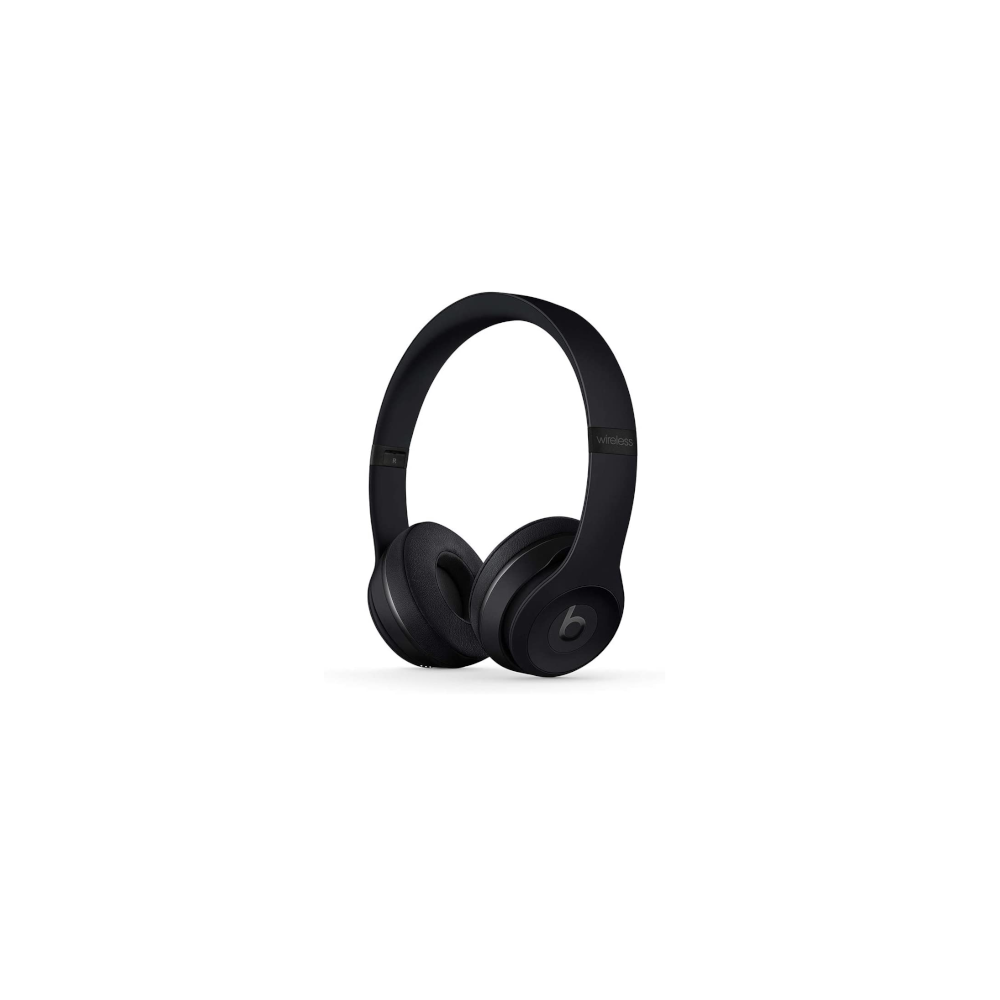
The Beats Solo3 Wireless is our pick for iPhone users because Apple’s W1 chip gives fast, seamless pairing and wide device recognition across iCloud devices. The Solo3 supports AAC for reliable high-quality streaming on Apple gear and delivers very long battery life in testing—over 45 hours—and Fast Fuel charging that yields several hours of playback after just a few minutes of charge. The design is fashion-forward and available in many colors, though the on-ear fit can create pressure for some listeners and it does not include active noise canceling. Included accessories such as a soft zippered carrying case and a 3.5mm cable add convenience for wired listening when desired. Overall, the Solo3 is a straightforward choice for listeners tied into Apple’s ecosystem.Sourced from Beats Solo3 Wireless review: Worth it in 2024? – SoundGuys.
Best Battery Life pick: Beats Solo 4

The Beats Solo 4 stands out for battery life, lasting an impressive 84 hours and 18 minutes in our runtime test. The Solo 4 supports Bluetooth 5.3 with SBC and AAC, and you can also listen wired via either the included USB-C or 3.5mm cables, which is handy if you run out of power. The on-ear design folds up and includes a small carrying case, but weight distribution and clamping force make the fit uncomfortable for extended sessions for some listeners. The Solo 4 does not include active noise canceling, so isolation against low-frequency noise is limited compared with ANC-equipped models. If long runtime is your priority in an on-ear form, the Solo 4 is a strong contender.Sourced from Beats Solo 4 review – SoundGuys.
Best for Android users pick: Marshall Major V

The Marshall Major V is our pick for Android users because it supports Bluetooth 5.3 with SBC, AAC, and LC3 codecs and works with the Marshall app for a customizable 5‑band EQ and M‑button assignments. In testing the Major V delivered roughly 92 hours and 52 minutes of playback, and it also offers wireless charging and a dual-function 3.5mm port that can share audio to another set of headphones. Multipoint connectivity is available for switching between phone and laptop, and the control knob and M‑button are straightforward to use. The Major V lacks active noise canceling, so it’s best for listeners who prioritize long runtime, wired/wireless flexibility, and codec support on Android devices. The headphones ship with a retro coiled 3.5mm cable and pair easily via standard Bluetooth steps.Sourced from Marshall Major V review – SoundGuys.
Our verdict
Across this group of on-ear headphones, the JBL Live 670NC is the closest to a true all-rounder for commuters and office use thanks to its strong adaptive ANC, balanced sound and near-55‑hour runtime, while the JBL Tune 660NC gives the best value tradeoff of useful ANC and solid call quality for budget buyers. If battery life is your top priority, the Marshall Major V and Beats Solo 4 deliver the longest runtimes in our testing (about 92+ hours and 84+ hours, respectively), with the Major V also offering wider codec support for Android.
For listeners tied to Apple devices, the Beats Solo3 is the simplest option thanks to the W1 chip and AAC support, but it lacks ANC; meanwhile the Sony WH-CH510 and WH-CH520 are cheaper, lightweight on-ear choices worth considering— the WH-CH510 offers excellent battery life (~46.5 hours) but has an intermittent sidetone problem and no wired option, and the WH-CH520 improves comfort and delivers roughly 55+ hours of playback with Fast Pair and multipoint support but also lacks ANC. Choose among these on-ear models based on whether you need noise canceling, the longest battery life, or tight integration with your phone ecosystem.
FAQ
Consumers and manufacturers alike have realized that isolation is a greater challenge with on-ear headphones, and they sometimes clamp too tightly. Even so, you can’t deny that on-ears are portable compared to over-ear headphones.
On-ear headphones offer a balanced compromise between sound quality and portability. While they don’t provide the same level of immersion as over-ear models, they deliver respectable audio performances suitable for most music genres.
Comfort is subjective and depends on individual preference. Over-ear headphones usually provide a more comfortable fit for extended periods, thanks to their cushioned ear cups that enclose the ears. On-ear models can be lighter but may apply pressure directly to the ears, which some people find uncomfortable over time.
Unlike over-ears, on-ear headphones sit directly on top of your ears. They do not often create a seal to your head as well as over-ears can. That looser fit can make them feel lighter and more breathable, which some people find more comfortable for short or casual listening sessions. However, it also means they usually block out less outside noise and may leak sound more easily, especially at higher volumes.
The on-ear design is great for listeners who want many of the benefits of over-ear headphones, without all the added heft. These aren’t quite pocketable as in-ears, but they often include rotating or collapsible hinges for storage. Again, manufacturers can include large batteries into these headphones.
Isolation, the ability for a headset to block out background noise, is difficult with on-ear headphones. An innocent wiggle of the ear could set the whole fit off-kilter, and let in all of the environmental noise around you. This is bad, because good isolation yields optimal audio quality.
Sometimes on-ear headphones can provide very effective isolation at the expense of comfort. This is true for the Beats Solo Pro noise-canceling on-ear headphones, which feel like wearing a vice grip. Another disadvantage: even though they’re easier to carry than over-ear headphones, they’re still cumbersome relative to earbuds.
Not usually. On-ear headphones can slip during intense movement and don’t manage sweat as effectively as earbuds. For workouts, wireless earbuds or bone-conduction headphones are generally better choices.
Not as much as over-ear headphones. Some models include active noise cancelling (ANC), which electronically reduces outside noise, but passive isolation (physical blocking) is usually limited.
Yes, generally more than over-ear or in-ear headphones. Because they don’t create a full seal around your ear, people nearby may hear your music, especially at higher volumes. Closed-back designs leak less than open-back ones.
Not yet. While Bluetooth has become way better and more convenient in the last few years, it still can’t compete on a technical level with wired over-ear headphones. Sure, we might be a little biased against removing the headphone jack. Still, even our objective testing of the LDAC codec (which is arguably one of the top transfer methods currently available) revealed that Bluetooth falls short. Of course, you probably won’t have to worry about it too much if you’re over the age of 24 because our hearing tends to go a lot sooner than you might realize, but it’s still something you should be aware of. At least for now, wired headphones still reign supreme.
Over-ear headphones generally offer superior sound quality due to their larger drivers and better isolation, which minimizes ambient noise and allows for a more immersive listening experience.
Thank you for being part of our community. Read our Comment Policy before posting.