All products featured are independently chosen by us. However, SoundGuys may receive a commission on orders placed through its retail links. See our ethics statement.
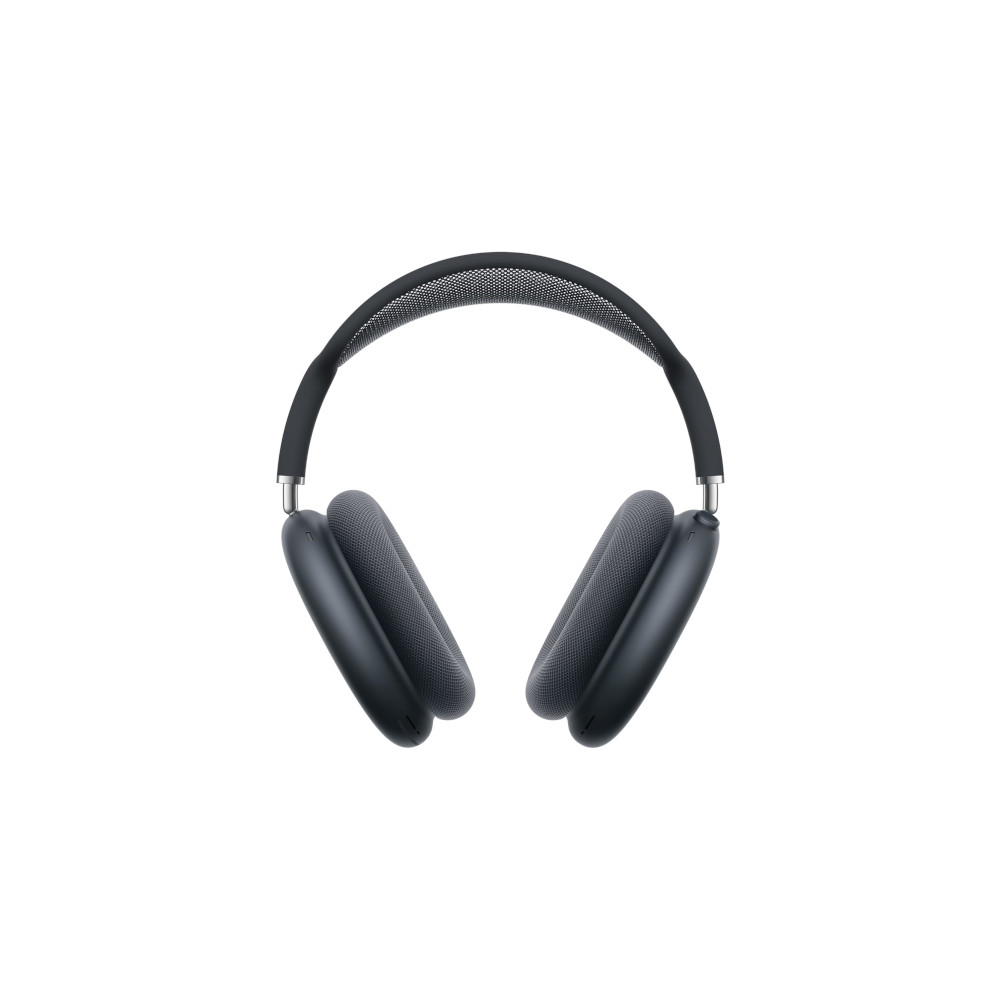
The Apple AirPods Max 2 inherits the best and worst of the original, but packs a new H2 chip to improve noise cancellation and unlock new software features. An iterative update for existing AirPods Max customers, but a compelling option for Apple device owners willing to pay a premium.Read full review...
Bluetooth 5.2 with SBC, AAC, LDAC, and wired connectivity options
Bluetooth multipoint
Find My Device enabled
Negatives
Price
No IP rating
The Bottom Line.
The predecessors to the Sony WH-1000XM5 were king of the hill, and this new headphone takes that crown. With new drivers, features, and design, the Sony WH-1000XM5 is an intriguing set of headphones among the flagship active noise canceling (ANC) devices on the market. It excels in travel or at the office, in particular.Read full review...
The Apple AirPods Max 2 and Sony WH-1000XM5 both target premium ANC headphone buyers, but approach the category very differently. Apple focuses heavily on ecosystem integration, software conveniences, and iterative refinements with its latest H2 chip. Meanwhile, Sony leans on a more balanced feature set with stronger battery life, codec flexibility, and lower weight. Both headphones offer flagship-tier noise canceling, but their differences in comfort, tuning, and platform compatibility make them appeal to different users. Here’s everything you need to know about the Apple AirPods Max 2 vs the Sony WH-1000XM5.
What’s it like to use the Apple AirPods Max 2 compared to the Sony WH-1000XM5?
Harley Maranan / SoundGuys
The Apple AirPods Max 2 are among the heaviest headphones on the market.
Using the Apple AirPods Max 2 feels premium from a materials standpoint, with aluminum ear cups, a mesh canopy headband, and magnetic ear cushions. I found the deep ear cups spacious and well-padded, but at 386g, these headphones feel heavy, and the strong clamping force can become uncomfortable over long sessions. Apple also retains its divisive Smart Case, lacks a dedicated power button, and offers no IP rating, which limits versatility. The digital crown remains intuitive for playback and volume, and new head gestures add some convenience.
By comparison, I found the Sony WH-1000XM5 much easier to wear for long periods. At 250g, Sony’s headphones are substantially lighter, and the deeper, wider ear pads better accommodate larger ears. The friction rod adjustment system may lack preset notches, but it’s easy to attain the desired clamping force. Sony also includes a proper power button, touch controls, and practical gestures like cupping the ear cup for ambient passthrough. Like Apple, Sony also lacks an IP rating, so neither are ideal for gym goers or use in the rain.
Do the Apple AirPods Max 2 or the Sony WH-1000XM5 have more features?
Swiping to control your headphones reduces the risk of a broken seal.
The Apple AirPods Max 2 gain major software upgrades through the H2 chip. These include Live Translation, Personalized Volume, Loud Sound Reduction, Conversation Awareness, Adaptive Mode, personalized spatial audio, and audio sharing. In my testing, Personalized Volume worked well, but Live Translation suffered from awkward delays. Still, Apple’s biggest drawback is that nearly all of these advanced features are locked to Apple devices, and there’s still no custom EQ for honing your sound.
Sony counters with broader compatibility through the Sound Connect app on iOS and Android. Features like ANC optimization, a custom EQ, 360 Reality Audio, head tracking, Fast Pair, and Find My Device support give Sony more flexibility across platforms. I particularly appreciate Sony’s custom equalizer because it offers users meaningful tuning adjustments that Apple simply doesn’t provide.
How do the Apple AirPods Max 2 and Sony WH-1000XM5 connect?
Harley Maranan / SoundGuys
Personalized Volume and Conversation Awareness are nice additions, but aren’t must-haves.
The Apple AirPods Max 2 use Bluetooth 5.3 with SBC and AAC only. In my testing, Apple’s wireless performance was stable, with quick pairing and seamless automatic device switching inside the Apple ecosystem. USB-C wired playback supports lossless audio, but wired mode disables many of the headphones’ settings adjustments. Similarly, the AirPods Max 2 feature Multipoint connectivity, but it only works with compatible iOS devices.
Sony supports LDAC in addition to standard Bluetooth codecs, giving it a clear advantage for Android users seeking higher bitrate wireless connections. The cans also feature “Audio Sharing”, which is Sony’s name for Auracast. While presently an underrepresented feature, it promises to streamline wireless broadcasting capabilities in the future. Otherwise, the WH-1000XM5 support analog wired playback via 3.5mm, though USB-C cannot be used for digital audio. Sony’s broader codec support and wired flexibility make it more versatile overall, but the lack of USB-C audio is less compelling for modern mobile devices.
Is battery life better on the Apple AirPods Max 2 or the Sony WH-1000XM5?
The headband on the Sony WH-1000XM5 is much thinner than its predecessors.
Battery life is one of Sony’s clearest wins. Apple rates the AirPods Max 2 for just 20 hours with ANC, which feels markedly underwhelming for a flagship in 2026. In my experience, that means more frequent charging compared to competitors. Similarly, the headphones’ battery will degrade faster than rivals over the long term, which is far worse for the environment.
By comparison, Sony’s WH-1000XM5 achieved 31 hours and 53 minutes with ANC enabled in testing, significantly outperforming Apple. Disabling ANC extends Sony’s battery to over 53 hours, and quick charging adds 180 minutes of playback from just three minutes of charging. Sony’s battery performance is much more competitive and far closer to what we expect of modern headphones.
Do the Apple AirPods Max 2 or the Sony WH-1000XM5 block noise better?
Loading chart ...
The Apple AirPods Max 2 offer excellent ANC, attenuating the perceived loudness of outside noise by about 89.4%. Indeed, they especially improve midrange attenuation over the original AirPods Max. In my testing, office chatter, keyboard clicks, and city sounds were effectively dulled. Transparency Mode also sounds remarkably natural, and Adaptive Mode is genuinely useful for commuting.
Sony’s WH-1000XM5 remain exceptional, with stronger passive isolation in the high-end and ANC that reduces many environmental sounds by around 30dB in critical ranges. I found Sony’s combination of physical isolation and ANC particularly strong for engines, trains, and street noise. Fit can impact results, especially with glasses, but overall, Sony still performs among the best.
Do the Apple AirPods Max 2 sound better than the Sony WH-1000XM5?
Harley Maranan / SoundGuys
Most people will enjoy the sound of the AirPods Max 2 and WH-1000XM5.
Overall, I found that both headphones have consumer-friendly tunings, but they differ in execution. For example, the AirPods Max 2 sound very similar to their predecessor, with strong bass and treble. Vocals and synths have good clarity, but the inability to adjust the default sound to your liking is frustrating. Sony also emphasizes bass and treble, but the recessed midrange can make some instruments sound comparatively dull. Thankfully, Sony’s companion app EQ offers more control for remedying this.
Objective Measurements
Loading chart ...
Looking at their respective frequency responses, the Apple AirPods Max 2 emphasize the sub-bass while tracing our target preference curve in the midrange. However, they under-emphasize the upper midrange around 2-4kHz, and over-emphasize the treble above 6kHz. By comparison, Sony significantly boosts the low-end and treble, with a slight recess between 800Hz and 1050Hz. Overall, I find Apple’s tuning more consistent, but that changes significantly when Apple’s Loudness-Dependent Equalization (LDEQ) feature is enabled.
Wow, what a change. As you can see, reducing the AirPods Max 2’s volume to 50% significantly boosts the bass and treble. Worse still, if you turn the volume down further, you can expect these peaks to increase even more. That means that, contrary to the usual relief associated with reducing volume, the AirPods Max 2’s become increasingly fatiguing as you decrease the volume.
Loading chart ...
Things get even weirder here. Normally, headphones add some noise when ANC is enabled. However, the AirPods Max 2 introduce noise below 100Hz when ANC is switched off. The headphones also exhibit crosstalk at these frequencies, demonstrating that something is behaving oddly when ANC is disabled. Thankfully, most listeners shouldn’t notice this in real-world listening environments.
How would most people rate the sound from 1 to 5?
The Apple AirPods Max 2 received a “good” Overall MDAQS score.
Timbre (MOS-T) represents how faithfully the headphones reproduce the frequency spectrum and temporal resolution (timing information).
Distortion (MOS-D) represents non-linearities and added noise: higher scores mean cleaner reproduction.
Immersiveness (MOS-I) represents perceived source width and positioning: how well virtual sound sources are defined in three-dimensional space.
From an MDAQS perspective, Apple scores “good” overall, with very good Distortion and Immersiveness results. However, as previously stated, the Apple AirPods Max 2 sound very similar to the AirPods Max. This is represented by the fact that, across all scores, only Distortion changed by more than 0.1. Still, an Overall score of 3.8 means that most people will enjoy how Apple’s flagship headphones sound.
The Sony WH-1000XM5 have one of the best Immersiveness scores on the market.
Sony also performs decently, with strong Immersiveness and Distortion scores. That means users shouldn’t notice much distortion during listening, and it should be relatively easy to locate instruments in a 360-degree sphere. Looking at both headphones’ Overall MDAQS results, neither headphone pulls dramatically ahead, but Apple’s LDEQ behavior may be more divisive.
Do the Apple AirPods Max 2 or the Sony WH-1000XM5 have a better microphone?
Power, Bluetooth, and noise cancellation can be controlled using hardware buttons underneath the left ear cup.
The Apple AirPods Max 2 microphone system performs adequately as a smartphone companion. Depending on your call environment, the headphones switch automatically between Standard and Voice Isolation mode. However, I found Standard mode underwhelming in noisy environments, while Voice Isolation mode does an amazing job of rejecting external noise.
Sony’s 8-mic array with AI noise rejection performs more consistently. In testing, Sony’s microphone excels at rejecting outside noise, making it particularly strong for office calls, Zoom meetings, and phone conversations. Check out the samples below.
Apple AirPods Max 2 microphone demo (Standard mode, ideal conditions):
Sony WH-1000XM5 microphone demo (Ideal conditions):
Apple AirPods Max 2 microphone demo (Standard mode, windy conditions):
Sony WH-1000XM5 microphone demo (Windy conditions):
As you can hear, the Apple AirPods Max 2 struggle to attenuate background noise in Standard mode. Wind, in particular, makes voices difficult to hear on the other end. The Sony WH-1000XM5 fare much better, canceling background noise extremely well with their sophisticated microphone system.
Apple AirPods Max 2 microphone demo (Voice Isolation mode, ideal conditions):
Apple AirPods Max 2 microphone demo (Voice Isolation mode, windy conditions):
Apple AirPods Max 2 microphone demo (Voice Isolation mode, reverberant spaces):
The picture changes dramatically once Apple’s Voice Isolation feature is enabled. Except for reverberant spaces, the headphones cancel most background noise very well. If you find your calls are filled with auditory background clutter, you should certainly consider activating Voice Isolation mode in the Control Center.
Readers' poll
Which microphone sounds better to you?
107 votes
Already own something?
Anything we have measured, not just the picks. It becomes a second curve on every chart here. Sign-in needed to publish.
Comparing needs no sign-up
Apple AirPods Max 2 vs Sony WH-1000XM5: Price and availability
Harley Maranan / SoundGuys
The design of the Apple AirPods Max 2 remains unchanged from its predecessor.
The Apple AirPods Max 2 cost $549, placing them firmly among the most expensive wireless headphones on the market. They’re widely available from Apple and major retailers, although existing USB-C AirPods Max owners may find the upgrades too incremental.
The Sony WH-1000XM5 launched at $400, and with newer Sony models now available, they can often be found at discounted prices. This pricing gap makes Sony more financially accessible while still delivering flagship performance.
ANC performance • Outstanding microphone • Useful app features
MSRP: $557.95
The king of the ANC pack extends its reign
The predecessors to the Sony WH-1000XM5 were king of the hill, and this new headphone takes that crown. With new drivers, features, and design, the Sony WH-1000XM5 is an intriguing set of headphones among the flagship active noise canceling (ANC) devices on the market. It excels in travel or at the office, in particular.
LMLuis Mario Carvajal AsenjoSigned-in owner. This member signed in to publish, so their reviews count for points and show on their profile.Owner · 1–2 years↻ Would buy again
✓Better than expected: Noise cancelling in the real world
✓Better than expected: Mic on calls
✓Better than expected: Fit and build after months
Did this help you decide?1 of 1 found this helpful
NHNorbert HortiSigned-in owner. This member signed in to publish, so their reviews count for points and show on their profile.Owner · 1–2 years↻ Wouldn’t buy again
Did this help you decide?1 of 1 found this helpful
Llello75Signed-in owner. This member signed in to publish, so their reviews count for points and show on their profile.Owner · 1–2 years↻ Would buy again
Did this help you decide?2 of 2 found this helpful
Should you get the Apple AirPods Max 2 or Sony WH-1000XM5?
Our testing robot does the heavy lifting.
The Apple AirPods Max 2 only really make sense for users deeply invested in Apple’s ecosystem who prioritize seamless device switching, software features, and a premium build. In my testing, they deliver strong ANC, solid sound, and polished Apple-exclusive conveniences. However, their heavy design, short battery life, lack of EQ, and iOS-focused feature set make them less versatile than rivals.
The Sony WH-1000XM5 offers a more balanced package for a wider audience. I found them more comfortable, longer-lasting, more codec-flexible, and easier to customize. While both headphones perform well, Sony’s practical advantages make them feel like the more versatile option for most listeners, especially outside Apple’s ecosystem.





Conversation
Read what readers said or add your take.