All products featured are independently chosen by us. However, SoundGuys may receive a commission on orders placed through its retail links. See our ethics statement.
Best AirPods Max Alternatives That Actually Compete
We tested them all—here are the leading contenders for sound, comfort, and features.
March 11, 2026

Adam is the Managing Editor at SoundGuys specializing in gaming headsets, flagship headphones, and earbuds. A lifelong fan of video games and cinema, he brings a sharp ear and passion for immersive sound to every review. Beyond hardware, Adam writes thought-provoking features and opinion pieces that explore how audio tech shapes our lives. Armed with a BA in Cognitive Science, he pairs technical insight with a love for music’s psychological uplift. At home, he still rocks his original Sennheiser MOMENTUM over-ears, switches to Bose QuietComfort Ultra on flights, and relies on Galaxy Buds2 Pro while out and about.
Don’t want to spend your entire wallet on a pair of AirPods Max? You’re in luck. We’ve tested hundreds of headphones, and on this page you’ll find the top contenders based on our results. We also ran a poll asking readers like you to pick the best alternative, and over 700 voted. The Sony WH-1000XM6 came out on top with 42% of the vote, followed by the JBL Tour One M3 at 32% and the JLab JBuds Lux ANC at 18%.
Compare table
Filter
- ProductVotes
- 2 total votes2 total votes
$570
8.7
7.3
8.6
9.0
8.0
9.0
7.0
9.5
9.9
9.0
8.5
- 95 total votes95 total votes
$200
8.4
7.6
8.4
6.9
7.7
8.0
7.5
9.5
9.9
9.0
9.0
- 0 total votes0 total votes
$399
8.4
7.8
8.7
8.0
8.0
8.0
7.0
9.5
9.6
9.0
8.0
- 15 total votes15 total votes
$449
8.4
7.1
8.7
6.9
7.9
8.0
7.5
9.7
9.4
8.9
9.0
- 36 total votes36 total votes
$450
8.3
6.8
8.7
8.0
8.0
8.0
7.0
9.5
9.9
9.0
8.0
- 85 total votes85 total votes
$80
8.3
7.2
8.1
6.7
9.5
8.0
7.7
7.5
9.9
9.5
8.5
- 14 total votes14 total votes
$500
8.3
7.4
8.3
7.5
7.0
8.0
7.0
9.5
9.9
9.0
9.0
- 45 total votes45 total votes
$300
8.3
7.6
8.5
8.0
9.0
7.0
7.0
9.0
9.7
9.0
8.0
- 43 total votes43 total votes
$429
8.3
6.5
8.5
6.9
7.9
8.0
7.5
9.5
9.5
8.9
9.0
- 27 total votes27 total votes
$289
8.3
6.6
7.9
6.9
8.9
8.0
7.5
8.5
9.9
8.8
8.8
- 33 total votes33 total votes
$218
8.3
7.0
8.0
6.9
8.5
8.0
7.5
9.5
9.9
7.5
9.0
- 0 total votes0 total votes
$430
8.2
7.3
8.7
7.5
8.5
8.0
7.0
9.0
9.5
8.0
8.5
Product chart
In the chart above, you can see how each of the headphones compares in terms of price and performance.

Here at SoundGuys, we’ve been testing audio products for over a decade. Our team comprises audio product experts who have tested hundreds of different headphones, earbuds, and speakers. Moreover, our team comes from diverse backgrounds and a wealth of expertise, including audio engineering, film production, journalism, podcasting, music production, and even touring musicians.
Everything we recommend results from our objective measurements and great subjective experiences. Ultimately, we want you to enjoy your purchase or, at the very least, leave our site with a little more knowledge about the inner workings of audio. To see why you can trust us with your purchase decision, make sure to check out our ethics policy.
To gather information about how well each of the earbuds and headphones work, we subject each product to a number of objective tests. We use a Bruel & Kjaer 5128 acoustic measurement system to test headphones and earbuds in our SoundGuys lab. The ear canal of the artificial head was created by averaging and smoothing 3D models of individual ear canal features from the MRI scans of 40 different people.

We perform the following testing to determine the best headphones and best earbuds:
- We run sequences to determine the best fit of the headphones, and if there are any manufacturing issues with the product.
- We measure the headphones’ performance and compare the frequency response to our industry-validated SoundGuys Headphone Preference Curve to give context to readers.
- To rate sound quality, we use the Multi-Dimensional Audio Quality Scores (MDAQS) algorithm from HEAD acoustics. These are virtual mean opinion scores as calculated by a powerful machine learning model based on the input of real listeners.
- We play several samples of shaped noise over loudspeakers to test noise canceling and record with our artificial head. We take samples with ANC on, ANC off, and with the headphones off the head. After subtracting the appropriate curves from each other, we can see how well the headphones block out noise.
- To evaluate microphone quality, we play pre-recorded spoken Harvard sentences from a calibrated artificial mouth in our test chamber, either with or without simulated background noises, simulated reverberant spaces, or artificial wind.
- To measure battery life, we play back music through the headphones or earbuds peaking at 75dB(SPL), a safe and realistic listening level.
In addition to objective testing, our team of audio experts uses each of the headphones and earbuds to evaluate the experience of using the product. By wearing the headphones in day-to-day use, we evaluate the comfort, noting any pain points. We also make sure to try out each of the features that the headphones have to offer, such as using the equalizer in the companion app.
Using a combination of subjective and objective testing, we score each product. To learn more about how we evaluate headphones and earbuds, check out our in-depth explainer on how we test.
Poll
Why aren’t you interested in buying the AirPods Max?
Related Videos
Best overall pick: Sony ULT WEAR

Sony ULT WEAR delivers a well-rounded package for wireless headphones, with very long battery life (32 hours, 35 minutes in our standardized test) and effective noise reduction above 80Hz that makes them useful for commutes and flights. The sound profile is bass-forward out of the box, so we recommend using the Sony Sound Connect app to rein in the low end or customize the ULT button’s output; our MDAQS data also reflects how that heavy bass affects the overall tonal balance. They support LDAC and Multipoint for flexible wireless use, fold up for travel, and the 40mm pads contribute to comfort despite some heat buildup from the faux-leather cushions. The cans lack USB-C audio passthrough and can slide if not fitted correctly, which can affect ANC and sound. Sony also earned Best Battery Life, Best Over-Ear Headphones, and Best for Comfort recognition in our coverage.
Sourced from Sony ULT WEAR review – SoundGuys.
Best ANC pick: Bose QuietComfort Ultra Headphones (2nd Gen)
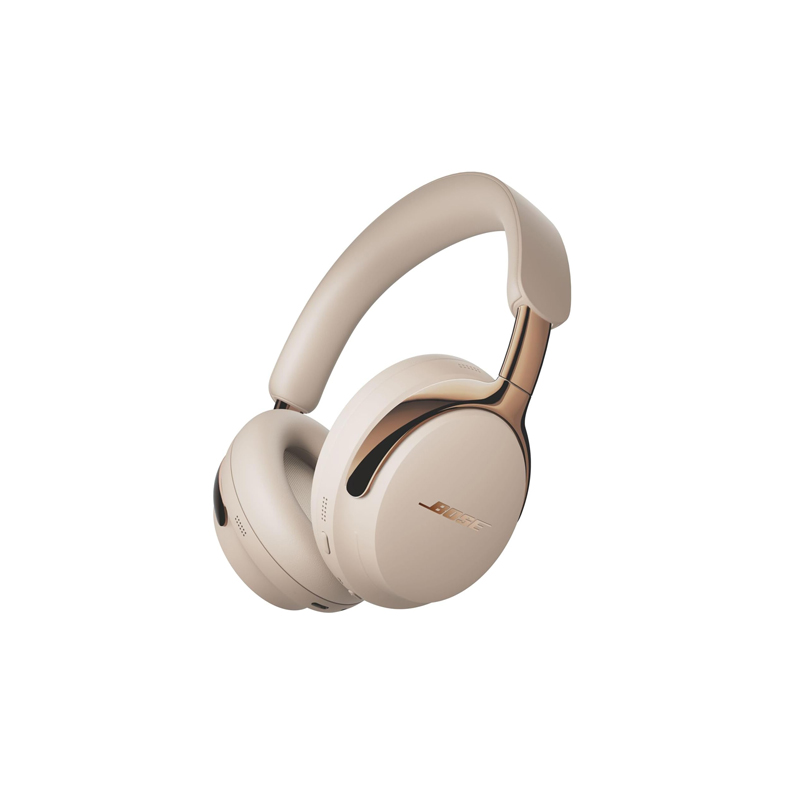

Bose QuietComfort Ultra Headphones (2nd Gen.) double down on noise canceling, offering precise ANC and an adjustable strength via the Bose app that helps tailor attenuation for travel or commuting. They remain comfortable for long sessions thanks to roomy ear cups and lightweight materials, and the headphones include a new spatial mode geared toward movie content. Connectivity is comprehensive with USB-C, analog input, and Bluetooth 5.4 supporting SBC, AAC, and the aptX Adaptive family (including aptX Lossless in supported scenarios). Battery life exceeds 27 hours with ANC on, making them practical for long trips. While the new features are evolutionary rather than revolutionary, their ANC is the standout here.
Sourced from Bose QuietComfort Ultra (2nd Gen) review: Boring refresh? – SoundGuys.
Best Call Quality pick: JBL Tour ONE M3

JBL Tour ONE M3 stands out for call clarity thanks to an array of eight microphones with windscreens and robust signal processing that reduce wind noise and improve voice intelligibility. The headphones are built as a full-featured daily driver—comfortable pads, a slim travel case, and a unique SMART Tx remote/transmitter that offloads processing and can act as a low-energy transmitter for compatibility with many sources. The Tour ONE M3 includes features like spatial audio, find-my, and ear detection, and the case and transmitter design are clearly aimed at travelers and families who want sharing capability. Battery performance is strong, and overall the hardware and mic setup make these a reliable choice for frequent callers.
Sourced from JBL Tour ONE M3 review: The next generation of ANC – SoundGuys.
Best Value pick: JLab JBuds Lux ANC

JLab JBuds Lux ANC is our pick for value-minded buyers, delivering over 44 hours of battery life, a 10-band EQ in the app, and usable ANC at a sub-$100 price point. The cans fold compactly for travel, include wired USB-C listening, and offer fast charging that yields roughly four hours of playback from a ten-minute charge. ANC performance is better in quieter systems and the earcup seal blocks high-frequency noise effectively, though it can’t match top-tier cancelers. The straightforward button controls and app customization make them easy to live with for daily commutes and budget-focused buyers.
Sourced from JLab JBuds Lux ANC review – SoundGuys.
Best Sound Quality pick: Bose QuietComfort Ultra
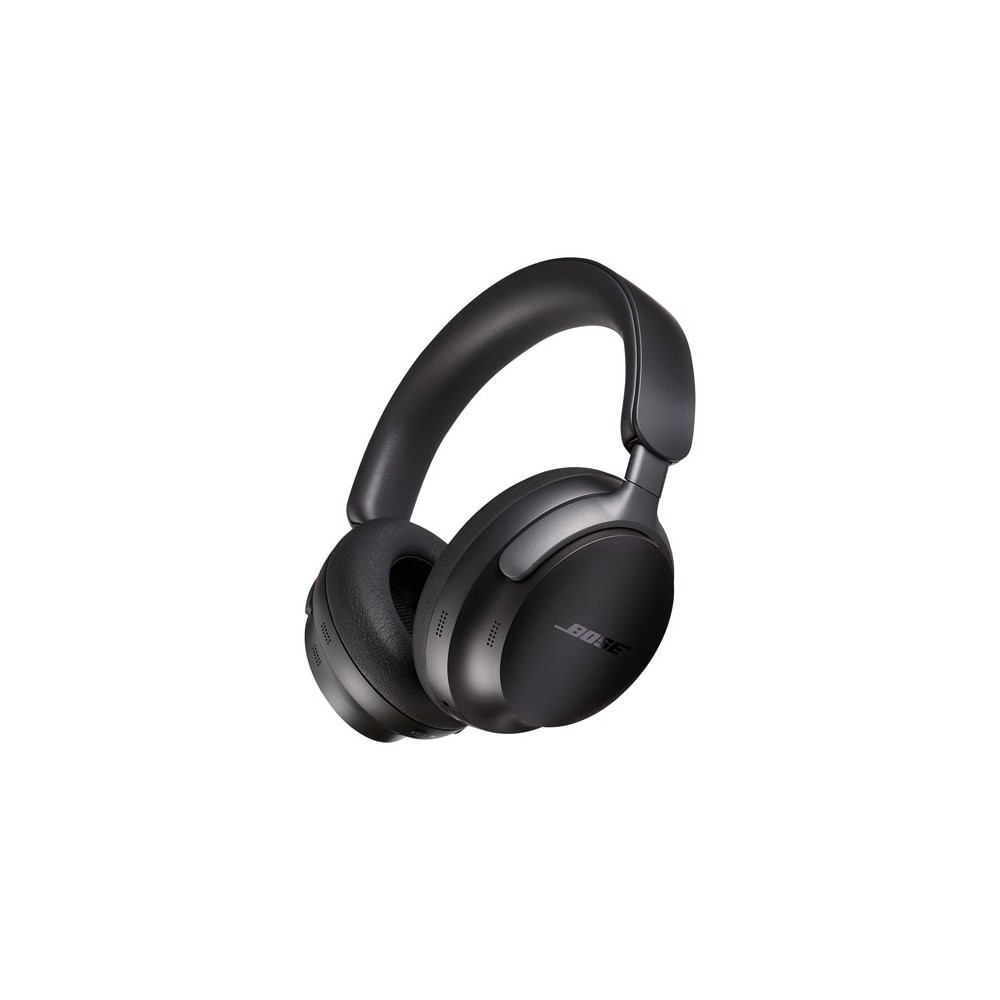

Bose QuietComfort Ultra Headphones deliver class-leading sound for listeners who can take advantage of higher-bitrate codecs, offering aptX Lossless support and CustomTune personalization to adapt audio to listener anatomy. The headphones also provide strong passive isolation from wide, dense ear pads and perform very well at reducing outside noise in real-world use. They connect over Bluetooth 5.3 with options for analog and digital wired listening, and the app gives access to EQ and immersive modes. With around 27 hours of battery life in our test, they balance sound quality and practical use for long listening sessions. These headphones also earned recognition as Best for Android users for their support of aptX Lossless and Snapdragon Sound features.
Sourced from Bose QuietComfort Ultra Headphones review – SoundGuys.
Best for iPhone users pick: Master & Dynamic MW75 Neuro

Master & Dynamic MW75 Neuro blends premium materials and unique EEG-based focus tracking while offering seamless Siri integration that makes them convenient for iPhone users. The MW75 Neuro pairs premium build (lambskin headband, aluminum and tempered glass ear cups) with physical controls and a comfortable fit, and the Neurable app provides brain-tracking data intended to help you monitor and improve focus. The headphones include removable memory foam earpads and a hardshell travel case for protection. While their standout feature is the EEG focus tracking, they also perform respectably as traditional wireless headphones for long sessions and travel.
Sourced from MW75 Neuro review: Headphones that can read your mind – SoundGuys.
Our verdict
For wireless headphones in this selection, the Sony ULT WEAR is our all-around pick for users who want very long battery life, solid ANC, and a comfortable over-ear fit, provided you’re willing to tweak the EQ to tame the bass. If ANC is the priority, the Bose QuietComfort Ultra (2nd Gen.) delivers the most precise cancelation and adjustable app controls, while the original Bose QuietComfort Ultra emphasizes top-tier sound quality and aptX Lossless support for compatible Android setups. The JBL Tour ONE M3 is the best choice for people who need excellent call clarity and a flexible transmitter-based workflow, and JLab’s JBuds Lux ANC offers the best value with long battery life and app EQ on a budget.
The Master & Dynamic MW75 Neuro caters to buyers who want premium materials and innovative EEG-based focus tracking with Siri support, and the Nothing Headphone (1) — which didn’t appear as a badge pick — stands out for its distinctive design, IP52 water and dust resistance, and an 8-band customizable EQ in the Nothing X app, making it a strong option for users who want durability and extensive tuning rather than a traditional badge-led strength.
FAQ
-
On-ear rest on your ears, smaller and more portable.
-
In-ear (earbuds) fit inside your ear canal, most compact.
-
Wired can offer more consistent sound quality and no battery worries.
-
Wireless adds freedom of movement, Bluetooth features, and portability.
-
Over-ear headphones with strong ANC work best on planes and trains.
-
Compact earbuds are great for commuting and portability.
Higher-priced models usually have better ANC, premium materials, wider soundstage, and extra features.
Active Noise Cancelling uses microphones to cancel out external noise for a quieter experience.
Open-back designs allow air and sound to pass through, creating a wider, natural soundstage but leaking sound. Closed-back isolate better and have more bass punch.
No, it’s a premium feature. Multipoint is useful if you switch often between laptop and phone.
Yes, by reducing background noise so you don’t need to turn up the volume. But listening too loud can still cause damage.
Isolation refers to the ability of your headphones to block outside noise from reaching your ears. This might sound like active noise cancelation, but it isn’t. Active noise canceling uses microphones to pick up the sounds that are going on around you and then uses clever processing to cancel them out. In physics, it’s called destructive interference, and you can learn more about that in our article on how noise canceling works, but that isn’t what isolation is.
Isolation is simply having a physical barrier between your ears and the outside noises. Every time you stuff your fingers in your ears, you’re isolating yourself. You might hear certain loud noises around you, but for the most part, sounds are blocked out. A good pair of over-ear headphones can do something similar. They’ll cover your ears and block noises that would otherwise interfere with the music you’re listening to.
Not yet. While Bluetooth has become way better and more convenient in the last few years, it still can’t compete on a technical level with wired over-ear headphones. Sure, we might be a little biased against removing the headphone jack. Still, even our objective testing of the LDAC codec (which is arguably one of the top transfer methods currently available) revealed that Bluetooth falls short. Of course, you probably won’t have to worry about it too much if you’re over the age of 24 because our hearing tends to go a lot sooner than you might realize, but it’s still something you should be aware of. At least for now, wired headphones still reign supreme.
Over-ear headphones generally offer superior sound quality due to their larger drivers and better isolation, which minimizes ambient noise and allows for a more immersive listening experience.
Thank you for being part of our community. Read our Comment Policy before posting.