All products featured are independently chosen by us. However, SoundGuys may receive a commission on orders placed through its retail links. See our ethics statement.
Sony WF-1000XM6 vs Apple AirPods Pro 3: Which premium earbuds should you buy?
Feb 12, 2026 — 12:00 PM ET
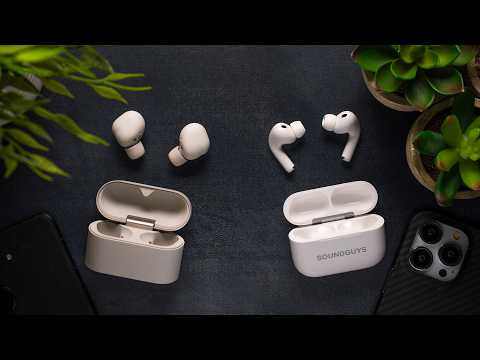


The Sony WF-1000XM6 and Apple AirPods Pro 3 are both chasing the flagship earbud crown, but they prioritize different features. In my testing, the Sony WF-1000XM6 earbuds lean into core performance, including sound quality and noise canceling. The Apple AirPods Pro 3 earbuds also deliver strong fundamentals, but they go further by adding deep iPhone integration, fitness tracking, hearing features, and Live Translation.
So, which pair actually makes the better everyday earbuds? I tested both to find out in this Sony WF-1000XM6 vs Apple AirPods Pro 3 comparison.
This article was originally published on February 12th, 2026, and this is the first version.
What’s it like to use the Sony WF-1000XM6 compared to the Apple AirPods Pro 3?

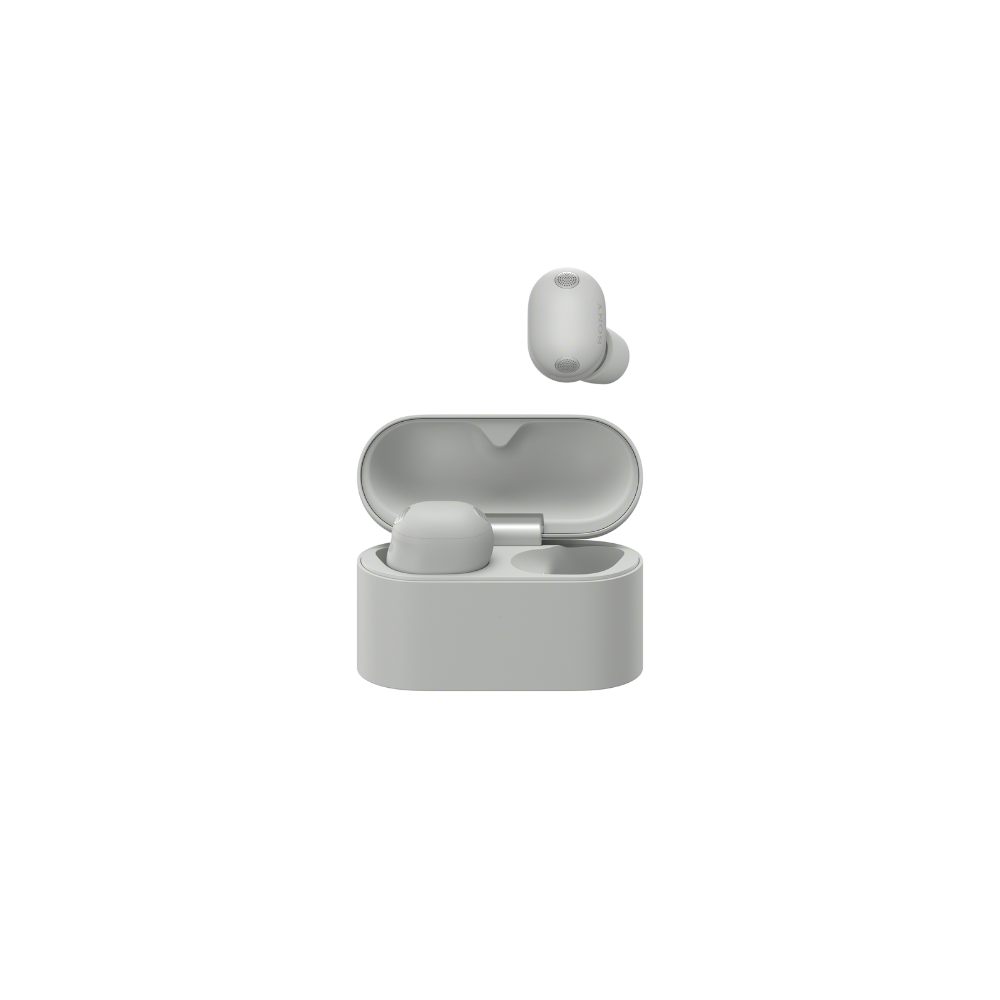
The Sony WF-1000XM6 earbuds have undergone a dramatic redesign. They ditch Sony’s older glossy look for a matte, pill-shaped profile, plus a taller case with flat top and bottom surfaces. I like the grippier finish, and the metal hinge on the case should hold up better long-term than the WF-1000XM5’s plastic hinge. That said, these are some of Sony’s chunkiest earbuds yet, and I can feel that extra size in daily use. Even so, I find the fit pretty forgiving; the indentation that tucks into the conchae makes the seal harder to mess up, even when I’m putting the earbuds in quickly. They also still ship with Sony’s memory foam ear tips.
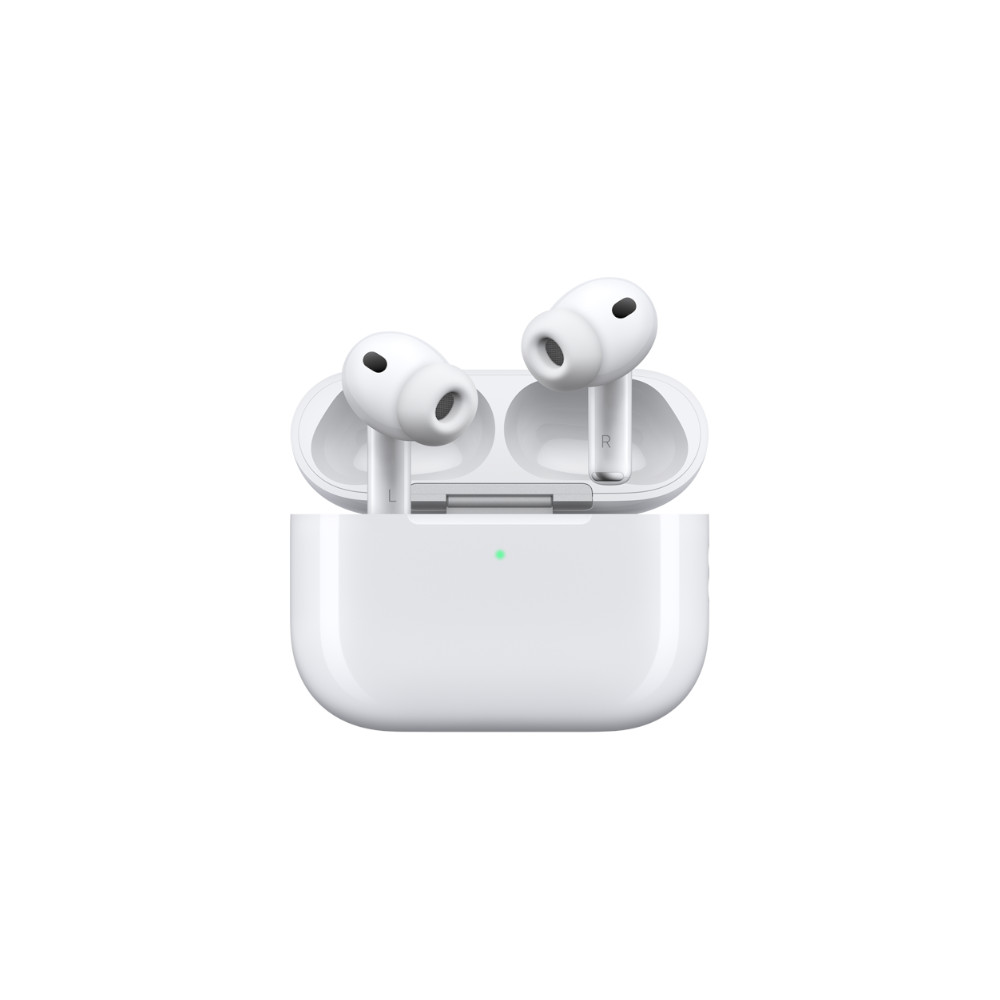
The Apple AirPods Pro 3 earbuds stick closer to the familiar AirPods formula, with minor refinements meant to improve stability. The smaller bulb and deeper in-ear seating help them seal more consistently, and Apple’s new foam-infused ear tips are clearly meant to keep the earbuds more secure. In my use, they do stay in more reliably than the previous generation while walking, but the glossy shell and smooth silicone exterior of the tips can still cause the earbuds to push out as sweat builds up. The case stays glossy and prone to scratches, and Apple swaps the pairing button for a capacitive touch sensor that works, though I sometimes can’t tell if it’s registered.

When it comes to controls, the Sony WF-1000XM6 earbuds use tap gestures, and the larger touch surface makes them easy to hit accurately. The Apple AirPods Pro 3 earbuds rely on stem squeezes and swipes, which I personally prefer. The physical input feels more deliberate, and I’m less likely to trigger something by accident compared to tap controls.
Both earbuds are suitable for workouts and cardio, but Apple has a slight edge in durability. The AirPods Pro 3 earbuds carry an IP57 rating, while the Sony WF-1000XM6 earbuds are rated IPX4. In practice, that means both handle sweat and gym sessions just fine, but Apple’s earbuds offer better overall protection against dust and water exposure.
Do the Sony WF-1000XM6 or Apple AirPods Pro 3 have more features?
This depends on what “features” means to you. The Sony WF-1000XM6 earbuds offer a deep feature set in the Sony Sound Connect app: multiple listening modes (including Background Music mode), Adaptive Sound Control, Speak-to-chat, and a 10-band EQ with ±6dB per band. I also like that Sony lets me pick a Bluetooth priority (sound quality vs stable connection vs low latency), and Adaptive Sound Control genuinely feels useful because it adjusts ambient settings based on activity and location instead of forcing me to constantly toggle modes. Sony also adds optional head gesture controls, and the earbuds support spatial features like Spatial Sound Optimization with head tracking on Android.

The Apple AirPods Pro 3 earbuds aim wider: heart rate monitoring, Hearing Aid features (including a Hearing Test that tunes the earbuds), Hearing Protection, and Live Translation. In my testing, heart rate tracking works well for a brisk walk or light jog, and it even seems to match an Apple Watch, but fit stability can break that contact during more intense workouts. Live Translation is ambitious, and the listening-mode transitions feel smooth, but the delay and the tendency to pick up office chatter make it hard for me to trust it for real travel use right now. Apple’s biggest downside is that many features are Apple-exclusive, and there’s still no equalizer, which is frustrating when the tuning isn’t exactly what you like.
How do the Sony WF-1000XM6 and Apple AirPods Pro 3 connect?

Both sets of earbuds use Bluetooth 5.3, but Sony offers far more codec flexibility. The Sony WF-1000XM6 earbuds support SBC, AAC, LDAC, and LC3, along with LE Audio and Auracast for receiving broadcasts in compatible venues. You also get Bluetooth multipoint, and in my testing, the earbuds switch between my phone and laptop without noticeable lag. I do occasionally run into brief dropouts in busy downtown areas unless I enable Sony’s “stable connection” setting.
The Apple AirPods Pro 3 earbuds support SBC and AAC but do not support higher-bitrate Bluetooth codecs. Instead, Apple relies on the H2 chip for connection and audio processing, while the U2 chip in the case improves precise location tracking.
Apple’s Android support technically works, but it is very limited. You get basic audio playback, but there is no access to customization, Apple’s feature set, or firmware updates without using an Apple device.
Is battery life better on the Sony WF-1000XM6 or Apple AirPods Pro 3?
In our standardized testing, the Sony WF-1000XM6 earbuds last longer on a single charge. We measured 9 hours and 41 minutes, compared to 8 hours and 42 minutes from the Apple AirPods Pro 3 earbuds with active noise canceling enabled. Both are strong results for flagship earbuds, but Sony takes the single-charge win.
Charging performance is solid across the board. The Sony WF-1000XM6 earbuds charge over USB-C and support Qi wireless charging. Sony claims 3 minutes in the case gives 60 minutes of playback, though in my testing with ANC on, I get closer to 45 minutes. The Apple AirPods Pro 3 earbuds charge via USB-C, support wireless charging, and also work with an Apple Watch charger. Apple claims that 5 minutes in the case delivers about an hour of listening, which aligns closely with my experience.
Do the Sony WF-1000XM6 or Apple AirPods Pro 3 block noise better?
Loading chart ...
The Apple AirPods Pro 3 earbuds deliver higher ANC: an average 90% reduction in loudness, the best we’ve measured. The Sony WF-1000XM6 earbuds are close at 88% average reduction, and I don’t think most people will feel or hear a small percentage gap in everyday use, but Apple takes the objective crown here.
Where Sony impresses me is how targeted the improvements feel. With eight microphones and an Adaptive NC Optimizer, the Sony WF-1000XM6 earbuds cut heavily around 100Hz and 2kHz, which helps crush things like transit rumble and keyboard clatter. In my use, they adapt quickly, moving between environments (quiet office to noisy platform), though I also notice the earbuds occasionally “fight” me and revert to ANC if I manually toggle ambient mode while the optimizer is enabled.
Sony offers an Ambient Sound mode that works well for basic awareness, but it doesn’t feel quite as natural as Apple’s Transparency Mode. On the AirPods Pro 3 earbuds, voices come through clearly, and it genuinely feels like I’m not wearing earbuds at all when Transparency Mode is enabled.
Do the Sony WF-1000XM6 sound better than the Apple AirPods Pro 3?

Both sets of earbuds sound good overall, but their frequency responses differ. With ANC enabled, the Sony WF-1000XM6 earbuds closely track the SoundGuys headphone preference curve across most of the midrange, with a clear bass lift from roughly 20–200Hz. That added bass strength gives low-frequency instruments more weight while maintaining good bass precision. In my listening, kick drums sound punchy, and bass lines stay present. There is also a treble emphasis around 6kHz, which increases treble strength and clarity and helps details like cymbals and vocal reverb stand out.
Turning ANC off changes the tuning. Bass strength and midrange strength pull back, and the Sony WF-1000XM6 earbuds sit closer to the preference curve overall, which explains why the sound comes across as more neutral to my ears. The tradeoff is consistency. Switching between ANC and Ambient changes the sound, and EQ settings do not carry over between modes, making these earbuds better suited to listeners who mostly stick to one listening mode.
The Apple AirPods Pro 3 earbuds show a less consistent relationship with the preference curve, and their tuning also changes with listening volume. At lower volumes, both bass strength and treble strength become more pronounced, pulling the response further away from the curve. As volume increases, this effect becomes less extreme but never fully disappears. In practice, this can sound engaging and immersive, especially with spatial content, but it can also become tiring on certain tracks or during longer listening sessions. When bass or treble feels excessive, there is no system-wide EQ to bring the sound closer to the preference curve.
Objective Measurements
Loading chart ...
Both sets of earbuds track the SoundGuys headphone preference curve reasonably well, but there are a few important things to note. With ANC enabled, the Sony WF-1000XM6 earbuds stay closer to the house curve through most of the midrange, with a modest bass lift in the low frequencies and a clear treble emphasis around 6kHz that increases treble strength and presence. Turning ANC off pulls back some bass and midrange strength, shifting the tuning closer to the preference curve overall and giving the sound a more neutral presentation.
The Apple AirPods Pro 3 earbuds show larger departures from the preference curve, with stronger bass strength in the low end and elevated treble in the upper mids and highs, increasing contrast relative to the midrange. That relationship also changes with listening volume, making the tuning less consistent overall. In comparison, Sony’s tuning stays closer to the preference curve across modes, while Apple’s approach prioritizes emphasized bass and treble over midrange balance.
How would most people rate the sound from 1 to 5?
- Timbre (MOS-T) represents how faithfully the headphones reproduce the frequency spectrum and temporal resolution (timing information).
- Distortion (MOS-D) represents non-linearities and added noise: higher scores mean cleaner reproduction.
- Immersiveness (MOS-I) represents perceived source width and positioning: how well virtual sound sources are defined in three-dimensional space.
The MDAQS scores lean toward Sony overall, largely because of a stronger Timbre score that suggests a more balanced sound. The Sony WF-1000XM6 earbuds also come out slightly ahead in the Overall score, which suggests fewer compromises across Timbre, Distortion, and Immersiveness.
The Apple AirPods Pro 3 earbuds land close behind, especially in Immersiveness, which lines up with how engaging they can sound for spatial content. Their lower Distortion score reflects the heavier emphasis on bass and treble we see in the measurements. In practice, both sets should rate highly with most listeners, but Sony’s steadier performance across the MDAQS categories makes them feel a bit more cohesive overall.
Do the Sony WF-1000XM6 or Apple AirPods Pro 3 have a better microphone?
Sony uses an AI-powered microphone system on the WF-1000XM6 earbuds, combining beamforming, an improved bone-conduction sensor, and AI noise rejection to focus on your voice. Apple takes a different approach with the AirPods Pro 3 earbuds, relying on upgraded ultra-low-noise microphones, an improved acoustic seal, and adaptive processing to manage background noise, without using bone conduction.
On paper, both aim to improve voice clarity in noisy environments, but listen to the mic samples to hear the differences for yourself.
Sony WF-1000XM6 microphone demo (Ideal conditions):
Apple AirPods Pro 3 microphone demo (Ideal conditions):
Sony WF-1000XM6 microphone demo (Windy conditions):
Apple AirPods Pro 3 microphone demo (Windy conditions):
Which microphone sounds better to you?
Sony WF-1000XM6 vs Apple AirPods Pro 3: Price and availability
The Sony WF-1000XM6 earbuds cost $329.99 with a release date of February 12, 2026.
The Apple AirPods Pro 3 earbuds cost $249 with a release date of September 19, 2025. If you’re value-minded strictly on price, Apple comes in meaningfully cheaper.
Should you get the Sony WF-1000XM6 or Apple AirPods Pro 3?

If I’m buying purely for “earbuds as earbuds,” I lean toward the Sony WF-1000XM6 earbuds, and for Android users in particular, they are the easier recommendation, even at their higher $329 price. In my testing, they nail the core stuff that matters every day with strong ANC and isolation, excellent microphone quality, and a tuning I find easy to enjoy across long sessions. The 10-band EQ is a big part of that, because it lets me fix minor issues rather than just live with them. Add in broader codec support and multipoint, and the XM6 earbuds feel like the more flexible, control-focused option.
If I’m an iPhone user who wants earbuds that do more than just play music, the Apple AirPods Pro 3 earbuds make a strong case at $249. Their ANC measures higher, Transparency Mode sounds very natural to me, and features like Hearing Aid support, Hearing Protection, heart rate tracking, and Live Translation add real value if you are invested in Apple’s ecosystem. The tradeoff is control. Many of those features are Apple-exclusive, and there is still no EQ when bass or treble strength doesn’t land where I want it. That means iPhone users genuinely have a choice, depending on whether ecosystem features or sound-tuning flexibility matter more, while Android users are better off sticking with Sony despite the higher price.
Get the Sony WF-1000XM6 if you:
-
Want stronger sound control, including a systemwide 10-band EQ to adjust bass strength and treble strength instead of living with the default tuning
-
Use Android or multiple platforms and want broader codec support, multipoint, and less ecosystem lock-in
-
Are okay sticking mostly to one listening mode in exchange for strong ANC and isolation, excellent microphone quality, and a tuning you can actively correct, even at the higher $329 price
Get the Apple AirPods Pro 3 if:
-
Use an iPhone and want the best overall ANC performance and seamless Apple integration at $249
-
Value Apple-exclusive features like Hearing Aid support, Hearing Protection, heart rate tracking, and Live Translation beyond just music playback
-
Prioritize convenience, Transparency Mode, and immersive spatial experiences over having direct control of sound tuning
Which earbuds would you buy?
Thank you for being part of our community. Read our Comment Policy before posting.