All products featured are independently chosen by us. However, SoundGuys may receive a commission on orders placed through its retail links. See our ethics statement.
Sony WF-1000XM6 vs Technics EAH-AZ100: Flagship face-off
Feb 18, 2026 — 6:00 AM ET
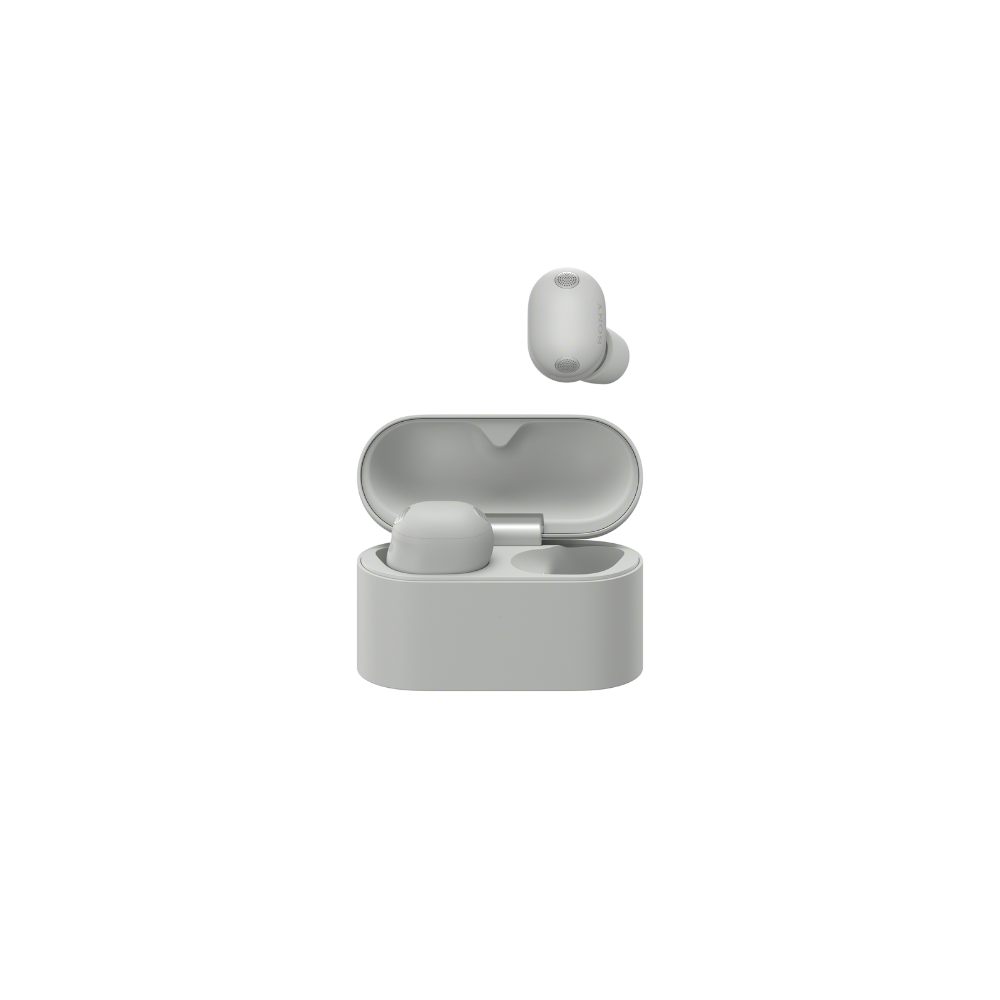





Two premium wireless earbuds enter the ring with excellent ANC and high-end features, but they take different approaches to sound, design, and value. The Sony WF-1000XM6 represents the latest evolution of Sony’s flagship line with meaningful improvements across the board, while the Technics EAH-AZ100 brings a distinctive retro aesthetic with competitive features at a slightly lower price point. Both are some of the best wireless earbuds on the market, but which one deserves your $300+?
This article was originally published on February 18, 2025, and this is the first version.
What’s it like to use the Sony WF-1000XM6 compared to the Technics EAH-AZ100?

The Sony WF-1000XM6 features an elongated oval pill-shaped profile with a matte plastic surface and textured finish that’s easier to grip than glossy coatings. The charging case has flat top and bottom surfaces with a concealed front-facing LED indicator, stands upright on desks or wireless charging pads, and remains pocketable—fitting into a watch pocket on jeans. The case features a metal hinge for better long-term durability. Sony claims the new shape improves fit consistency across different ear sizes, making it harder to mess up the seal. The earbud body features a subtle indentation that tucks into the conchae, using your ear’s natural anatomy as an anchor point. However, the increased height and width may be noticeable for those with smaller ears, and they protrude too much to be comfortable lying against a pillow.

The Technics EAH-AZ100 is chunkier with soft rectangular nozzles that nestle into ear canals easier than traditional cylinder shapes. The back of each earbud features a capacitive touch surface with metallic-looking material and the Technics logo. The circular back housing rests against your concha while the nozzle does most of the fit work. The case is a larger rounded rectangle with wireless charging capability and a USB-C port on the back, though the case itself is not moisture resistant.
Both earbuds are pocketable and offer four ear tip sizes in the box—the Sony includes memory foam tips while the Technics provides silicone tips with foam in the gap. Both carry an IPX4 water resistance rating for the earbuds themselves.
Do the Sony WF-1000XM6 or Technics EAH-AZ100 have more features?

The Sony WF-1000XM6 offers extensive customization through the Sony Sound Connect app, including multiple listening modes like Background Music mode, Adaptive Sound Control, Speak-to-chat, and a 10-band custom equalizer with ±6dB of adjustment per band. You can select what to prioritize when connected via Bluetooth: sound quality, stable connection, or low latency. The earbuds support Scene-Based Listening, Spatial Sound Optimization with Head Tracking on Android, and Auracast for receiving audio broadcasts in compatible venues. Adaptive Sound Control detects your activity and location, then adjusts ambient sound settings accordingly. Sony has also added optional head gesture controls for accepting or rejecting calls with nods or head shakes.
The Technics EAH-AZ100 includes standard high-end features like Find My, multipoint, in-ear detection, LE audio, passthrough, and ANC adjustment. The earbuds are Atmos-compatible but don’t have many spatial audio features. A standout feature is the AI voice focus setting for calls, which allows you to either isolate conversations around you while deadening environmental noise, or deaden conversations while listening to the environment—potentially helpful for those with sensory issues. The Technics app offers EQ presets and an eight-band custom equalizer, though it’s less granular than Sony’s 10-band option.
Both offer customizable touch controls and transparency/passthrough modes, though the Sony provides more listening mode options and a more advanced equalizer.
How do the Sony WF-1000XM6 and Technics EAH-AZ100 connect?
Both earbuds offer nearly identical connectivity: Bluetooth 5.3 with support for SBC, AAC, LDAC, and LC3 codecs. This means high-resolution wireless audio up to 24-bit/96kHz for Android users via LDAC, while iPhone users are limited to AAC. Both support multipoint connectivity; however, the Sony earbuds can only connect to two devices, while the Technics can connect to up to three devices simultaneously. Neither has adopted Bluetooth 6, which is a future-proofing concern at this price point—the earbuds won’t support exclusive features that may emerge down the line. I did notice a slight delay when using SBC or LDAC, though it’s minimal.
Is battery life better on the Sony WF-1000XM6 or Technics EAH-AZ100?
The Technics EAH-AZ100 offers superior battery life, lasting 10 hours and 40 minutes in standardized testing with SBC and ANC on—enough to withstand an intercontinental flight. The Sony WF-1000XM6 lasted 9 hours and 41 minutes on a single charge, surpassing Sony’s 8-hour claim but falling short of the Technics by about an hour. Sony’s Quick Charge feature provides around 45 minutes of playback with 3 minutes of charging in testing with ANC on. Both support USB-C and Qi wireless charging.
Do the Sony WF-1000XM6 or Technics EAH-AZ100 block noise better?
Loading chart ...
The Sony WF-1000XM6 delivers superior active noise cancelation across the board, achieving an 88% average reduction in loudness. Sony has upgraded the ANC hardware with eight microphones (up from six on the XM5), and the results are impressive. The most dramatic attenuation appears around 100Hz and 2kHz, where the WF-1000XM6 cancels over 40dB and 50dB respectively—nearly eliminating low-end noise like air conditioners and incidental sounds like keyboard clatter. Sony also pulls ahead significantly in the 2,000-10,000Hz range, outperforming Technics by around 15-20dB in some areas. However, both earbuds struggle somewhat in the 400Hz-2kHz midrange, so voices and office chatter may still break through. The Sony includes an Adaptive NC Optimizer that analyzes external noise and wearing conditions in real time.
The Technics EAH-AZ100 offers consistently decent noise cancelation and keeps pace with the Sony in the low-end bass frequencies (below 100Hz), achieving around 35-38dB of attenuation—adequate for airplane engine noise and rumbling trains. The earbuds also provide strong passive isolation even without ANC active, which helps close the gap. However, the Technics falls noticeably short in the critical 2-10kHz range where the Sony excels. You can adjust the ANC level in the app to toggle between different modes based on your environment.
Do the Sony WF-1000XM6 sound better than the Technics EAH-AZ100?
The Sony WF-1000XM6 delivers a more crowd-pleasing sound out of the box, while the Technics EAH-AZ100 has an unorthodox tuning that benefits from EQ adjustment.
Objective Measurements
Loading chart ...
The Sony WF-1000XM6’s frequency response tracks closer to the SoundGuys house curve with ANC enabled, with modest bass overemphasis and some treble lift around 6kHz. The response is well-behaved overall, and most listeners should find little to complain about.
The Technics EAH-AZ100’s default frequency response is unusual: the bass rise starts too high in frequency, and the ear gain region around 2–4kHz is quieter than ideal. The result is a dark, boomy presentation that sounds a bit off. Switching to the Treble+ preset or manually adjusting the EQ brings it much closer to a balanced response.
Both earbuds exhibit frequency response changes when ANC is toggled. The Sony becomes less bass-heavy with ANC off, while the Technics actually measures more normally with ANC disabled.
How would most people rate the sound from 1 to 5?
The MDAQS algorithm predicts how a panel of around 200 listeners would rate the sound on a scale from 1.0 (very bad) to 5.0 (very good).
- Timbre (MOS-T) represents how faithfully the headphones reproduce the frequency spectrum and temporal resolution (timing information).
- Distortion (MOS-D) represents non-linearities and added noise: higher scores mean cleaner reproduction.
- Immersiveness (MOS-I) represents perceived source width and positioning: how well virtual sound sources are defined in three-dimensional space.
The Sony scores considerably higher in Timbre, which reflects how faithfully the earbuds reproduce the frequency spectrum—this is generally the most important subscore for overall listener satisfaction. The Technics actually edges ahead in both Distortion and Immersiveness, posting a notably high 4.8 for perceived source width and positioning, which is unusual for in-ears. However, the Sony’s superior Timbre score drives its higher overall rating of 4.8 versus the Technics’ 4.3.
It’s worth noting that the Technics’ Treble+ EQ preset scores considerably better than the default, earning a 4.5 overall with a 4.5 Timbre score—much closer to the Sony’s stock performance. If you’re willing to use presets, the gap narrows.
Do the Sony WF-1000XM6 or Technics EAH-AZ100 have a better microphone?
The Sony WF-1000XM6 wins out on for microphone quality. Sony upgraded the mic system with AI-powered beamforming, an improved bone conduction sensor, and AI noise rejection. In quiet environments, the voice comes through clearly with good articulation and minimal reverberation. Outdoors, the microphones handle wind and ambient noise impressively well, maintaining clarity even with wind hitting the mics directly. On busy streets, occasional loud vehicles broke through, but voice clarity held up better than the previous generation.
The Technics EAH-AZ100 uses a mono MEMS microphone that gets the job done for calls, but doesn’t perform as well in the presence of noise. In ideal conditions, it’s more than adequate, but taking calls in noisy environments can be difficult. Listen to our samples below to compare:
Sony WF-1000XM6 microphone demo (Ideal conditions):
Technics EAH-AZ100 microphone demo (Ideal conditions):
Sony WF-1000XM6 microphone demo (Street conditions):
Technics EAH-AZ100 microphone demo (Street conditions):
Sony WF-1000XM6 vs Technics EAH-AZ100: Price and availability
The Sony WF-1000XM6 launched on February 12, 2026, at $329.99—$30 more than the WF-1000XM5’s launch price. The Technics EAH-AZ100 released on January 7, 2025, at $299.99. Technics has been on the market longer and may be available at a discount, while the Sony XM6 buds are brand-new at full retail.
Should you get the Sony WF-1000XM6 or Technics EAH-AZ100?
Get the Sony WF-1000XM6 if you:
- You want the best out-of-the-box sound quality.
- Call quality across noisy environments is important to you.
- You want top-tier ANC with real-time adaptive optimization.
- You value a deep feature set, including a 10-band EQ and Auracast.
Get the Technics EAH-AZ100 if:
- You prefer a distinctive, retro-inspired design.
- You don’t mind tweaking EQ.
- You want to spend less.
- The AI voice focus feature for managing sensory input appeals to you.
Which earbuds would you buy?
Both of these earbuds deliver a flagship experience, but they excel in different areas. The Sony WF-1000XM6 is the more polished all-rounder—better sound out of the box, stronger microphones, and slightly superior ANC—but it commands a $30 premium for those advantages. The Technics EAH-AZ100 fights back with longer battery life, a distinctive design, and impressive spatial performance that punches above its weight, though it asks you to meet it halfway with some EQ tweaking. Your pick comes down to whether you’d rather have everything dialed in from the jump or save a few bucks and tailor the experience yourself.
Thank you for being part of our community. Read our Comment Policy before posting.