All products featured are independently chosen by us. However, SoundGuys may receive a commission on orders placed through its retail links. See our ethics statement.
Sony WF-1000XM6 vs Bose QuietComfort Ultra 2: Which ANC earbuds should you buy?
Feb 13, 2026 — 7:00 AM ET
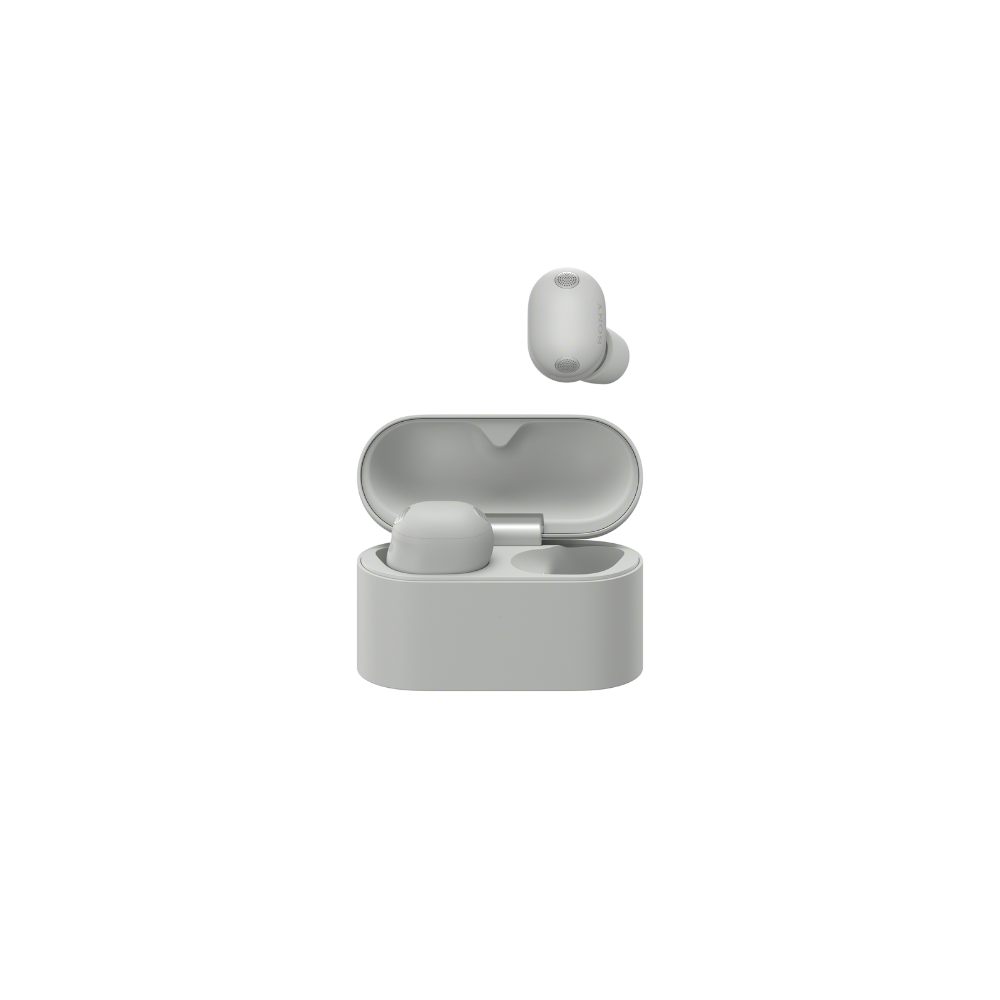



Sony and Bose are two of the biggest names in noise canceling earbuds, and once again, their latest flagships go head-to-head. The Sony WF-1000XM6 arrives at $329.99, promising improved ANC, sound, and microphone performance, while the Bose QuietComfort Ultra 2 hold steady at $299.99 with iterative refinements to an already solid formula. Both pack Bluetooth 5.3, wireless charging, and IPX4 water resistance—but the differences in sound tuning, battery life, and features tell a more interesting story. Here’s how they stack up.
This article was originally published on TKTK and this is the first version.
What’s it like to use the Sony WF-1000XM6 compared to the Bose QuietComfort Ultra Earbuds 2?
Both earbuds are chunky, and neither is ideal for people with smaller ears. The Sony WF-1000XM6 sports an elongated oval pill-shaped profile with a matte, textured finish that’s easy to grip, and a subtle indentation that tucks into the cavity of your conchae for a more forgiving fit. Sony claims the new shape improves fit consistency across different ear sizes, making it harder to get a bad seal even when inserting them at slightly different angles. In the box, you get four sizes of memory foam ear tips.
The Bose QuietComfort Ultra (2nd Gen) look virtually identical to the originals, with the main visible change being a new earwax guard on the nozzles. The ovoid nozzle shape is conducive to getting a good seal, and Bose includes three sizes of concha fins (“stability bands”) along with ear tips to help secure the fit. Those stability bands can occasionally get dislodged when you remove the buds, which can wedge in a way that prevents charging in the case if you’re not careful.
Both cases support USB-C and Qi wireless charging, and both earbuds carry an IPX4 water resistance rating. The Sony case has a metal hinge that should offer better long-term durability, and its flat top and bottom surfaces let it stand upright on a desk or wireless charging pad. The Bose case is largely unchanged from its predecessor, though the addition of wireless charging is a welcome upgrade.
For controls, both earbuds use capacitive touch surfaces. Sony’s larger earbud surface makes taps easier to register, with the right earbud handling playback and the left managing ambient sound modes by default—all reassignable in the Sony Sound Connect app. Sony also offers optional head gesture controls for accepting or rejecting calls. The Bose controls are straightforward, with both earbuds sharing the same tap, swipe, and long-press scheme, and long-press shortcuts customizable through the Bose app.
Do the Sony WF-1000XM6 or Bose QuietComfort Ultra Earbuds 2 have more features?
Both earbuds offer extensive companion app control. The Sony Sound Connect app provides a 10-band custom equalizer with ±6dB of adjustment per band, multiple listening modes including Background Music mode, Adaptive Sound Control that adjusts ambient settings based on your activity and location, Speak-to-chat, and Scene-Based Listening. Sony also includes Spatial Sound Optimization with Head Tracking on Android.
The Bose app offers spatial audio controls, CustomTune calibration, mode definitions for automatic ANC switching, fit testing, and multipoint management. Bose’s earbuds also support aptX Lossless via Snapdragon Sound on compatible devices, and the transparency mode can blunt dangerously loud sounds for hearing protection.
Where the two diverge most is in equalization. Sony’s 10-band EQ with presets gives you meaningful control to fine-tune the sound. Bose’s 3-band EQ has no labeled center frequencies or scale, making it frustratingly imprecise—and its presets don’t help much either.
How do the Sony WF-1000XM6 and Bose QuietComfort Ultra Earbuds 2 connect?
Both earbuds support Bluetooth 5.3 and multipoint connectivity for pairing to two devices simultaneously. The Sony WF-1000XM6 supports SBC, AAC, LDAC, and LC3 with LE Audio, offering high-resolution audio up to 24-bit/96kHz for Android users via LDAC, plus Auracast for receiving audio broadcasts in compatible venues. The Bose QuietComfort Ultra (2nd Gen) support SBC, AAC, and the aptX Adaptive codec family, including aptX Lossless via Snapdragon Sound—though that requires a phone with a Qualcomm Snapdragon 8 Gen 3 or later.
iPhone users are limited to AAC on both earbuds. Android users choosing between the two will need to consider which high-resolution codec their phone supports: LDAC for Sony or aptX Adaptive for Bose.
Is battery life better on the Sony WF-1000XM6 or Bose QuietComfort Ultra Earbuds 2?
The Sony WF-1000XM6 has a clear advantage in battery life. In testing, the XM6 lasted 9 hours and 41 minutes on a single charge, surpassing Sony’s 8-hour claim, with a total of 24 hours including the charging case. Sony’s Quick Charge feature provides up to 60 minutes of playtime from just three minutes of charging (closer to 45 minutes with ANC on in testing).
The Bose QuietComfort Ultra Earbuds (2nd Gen) lasted 5 hours and 34 minutes in testing, which is below average for modern wireless earbuds. The case provides about three full recharges. That’s a significant gap—the Sony earbuds last nearly twice as long on a single charge.
Both charge via USB-C or Qi wireless charging.
Do the Sony WF-1000XM6 or the Bose QuietComfort Ultra 2 block noise better?
Loading chart ...
The Sony WF-1000XM6 edges out the Bose in noise cancelation. Sony’s eight-microphone array achieves an 88% average reduction in loudness across all frequencies, with particularly strong performance around 100Hz and 2kHz (over 40dB and 50dB attenuation, respectively). The ANC is less effective in the 400Hz–2kHz midrange, so some voices and office chatter can still break through. Sony’s Adaptive NC Optimizer analyzes external noise in real time and adjusts accordingly.
The Bose QuietComfort Ultra Earbuds (2nd Gen) reduce external noise by 85%, which is still among the best of any wireless earbuds tested. Bose’s fit system—with its ovoid nozzle and concha fins—contributes to solid passive isolation. However, there is a faint noise floor introduced by the ANC unit that persists even when ANC is dialed to zero in the app; in quiet environments, the earbuds will reduce the ANC effect to minimize this.
Sony’s transparency mode offers 20 levels of adjustable ambient sound, auto ambient mode, and a voice passthrough option. Bose’s transparency mode includes loud-sound blunting for hearing protection.
Do the Sony WF-1000XM6 sound better than the Bose QuietComfort Ultra Earbuds 2?
The Sony WF-1000XM6 offers a more balanced sound, with modest bass emphasis and some extra energy in the treble. The tuning is likely to please most listeners without major complaints, and the 10-band EQ provides ample room for fine-tuning.
The Bose QuietComfort Ultra (2nd Gen) leans much harder into a V-shaped sound with heavy bass and treble emphasis at the expense of the mids, which can make sub-bass distracting and leave vocals, particularly women’s, sounding oddly quiet. The limited 3-band EQ makes it difficult to address these issues.
Modes?
The Sony WF-1000XM6’s frequency response changes when ANC is disabled, with less bass and midrange emphasis that tracks closer to the preference curve. Some listeners may actually prefer this sound, though they’ll lose noise cancelation. The Bose review does not note any significant frequency response changes across listening modes.
Objective Measurements
Loading chart ...
The Sony WF-1000XM6’s frequency response tracks fairly close to the SoundGuys house curve with ANC enabled, with modest overemphasis in bass/lower mids (20–400Hz) and some treble overemphasis around 6kHz.
The Bose QuietComfort Ultra Earbuds (2nd Gen) show significantly more deviation, with bass and treble both far more emphasized than our house curve looks for, and mids suffering as a result. The tuning resembles a Diffuse Field Modified target turned up to eleven.
In short, Sony offers a more balanced, versatile sound out of the box, while Bose caters to listeners who prefer pronounced bass and treble. Sony’s superior equalizer makes it far easier to dial in your preferred sound regardless.
How would most people rate the sound from 1 to 5?
- Timbre (MOS-T) represents how faithfully the headphones reproduce the frequency spectrum and temporal resolution (timing information).
- Distortion (MOS-D) represents non-linearities and added noise: higher scores mean cleaner reproduction.
- Immersiveness (MOS-I) represents perceived source width and positioning: how well virtual sound sources are defined in three-dimensional space.
Both earbuds scored an identical 4.8 out of 5.0 overall in MDAQS, and both share a Timbre score of 4.9. The key difference is in the sub-scores: the Sony WF-1000XM6 scores higher in Distortion (3.7 vs 3.2) and Immersiveness (4.5 vs 4.2), meaning it produces cleaner audio with less added noise and a more convincing sense of spatial positioning. Despite the Bose’s heavier V-shaped tuning, most listeners are predicted to rate both earbuds similarly well overall, but the Sony has the edge in technical performance.
Do the Sony WF-1000XM6 or Bose QuietComfort Ultra Earbuds 2 have a better microphone?
The Sony WF-1000XM6 delivers stronger microphone performance overall. Sony upgraded the system with AI-powered beamforming, an improved bone conduction sensor, and AI noise rejection trained on millions of voice samples. In quiet environments, voice comes through clearly with good articulation. Outdoors, wind and ambient noise are handled impressively well. On busy streets, occasional loud vehicles can break through, but voice clarity is maintained.
The Bose QuietComfort Ultra Earbuds (2nd Gen) microphones had more difficulty processing voices, with effects like echo, wind, and nearby noise coming through more prominently. The earbuds also use bone conduction to distinguish voice from background noise, and because we can now properly test bone conduction microphones with our upgraded fixture, the following samples accurately represent real-world call performance.
Sony WF-1000XM6 microphone demo (Ideal conditions):
Bose QuietComfort Ultra Earbuds 2 microphone demo (Ideal conditions):
Sony WF-1000XM6 microphone demo (Windy conditions):
Bose QuietComfort Ultra Earbuds 2 microphone demo (Windy conditions):
Which microphone sounds better to you?
Sony WF-1000XM6 vs Bose QuietComfort Ultra Earbuds 2: Price and availability
The Sony WF-1000XM6 retails for $329.99 and was released on February 12, 2026. The Bose QuietComfort Ultra Earbuds (2nd Gen) retails for $299.99 and was released on July 1, 2025. That’s a $30 difference in Sony’s disfavor, though both sit firmly in flagship pricing territory
Should you get the Sony WF-1000XM6 or Bose QuietComfort Ultra Earbuds 2?

On paper, the Sony WF-1000XM6 wins most of the matchups here: better battery life, stronger ANC, more balanced sound, a far superior equalizer, and improved microphone performance. Still, the Bose QuietComfort Ultra (2nd Gen) aren’t pushovers—their ANC is still excellent, the concha fins offer a uniquely secure fit, and most casual listeners should enjoy the sound. The $30 price difference is another gap between these two, and may be the factor in your decision.
Get the Sony WF-1000XM6 if you:
- You want better battery life
- You prioritize a balanced sound signature with a capable 10-band EQ for fine-tuning
- Microphone quality matters to you for calls and remote work
- You want the strongest possible ANC performance
- You’re an Android user who wants LDAC high-resolution audio
Get the Bose QuietComfort Ultra Earbuds 2 if:
- You prefer a bass- and treble-heavy V-shaped sound signature
- You want concha fins for a more physically secure fit
- Your phone supports Snapdragon Sound for aptX Lossless
- You want to save $30
- You want transparency mode with loud-sound blunting for hearing protection
Decent features
Comfortable
Ultimately, I think the Sony WF-1000XM6 is the stronger all-rounder for most people. But if the Bose sound signature clicks with your preferences and you value the secure fit of the stability bands, the QuietComfort Ultra Earbuds (2nd Gen) remain a solid flagship option.
Which earbuds would you buy?
What should you get instead?
If neither the Sony WF-1000XM6 nor the Bose QuietComfort Ultra Earbuds (2nd Gen) are quite right for you, here are some alternatives worth considering:
- Apple AirPods Pro 3 ($249 at Amazon): The best ANC ever tested, plus unique health features like heart rate monitoring and clinical-grade hearing aids—all for significantly less money. The catch: no EQ controls, sound changes dramatically at different volumes due to LDEQ, and they’re essentially useless on Android beyond basic playback.
- Technics EAH-AZ100 ($299.99 at Amazon): Offers good ANC with over 10 hours of battery life and a retro aesthetic for $30 less than the Sony. Stock tuning is oddly bass-heavy with weak treble, so expect to spend time with the EQ.
- Sennheiser MOMENTUM True Wireless 4 ($269.95 at Amazon): The best-sounding alternative with aptX Lossless support, high MDAQS scores, better dust/water protection (IP54), and Auracast support. ANC is slightly weaker, battery life is shorter, and microphone performance is notably worse.
- Bose QuietComfort Ultra Earbuds (1st Gen) ($299 at Amazon): Nearly identical to the 2nd Gen in performance and sound. If you don’t need the absolute latest model, this is an easy way to save a few bucks.
- Technics EAH-AZ80 ($167.99 at Amazon): A budget-friendly option if you’re willing to skip some of the flagship features that Sony and Bose offer.
Thank you for being part of our community. Read our Comment Policy before posting.