All products featured are independently chosen by us. However, SoundGuys may receive a commission on orders placed through its retail links. See our ethics statement.
Samsung Galaxy Buds4 Pro vs Sony WF-1000XM6: Worth the extra $80?
Mar 10, 2026 — 9:44 AM ET
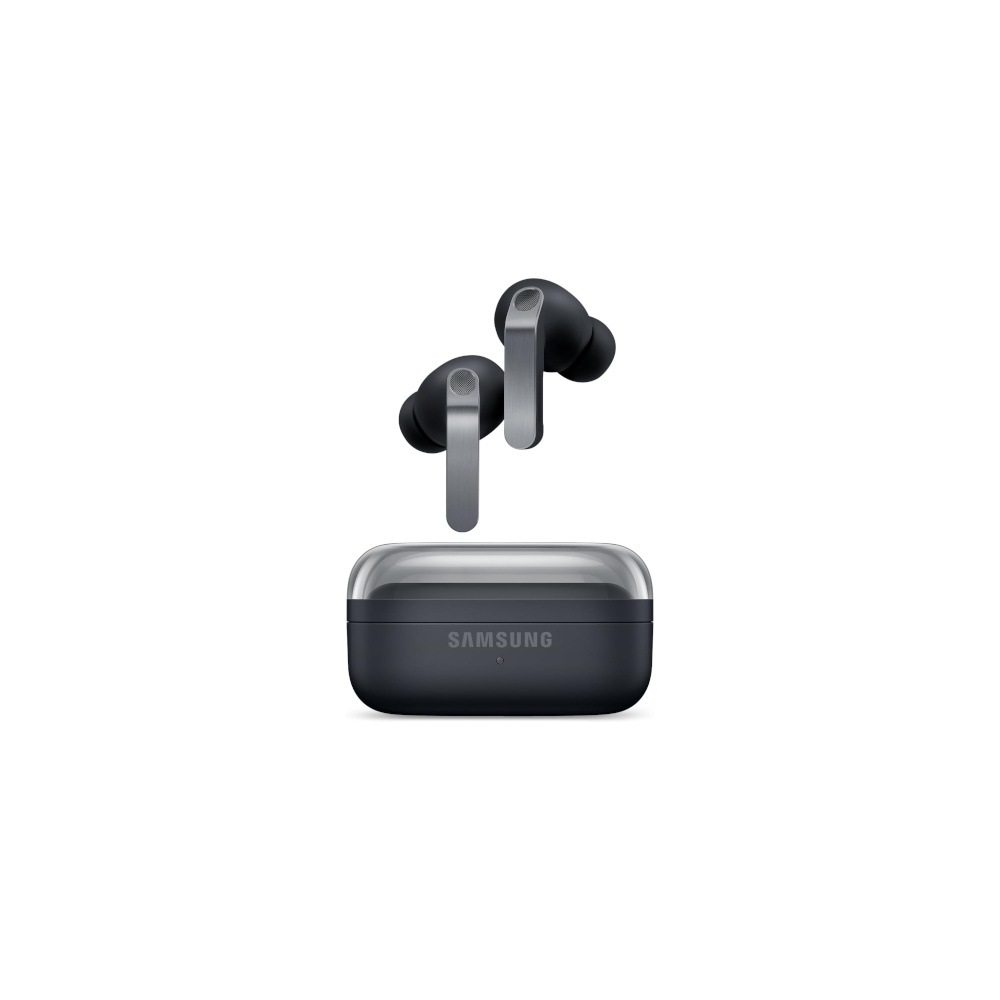

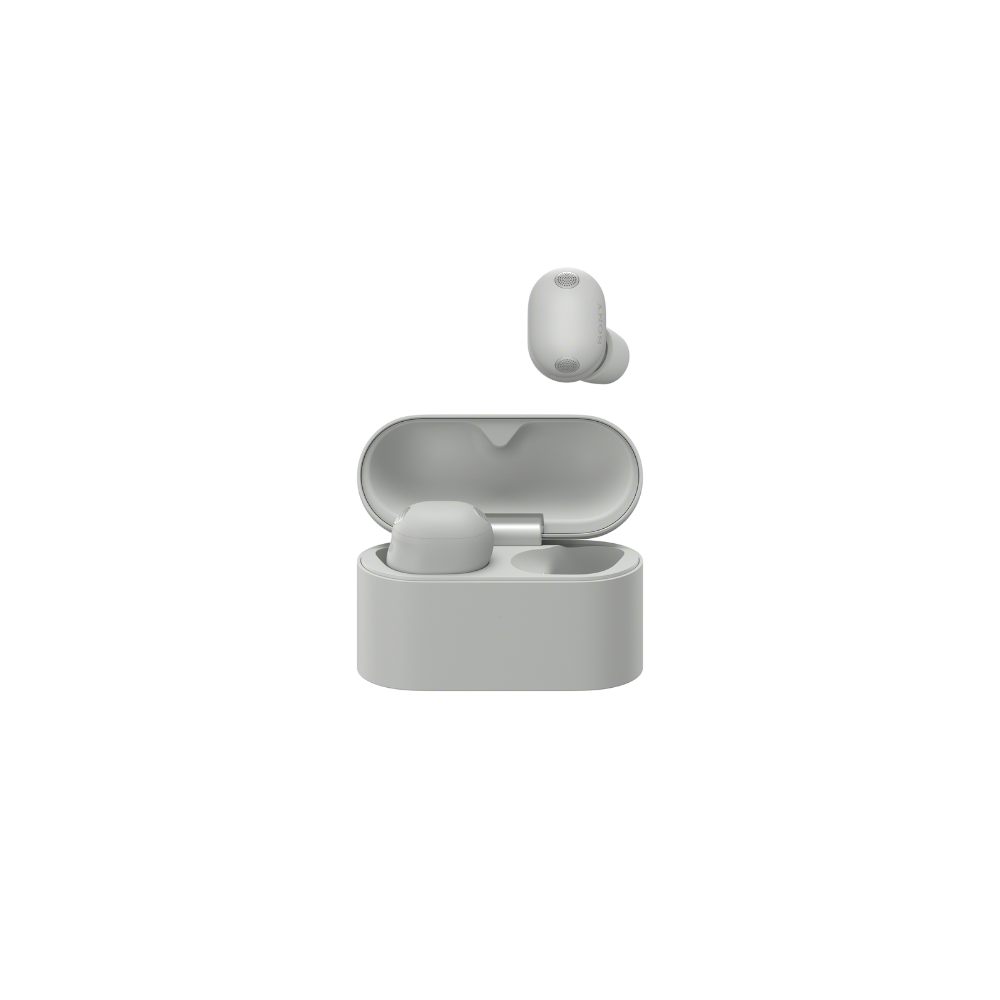



If you’re shopping for flagship earbuds right now, two names are probably at the top of your list: the Samsung Galaxy Buds4 Pro and the Sony WF-1000XM6. Both launched in February 2026, both sit at the premium end of the market, and both deliver solid noise canceling and sound quality. But at $249.99 vs $329.99, the question isn’t really which one is better — it’s whether Sony’s performance gains justify an $80 premium. The answer, as with most things, depends on who you are and what phone you’re carrying.
- March 10, 2026: We updated this article with our final battery life test results for the Samsung Galaxy Buds4 Pro.
What’s it like to use the Samsung Galaxy Buds4 Pro compared to the Sony WF-1000XM6?
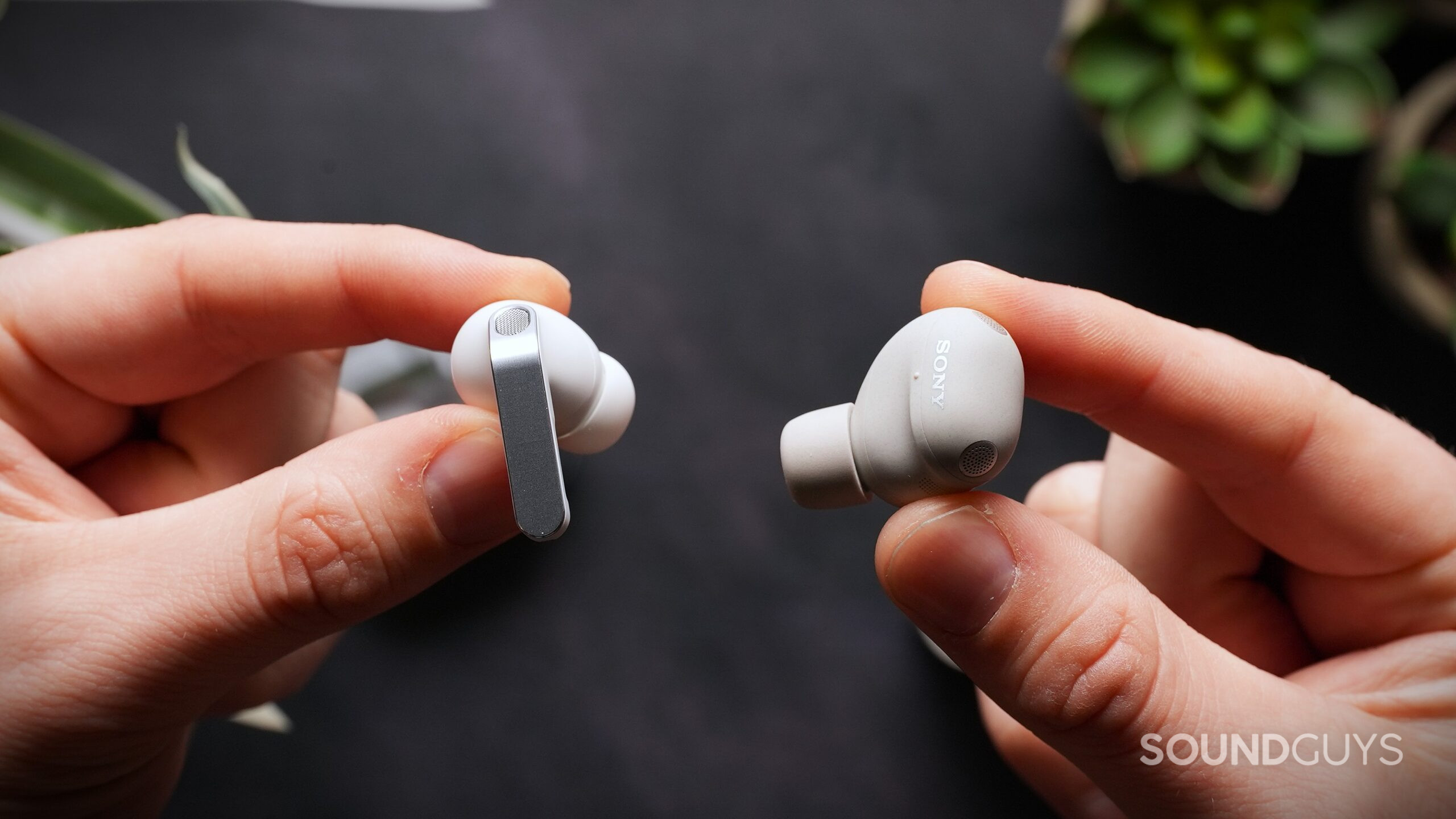
These two earbuds take pretty different approaches to design. The Galaxy Buds 4 Pro use a lollipop stem-and-bud shape with silicone ear tips, and each earbud weighs 5.1g, which sits comfortably in my ears. The stem has a pinch control that can be a little fiddly to use, and Samsung phone owners can optionally enable head gestures to manage calls, notifications, and more. The case is square and compact, with a clear plastic top, and supports both wired USB-C charging and wireless charging.
The WF-1000XM6 takes a chunkier approach — Sony has moved to an elongated oval pill shape with a matte plastic finish and a redesigned case with flat surfaces and a metal hinge. The larger size means they protrude more than the Galaxy Buds4 Pro, and they are far less ideal for smaller ears or side sleepers. These are big, bean-shaped earbuds with no stem and therefore have touch and tap controls on the surface, but no swipe controls.
I would say the Samsung case is the more pocketable of the two, and the Galaxy Buds 4 Pro’s lighter build gives them a slight comfort edge for all-day wear. The Sony case, while still pocketable, is taller and heavier. Samsung also has a stronger water-resistance rating here — IP57 vs. Sony’s IPX4 — meaning the Galaxy Buds 4 Pro can better withstand a sweaty workout at the gym.
Do the Samsung Galaxy Buds4 Pro or Sony WF-1000XM6 have more features?
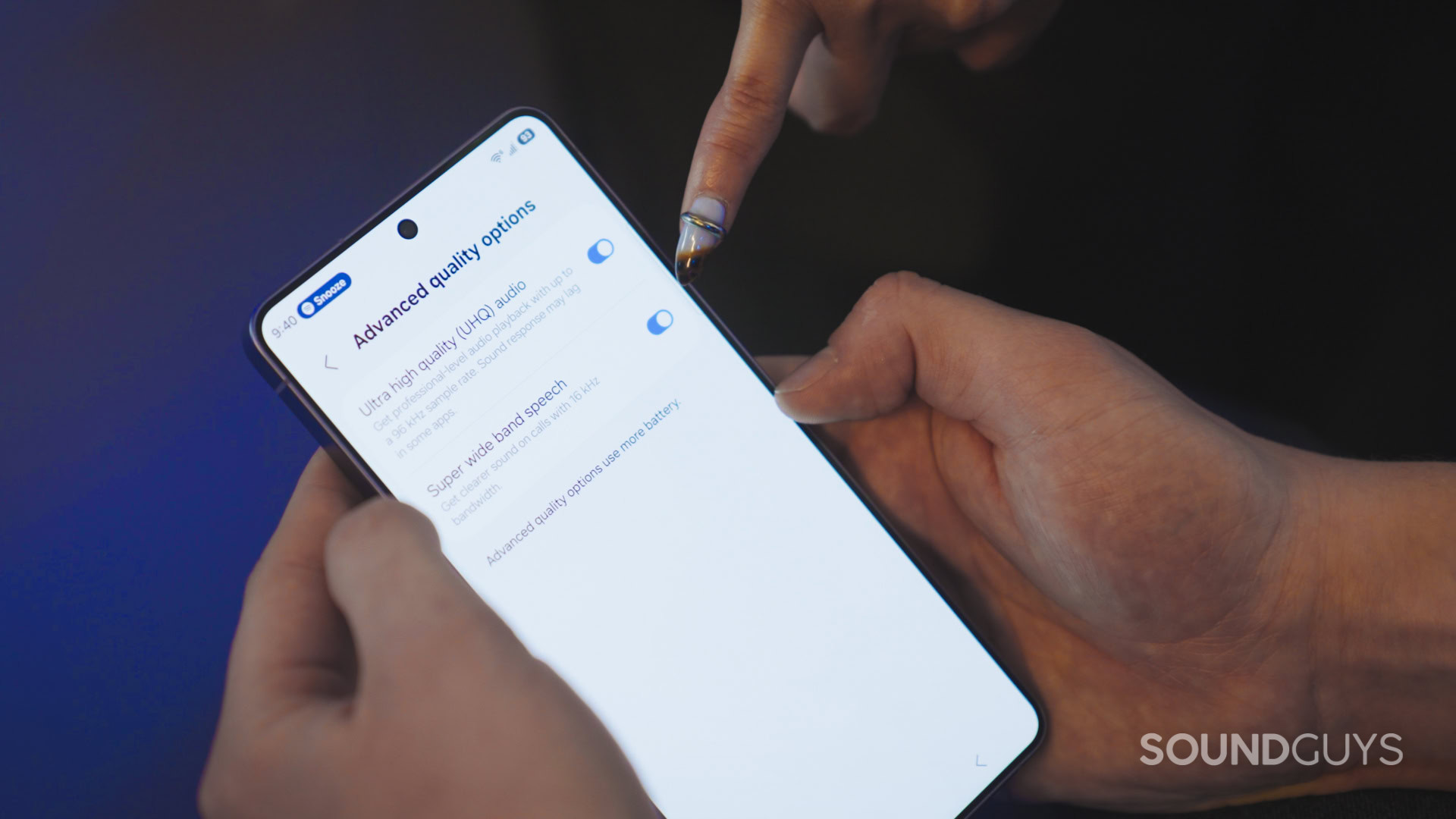
Both earbuds come with fairly robust companion apps: Samsung’s Galaxy Wearable and Sony’s Sound Connect. But the nature of their features differs in an important way. Samsung’s most compelling features, including ultra-wideband microphones, Ultra High-Quality audio, and Samsung Seamless Codec, are locked to recent Samsung Galaxy phones running One UI 6.1.1 or later. Without a compatible Samsung device, you’re limited to SBC and AAC. Still, Samsung does include some universally accessible features, like Adapt Sound (a personal hearing test that adjusts output to your hearing profile), spatial audio, Boost Dialogue, Find My Earbuds, and Auracast support.

Sony’s feature set is more platform-agnostic. The Sound Connect app offers a 10-band custom equalizer with ±6dB of adjustment per band along with multiple listening modes, Adaptive Sound Control, Speak-to-Chat, and Scene-Based Listening. LDAC support gives Android users access to high-resolution wireless audio up to 24-bit/96kHz. Auracast is also on board. Crucially, Sony supports true Bluetooth multipoint, letting you stay connected to two devices simultaneously. Samsung does not — you’ll need to use the Wear app to manually switch between devices.
For non-Samsung users, Sony’s feature set is simply more complete out of the box.
Both codecs support high-resolution audio up to 24-bit/96kHz, so on paper they’re evenly matched in terms of audio resolution. The key difference is bitrate: LDAC can transmit up to 990kbps, which is higher than SSC. However, a higher bitrate doesn’t automatically translate into better sound quality. Real-world performance depends on a number of factors including signal conditions and how well the codec handles interference. SSC has the advantage of tighter integration with Samsung devices, which can mean more stable connections and lower latency compared to LDAC in the same environment. For non-Samsung Android users, LDAC remains the more widely supported high-res option.
How do the Samsung Galaxy Buds4 Pro and Sony WF-1000XM6 connect?
The Galaxy Buds 4 Pro use Bluetooth 6.1, which is newer than the WF-1000XM6’s Bluetooth 5.3, and supports Swift Pair and Fast Pair for quick initial setup. Codec support, however, is limited to SBC and AAC unless you have a compatible Samsung device, in which case Samsung Seamless Codec unlocks. There is no true multipoint support.
The WF-1000XM6 runs on Bluetooth 5.3 with support for SBC, AAC, LDAC, and LC3 with LE Audio. While Bluetooth 5.3 is an older standard, the broader codec support — particularly LDAC for Android users — gives it a real-world connectivity advantage for most people. Multipoint works well, with reliable switching between devices.
Is battery life better on the Samsung Galaxy Buds4 Pro or Sony WF-1000XM6?
In our standardized testing, the Galaxy Buds4 Pro lasted just over 6 hours with ANC on, which is pretty much exactly what Samsung claims. The WF-1000XM6, by contrast, lasted 9 hours and 41 minutes in our testing — well above Sony’s own 8-hour claim.
If you absolutely need the extra few hours of listening time, the XM6 earbuds outperform here. However, both earbuds support fast charging via the case for quick top-ups on the go.
Do the Samsung Galaxy Buds4 Pro or Sony WF-1000XM6 block noise better?
Both earbuds perform at blocking out noise, but Sony has the edge. The WF-1000XM6 achieves an average of 88% noise reduction across the audible spectrum, compared to 84% for the Galaxy Buds 4 Pro.
Loading chart ...
Sony has upgraded to an eight-microphone array, while Samsung still employs three microphones on the earbuds. That gives the XM6 earbuds a lot more data to work with when analyzing and canceling outside noise. As you can see in the chart above, the Sony earbuds achieve much higher attenuation for both low- and high-frequency noise.
It’s worth noting that the Galaxy Buds 4 Pro is meaningfully better at ANC than its predecessor, the Buds 3 Pro, improving by 5–10dB in that problematic midrange band. But the WF-1000XM6 simply has better hardware to work with, and it shows in the numbers.
Do the Samsung Galaxy Buds4 Pro sound better than the Sony WF-1000XM6?
Both earbuds are genuinely good-sounding products, but they’re tuned differently, and those differences matter depending on what you listen to.
The Galaxy Buds 4 Pro lean dark: there’s a prominent bass slope, relatively even mids, and a rolled-off high end. This tuning works well for quieter, more dynamic music — acoustic guitar, older recordings, somber vocals — but can make busy, heavily produced tracks sound muffled and bass-heavy. Heavily mixed modern music, in particular, can feel lopsided without some EQ correction. The Clear EQ preset goes a long way toward addressing this, flattening out the mids and bass and bringing the 1–5kHz region forward.
The WF-1000XM6 tracks closer to our preference curve, with a modest bass and lower-mid emphasis and some added presence around 6kHz that contributes to a sense of detail and air. The result is a more versatile tuning — instruments and vocals are easier to separate, and the soundstage feels wider and more three-dimensional. The main caveat is that the bass emphasis increases with ANC enabled, which some listeners may find a bit much; turning ANC off reins in that low-end emphasis considerably.
Objective Measurements
Loading chart ...
The Galaxy Buds4 Pro starts out with stronger sub-bass strength at the very low end, but the XM6 earbuds maintain roughly 2dB more bass strength through to about 500Hz. Sony also has a slightly stronger ear gain bump through the presence region. Both earbuds share a similar peak around 5kHz that sits 3–4dB above our house curve, which may add some sharpness for sensitive listeners. The most meaningful difference in the upper frequencies is that the Samsung rolls off around 12kHz, reducing brilliance earlier than the Sony, which rolls off around 15kHz.
How would most people rate the sound from 1 to 5?
- Timbre (MOS-T) represents how faithfully the headphones reproduce the frequency spectrum and temporal resolution (timing information).
- Distortion (MOS-D) represents non-linearities and added noise: higher scores mean cleaner reproduction.
- Immersiveness (MOS-I) represents perceived source width and positioning: how well virtual sound sources are defined in three-dimensional space.
Interestingly, the two earbuds score identically on the top-line MDAQS metrics: both earn a Timbre score of 4.9, a Distortion score of 3.7, and an Overall score of 4.8. The WF-1000XM6 edges ahead slightly in Immersiveness with a 4.5 versus the Galaxy Buds 4 Pro’s 4.3, reflecting Sony’s stronger sense of three-dimensional space. In short, a large simulated panel of listeners would be happy with either, and the difference in predicted ratings is narrow.
Do the Samsung Galaxy Buds4 Pro or Sony WF-1000XM6 have a better microphone?
Both earbuds use bone conduction sensors to augment their microphone arrays, but Sony’s implementation is more refined. The WF-1000XM6 features eight microphones with AI-powered beamforming. They perform especially well outdoors and in wind, where voice clarity is maintained well. On a busy street, loud vehicles can still break through, but overall intelligibility holds up.
The Galaxy Buds 4 Pro’s microphone performance is more variable. In ideal conditions, it sounds good, but in windy environments, the bone conduction sensor can fail to engage properly if the earbuds aren’t seated securely, introducing more ambient noise and wind noise into calls.
Samsung Galaxy Buds4 Pro microphone demo (Ideal conditions):
Sony WF-1000XM6 microphone demo (Ideal conditions):
Samsung Galaxy Buds4 Pro microphone demo (Windy conditions):
Sony WF-1000XM6 microphone demo (Windy conditions):
Which microphone sounds better to you?
Samsung Galaxy Buds4 Pro vs Sony WF-1000XM6: Price and availability
The Samsung Galaxy Buds 4 Pro launched on February 25, 2026, at $249.99 at Amazon. The Sony WF-1000XM6 launched on February 12, 2026, at $329.99 at Amazon. Both are available now.
Should you get the Samsung Galaxy Buds4 Pro or Sony WF-1000XM6?

On pure specs, the Sony WF-1000XM6 wins most of the categories that matter: better ANC, longer battery life, superior microphones, true multipoint, and a more complete feature set, regardless of what phone you use. But the Galaxy Buds 4 Pro cost $80 less, and for Samsung phone users especially, that gap shrinks further when you factor in the ecosystem features that add real value, such as UHQ audio, Adaptive EQ, and tighter software integration.
For non-Samsung users, it’s a harder sell. Without a compatible Galaxy device, you lose some of the Buds 4 Pro’s best features, and the Sony simply outperforms it in most measurable ways. At that point, the $80 difference becomes the main argument for the Galaxy Buyds4 Pro — and whether that’s enough is a personal call.
Get the Samsung Galaxy Buds4 Pro if you:
- You own a recent Samsung Galaxy phone and want deep ecosystem integration
- Comfort and a lighter, more discreet fit are priorities
- You want strong water resistance (IP57) at a lower price point
- $249 is your ceiling, and you don’t want to compromise on sound quality
Get the Sony WF-1000XM6 if:
- You want better ANC and battery life
- You use multiple devices and need true Bluetooth multipoint
- You’re an Android user who wants LDAC for high-res audio
- Call quality in challenging environments matters to you
Which earbuds would you buy?
Both earbuds represent genuine flagship options, and neither will disappoint as a daily driver. But if you’re not locked into Samsung’s ecosystem, the WF-1000XM6’s across-the-board performance edge is hard to argue with, assuming you’re willing to pay for it. If the price gives you pause, I think it’s worth waiting to see if the Sony XM6 drops in price on sale.
Improved ANC
Distinctive design
What should you get instead of the Samsung Galaxy Buds 4 Pro or Sony WF-1000XM6?

If you’re an iPhone user, neither of these earbuds makes much sense. The Apple AirPods Pro 3 ($249 at Amazon) is the obvious choice, with deep iOS integration and ANC performance that beats both options measured here. If you want to save some money without sacrificing too much, the AirPods Pro 2 ($199.99 at Amazon) remains a strong value pick.
For Android users who want to spend less than either option here, the Nothing Ear (3) ($179 at Amazon) is worth a look. It includes bone-conduction microphones and delivers solid sound quality at a lower price. If you want something with more features and a smart charging case, the JBL Tour Pro 3 ($249.95 at Amazon) is a capable alternative that doesn’t tie you to any one ecosystem.
Thank you for being part of our community. Read our Comment Policy before posting.