All products featured are independently chosen by us. However, SoundGuys may receive a commission on orders placed through its retail links. See our ethics statement.
Before you buy the new Bose headphones, these Skullcandy cans have all the same tech for $80 less
Aug 25, 2026 — 5:00 AM ET


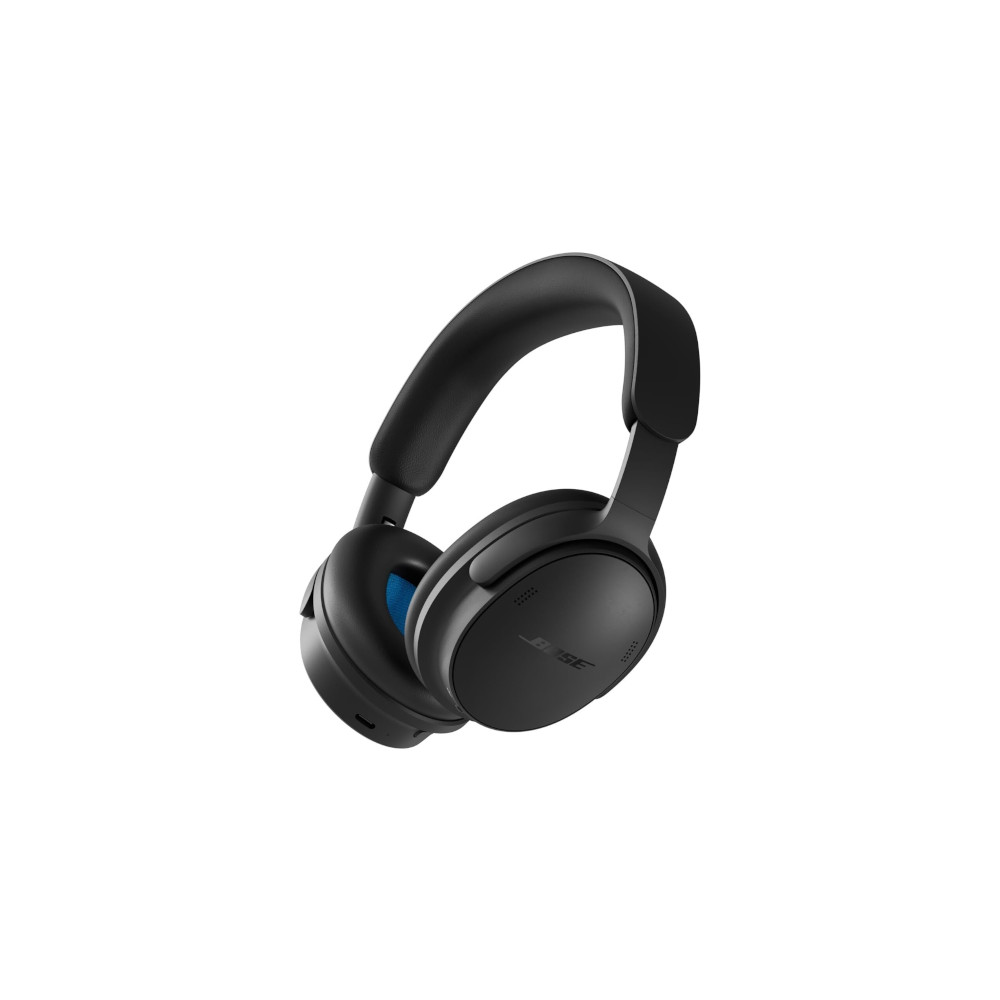
Bose’s new QuietComfort Headphones just launched, and they’ve got all the stuff Bose is known for: solid ANC, spatial audio with head-tracking, and a bass-heavy sound signature. Of course, that all comes with Bose’s premium prices, $359 at Amazon to be exact.
But what if I told you there’s another pair of headphones for $80 less that packs all the same official Bose tech, and even beats it in a few places Bose doesn’t? That headphone is the Skullcandy Crusher 1080 ANC. I’ve spent time with both and tested both pairs in our lab, and they offer a lot of what people who like Bose are looking for, but for $80 less.
Which headphones would you buy?
Same Bose systems, different results
The Skullcandy Crusher 1080 ANC is one of a handful of headphones on the market to license the “Sound by Bose” label. However, they are currently the only set of cans to license more than just the tuning from Bose. Bose also supplied the noise canceling system, the spatial audio engine, and the microphone processing.
Starting with ANC, both headphones use Bose’s QuietControl adaptive ANC, which actively adjusts to your fit rather than canceling noise in the same way, regardless of how good your seal is. In our testing, the Bose QuietComfort Headphones (2nd Gen) reduced perceived noise by 85.1% with ANC on. The Crusher 1080 ANC came in a bit lower at 81%, but really, most people won’t notice that 4% difference in their daily commute.
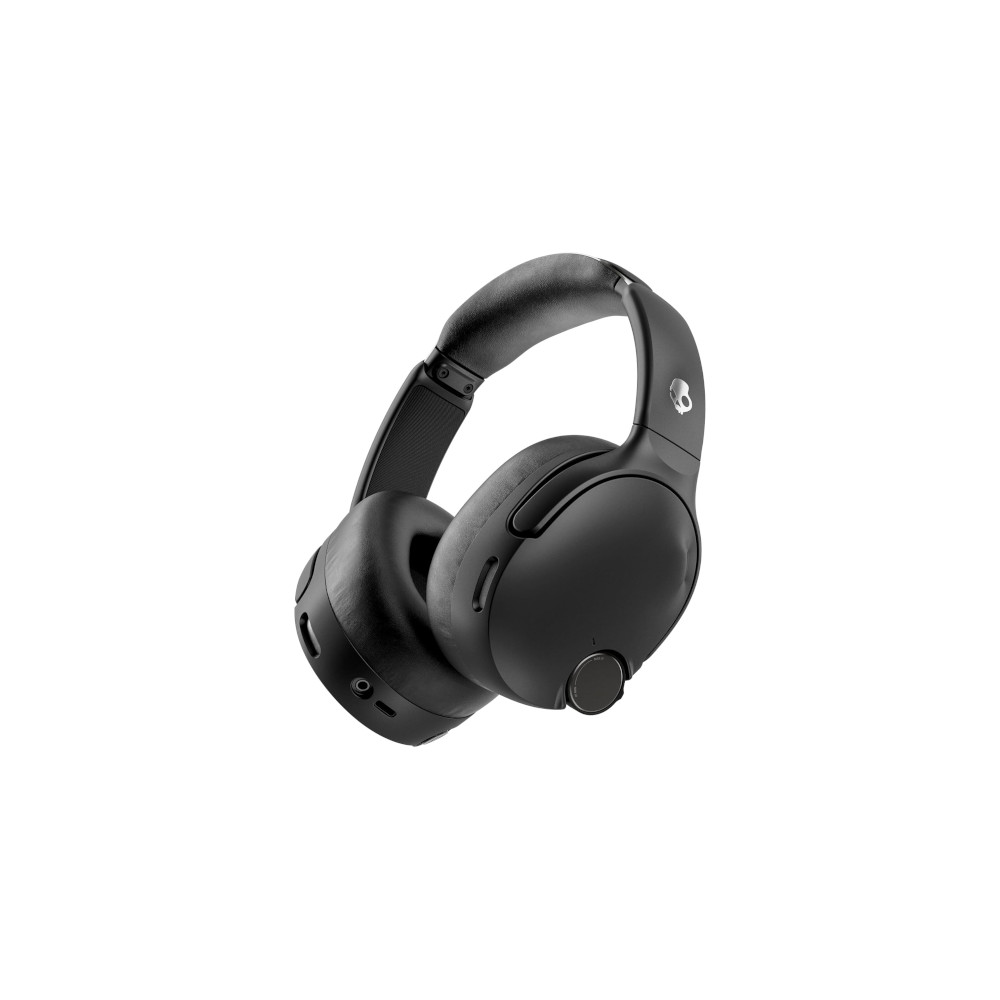
The Crusher 1080 ANC have Sound by Bose, Bose QuietControl ANC, Bose TrueSpatial, and Bose SpeechClarity.
Spatial audio is also close between the two. Both run Bose’s head-tracked TrueSpatial engine, letting you anchor sound in front of you like speakers (Still Mode) or have it move with your head (Motion Mode). Bose gives the new QuietComfort Headphones a third option, too: Cinema Mode, built specifically for movies, TV, and podcasts to sound more spacious while keeping dialogue centered in front. However, I found that with the Crusher 1080 ANC, I was able to achieve a similar effect with Still Mode, which gives you the same anchored, speaker-like sound with sounds coming from around you for whatever you’re watching.

Battery life is where things get a little embarrassing for Bose. In our standardized battery test, the Crusher 1080 ANC ran 50 hours and 20 minutes with noise canceling on. Bose only claims 24 hours of playback with ANC on for the QuietComfort (2nd Gen), dropping to 18 with spatial audio enabled. Even taking Bose’s own number at face value, the Crusher’s tested result more than doubles it.
Skullcandy carries more than twice the battery life
Calls are the last piece of the shared tech: both headphones run Bose’s SpeechClarity voice processing to clean up your mic. In our testing, the Bose QuietComfort Headphones (2nd Gen) kept voices clear in quiet and moderately noisy office conditions, but the mic struggled noticeably once wind entered the picture outdoors. The Crusher 1080 ANC held up in a similar range, handling background noise well across most of our test conditions, though it also stumbled once things got echo-heavy in a reverberant room. Neither pair is winning any awards for call quality, but they’re in the same ballpark and suitable for casual calls.
Would you like more bass with your bass?

Then there’s the EQ and the bass system. You get a five-band equalizer in the Skullcandy app, each with specified bands, versus Bose’s three-band EQ, which still doesn’t list the frequencies it controls. That alone gives you more control over the tuning. Speaking of which, Bose has a reputation for bass emphasis, so if you are a bass-head considering Bose for that reason, let me tell you: this is where the Crusher headphones really earn their name. If you don’t believe me, take a look at the frequency response measurements chart below:
Even with the Bass Boost EQ enabled on the QuietComfort headphones, the bass response of the Crusher 1080 ANC is a whole different ballgame. And that’s before you even touch the Crusher dial itself on the back of the left ear cup. It controls a separate set of haptic drivers layered on top of the regular ones, so instead of just hearing more bass, you feel it. Literally, a physical vibration against your head that tracks the low end in real time. Turn it up, and you go from a subtle rumble to something that can genuinely rattle your skull. And yes, the highs measure higher on the Crusher too, but they don’t come across as brighter overall, since all that extra bass balances things out.
Personally, I do prefer the overall tuning of the Bose QuietComfort Headphones (2nd gen) for listening to music, but again, if you are a bass head that listens to a lot of EDM or hip-hop, then you’ll have a lot of fun with the Crushers.
Comfort and connectivity
Comfort is another area where I might give a slight edge to Bose, since they are much lighter at 230 grams compared to the Crusher 1080 ANC, which weighs 374 grams. However, that is because the QuietComfort (2nd gen) is mostly plastic, whereas the 1080 ANC has a metal headband, which is more durable. They are also carrying those extra crusher drivers and have larger, more plush earcups to accommodate them.
Bose also sticks with proper physical playback and volume buttons instead of touch controls, and throws in two cables in the box, a USB-C-to-USB-C and a USB-C-to-3.5mm. The Crusher 1080 ANC ships with a 3.5mm AUX cable and a single USB-C-to-USB-C cable that pulls double duty for charging and wired audio.

Wired audio is technically an advantage for Bose, however. The new QuietComfort Headphones support lossless USB-C input up to 24-bit/48kHz, and mic output up to 24-bit/16kHz for calls over the same cable. In practice, that number mostly matters if you’re feeding the headphones a high-resolution source, like a lossless stream or a FLAC file, and listening closely enough to notice the difference from a compressed Bluetooth connection. Most people won’t hear a dramatic gap either way, so I’d say this is only a real edge for Hi-Res audio enthusiasts specifically.
At the end of the day, Bose licensing its own tech out to Skullcandy means you’re no longer paying $359 just to get Bose’s noise canceling and spatial audio. If you just wanted Bose’s tech without the Bose price tag, and especially if you are a basshead, the Skullcandy Crusher 1080 ANC gets you there for $80 less.
Thank you for being part of our community. Read our Comment Policy before posting.