All products featured are independently chosen by us. However, SoundGuys may receive a commission on orders placed through its retail links. See our ethics statement.
IEMs are a strong alternative to gaming headsets regardless of genre. I prefer them because they take up less space, are comfortable to wear for long sessions, and won’t leave a dent in my head. A built-in mic isn’t a requirement for everyone either; plenty of gamers play solo or local co-op and don’t need one. That’s why you won’t find gaming-specific IEMs like the Razer Moray dominating this list. I’ve tested over 25 IEMs, and instead of focusing purely on FPS gaming, I have picks for every gaming genre.
Most gaming IEM recommendations default to competitive shooters, but that’s only a slice of what people actually play. There are story-driven games like Clair Obscur: Expedition 33, with dense dialogue and sweeping soundtracks. Action games like Monster Hunter Wilds, where environments are vast and monsters are loud. Also, there are cozy games where you’re quietly spiraling into debt on an island because of a money-hungry raccoon. The IEM you pick doesn’t have to work across all of them; what’s important is that it does especially well in the one you play the most.
Already own something?
Anything we have measured, not just the picks. It becomes a second curve on every chart here. Sign-in needed to publish.
Price • Able to position sound easily • Build quality
MSRP: $99.99
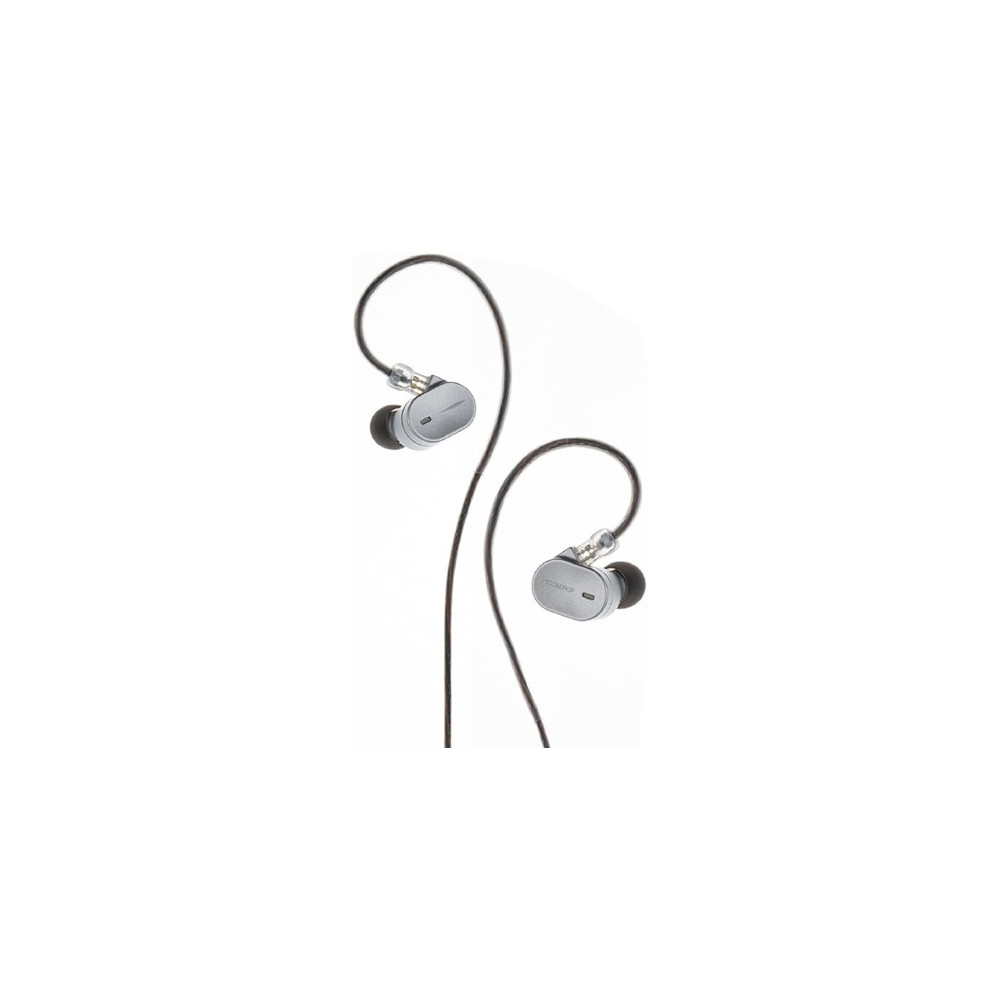
Dynabird delivers a sound that caters to the discerning competitive gamer.
The Oriveti Dynabird is great for competitive shooters. The ability to hear and locate the position of the sound is crucial. The Dynabird delivers that, without compromising on sounding good when listening to music or movies.
The Oriveti Dynabird is well-tuned for competitive gaming without sacrificing everyday listenability in other gaming genres. For music, it’s a touch light on treble and slightly overemphasizes sub-bass, but unlike most gaming IEMs, it’s enjoyable during long listening sessions. The way they’re tuned means you won’t miss out on competitive performance while still enjoying casual gaming during your downtime.
In competitive gaming, I could easily pick out gunfire, enemy movement, ability cues, and team communication without much concentration. The bass keeps its rumble without drowning out story dialogue, and the treble stays free of distracting sibilance. The stock eartips seal well enough that, with passive isolation only, outside noise doesn’t compete with the game audio, making them a comfortable pick for cozy games.
In games like Apex Legends, I could easily pick out gunfire, enemy movement, ability cues, and team communication simultaneously. The bass keeps its presence without drowning out comms, and the treble stays free of sibilance that would otherwise mask useful audio in a full firefight. Passive isolation isn’t the best option available, but it blocks enough that what gets through doesn’t compete with the game. Pinpointing the direction of a sound takes almost no effort, which is exactly what you want in a competitive shooter.
In action games, the Dynabird does well. I can feel the rumble in bassy sections, such as explosions or earthquakes, but it’s not skull-rattling. The crack of gunshots doesn’t pierce your ears like it would if you’re right in the middle of the action. It doesn’t feel like you’re completely immersed in the middle of the action.
In dialogue-focused or story-driven games, the Dynabird does well. There’s a good amount of separation, so the dialogue is easy to understand while still enjoying the background music. The background music doesn’t overwhelm the dialogue, even in busy scenes where it tends to get loud during dramatic or tense moments.
Most IEMs tell you something is behind you. The Dynabird tells you where.
For spatial depth, it’s easier than usual to judge how far away a firefight is, which helps with map decisions in battle royales like Apex Legends and Fortnite. In tactical shooters like Valorant and CS2, the spatial width is precise enough to pre-aim before an enemy breaks cover. Although good game sense still matters, experienced players won’t move loudly until the last moment.
For dialogue-heavy games, the top priorities are going to be clarity, comfortable tuning, and comfort. Separating sounds will help keep vocals at the front of the mix. Closely followed by making sure the IEMs don’t sound fatiguing when listening to them, which means we don’t want too much treble energy. Since story games are played for roughly 2 to 4 hours at a time, comfort is very important.
Which is why the top pick for dialogue-heavy story games will be the Truthear Gate. In games like Cyberpunk 2077, the dialogue doesn’t get lost in the mix, even with background music and other environmental noise. High-pitched sounds like the crystalline chimes aren’t painful, and the Truthear Gate is easy to listen to for hours on end without many issues. They fit in my ears just fine, and they’re light without any notable points of pressure. Wearing these for over 6 hours at a time didn’t pose any issues either.
In cozy games like The Legend of Zelda: Echoes of Wisdom, high-pitched sounds such as the summoning chimes never turn painful, making for easy hours-long sessions. Some listeners may find the softened treble a little unnatural, though. Action games fare less well: in Indiana Jones and the Great Circle, gunshots lack a powerful crack and the exaggerated punches fall flat. They don’t have much rumble for action games and aren’t very accurate with sound positioning.
Voices stay clear even over music and ambient noise
Competitive play exposes the Gate’s limits most. In Apex Legends, positioning is crude, with sounds registering only as somewhere to the left or right, so an L-Star firing from behind went unnoticed, and depth is shallow, with sounds seeming either close or not at all. Distinct cues are similarly hard to pick out in League of Legends, like teleport twinkles, though the set is passable there because teammate comms stay audible even mid-clash.
Best IEM for action and adventure gaming: Meze Audio Alba
Price • Small size • Deep bass • 3.5mm to USB-C adapter
MSRP: $159.00
Big bass in a small package, for discerning bass heads.
The Meze Alba are an interesting pair of earbuds, especially if you want a refined bass experience. You will likely find they are a step up in sound quality compared to most consumer earbuds, but keep in mind they don't have general consumer-facing features such as a microphone.
In action and adventure games, you likely want to be in the action. Immerse yourself in the action without any compromise; explosions should rumble, the crack of ice breaking beneath your very feet painfully obvious, vehicles whooshing by with breakneck speed. You’ll want it loud and in your face for the most part.
Putting you in the action is the Meze Audio Alba. It has a deep and punchy bass, but not so much that it muddies the overall sound. There are times when the treble feels painful to the ears, which is exactly what we want when being immersed: to feel that same ear-piercing shattering of glass panel you would flinch from in real life. Bass from explosions has enough pressure to feel the rumble. The vocals stand out, feeling forward in the mix even when in busy scenes. The separation between sounds is excellent, but it doesn’t sound very wide. The sound feels like it comes from between my ears, leading to the feeling of sounds panning from left to right incredibly fast, and constantly feeling close. This is horrible in competitive shooters, making them difficult to use.
Bass from explosions has enough pressure to feel the rumble. The vocals stand out in dialogue-focused games, feeling forward in the mix even when in busy scenes. The separation between sounds is excellent, so you can hear everything as you dive into the action. The tuning of the Alba is also great for when you’re listening to EDM or drum and bass.
Bass from explosions has enough pressure that you can feel the rumble
While playing games such as Apex Legends, pinpointing distance and location was confusing. Where it covers that disadvantage is in its ability to separate sounds, which is important for listening to team call-outs or for game audio cues in MOBA (Multiplayer Online Battle Arena) games such as League of Legends. This makes the Meze Audio Alba a great choice for gaming, except for competitive shooters, where most players rely on accurate audio positioning. For some people, an included mic would be good here, but it is almost always better to get a proper microphone. Our current pick doesn’t include a microphone, but you can easily get a replacement cable with one built in.
When you’re looking to relax in cozy games like Animal Crossing and Tamagotchi Plaza, you’ll want to prioritize comfort. You don’t want anything getting in the way between you and staying on the couch for hours playing A Short Hike, instead of going on a short hike, or neatly and aesthetically arranging a room in the game Unpacking while being buried in a blanket instead of cleaning your room. I’m definitely, totally not speaking from experience at all.
If you’re looking for earbuds that are comfortable enough to wear while you fall asleep, the Moondrop Chu III are very small and comfortable. I was able to wear them all day without any issues. The vocals aren’t drowned out by the bass and other instruments. There isn’t any painful sibilance or overbearing sub-bass that would make them feel fatiguing to listen to over time. There isn’t much rumble to the bass, which makes action games fall flat, but that’s kind of the point since you’re trying to relax instead of jump into the action.
For general gaming, the Chu III does a great job. However, it’s not tuned for competitive shooters. In Apex Legends, I could pick out footsteps amid the gunfire and abilities, but it took a little effort to separate those important cues from all the noise.
limited localisability makes the Chu III a so-so pick for competitive shooters
Pinpointing where sounds came from was harder. Spatial depth felt shallow, so I had a tough time judging how far away an enemy was. Direction was similar: I could tell the general side a sound came from, but not precisely enough to react quickly. That limited localisability makes the Chu III a so-so pick for competitive shooters, but it’s well suited to dialogue-heavy story games, where those forward vocals help.
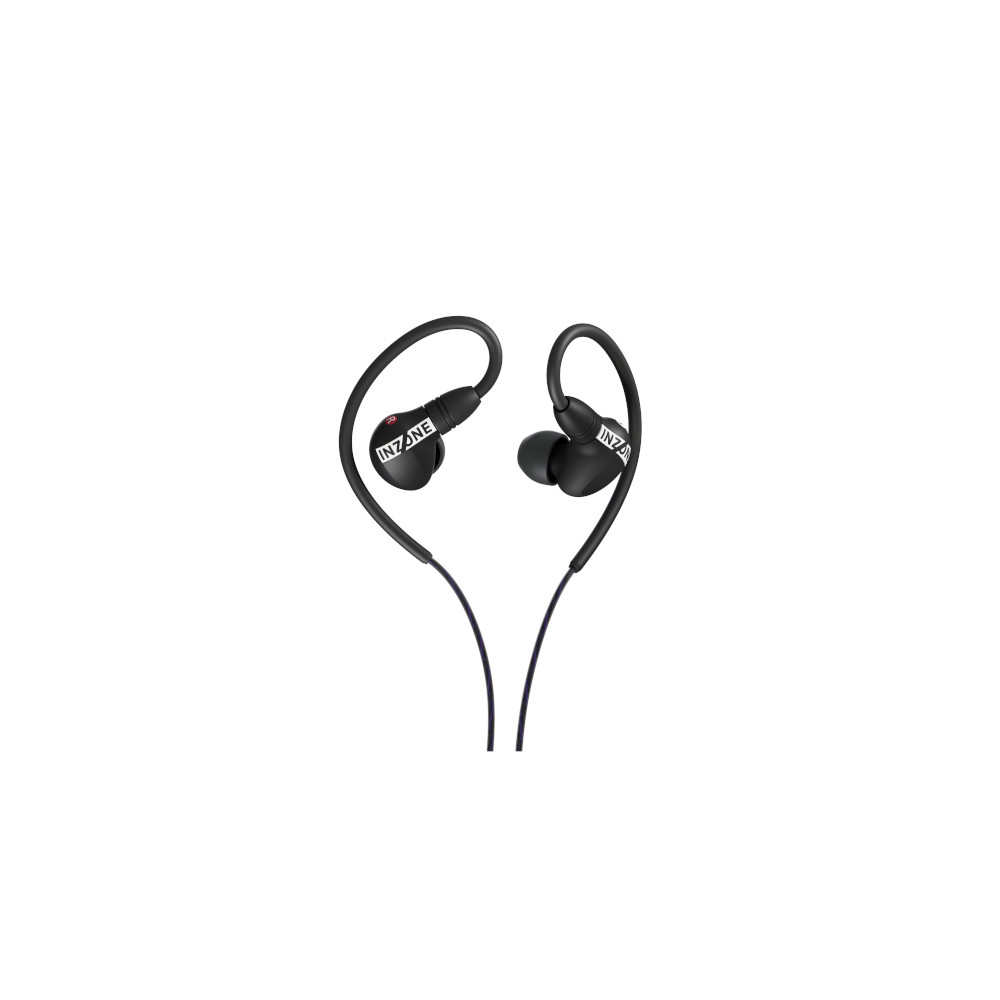
Best IEM for competitive FPS gaming: Sony INZONE E9
For competitive games, sound separation and isolation matter more than raw positioning accuracy. Separation keeps cues like a flanking enemy or a third party from behind audible over the roar of a firefight, and isolation, a close second, shuts out the outside world. Spatial width and depth come last, though they still count: width helps you pre-aim where a flanker will break cover in games like Valorant and Counter-Strike 2, while depth tells you how far a fight is, which helps with decisions in battle-arena games like Apex Legends or Fortnite.
In Apex Legends, where I have the most experience, the Sony INZONE E9 delivers on exactly those priorities. Separation and clarity are excellent, so footsteps cut through sniper shots, explosions, and raging abilities, and the fairly accurate stereo imaging made it easy to pinpoint enemy flankers. Depth is good too, clearly distinguishing fights that are far, mid-range, close, or right next to me. Sony focused on separation and isolation first, and strong imaging was a byproduct. Variety gamers and streamers should look elsewhere, since the E9 is dull to listen to, action games fall flat, and music isn’t enjoyable. But as a highly specialized FPS IEM, it’s the best I’ve used.
Although action and FPS games are closely related, the Sony INZONE E9 lacks bass. Not that it has none, but it lacks punch. This makes explosions sound like a bass-riddled fart in the wind. The expansive depth of space can make you feel like you’re far from the action. While the Sony INZONE E9 sounds great for keeping a cool head in competitive shooters, it makes most tense action scenes feel a little dull.
The tuning of the Sony INZONE E9 doesn’t evoke much emotion, and the background music doesn’t feel very exciting
For story-driven games, the separation helps you hear dialogue clearly despite background music. However, the tuning of the Sony INZONE E9 doesn’t evoke much emotion, and the background music doesn’t feel very exciting. In scenes focused on visuals with music, it doesn’t sound bad, but it can be fatiguing to the ears. The relatively fatiguing sound of the Sony INZONE E9 doesn’t make it great for cozy games. Even if the earbuds are comfortable to wear for long periods, they’re not the most pleasant to listen to for long periods when relaxing.
Not all is lost outside of competitive FPS gaming. With the included USB-C dongle, you get access to the Sony INZONE app. The app lets you customize the IEM’s sound with EQ. That way, you can adjust how the INZONE E9 sounds for everything else.
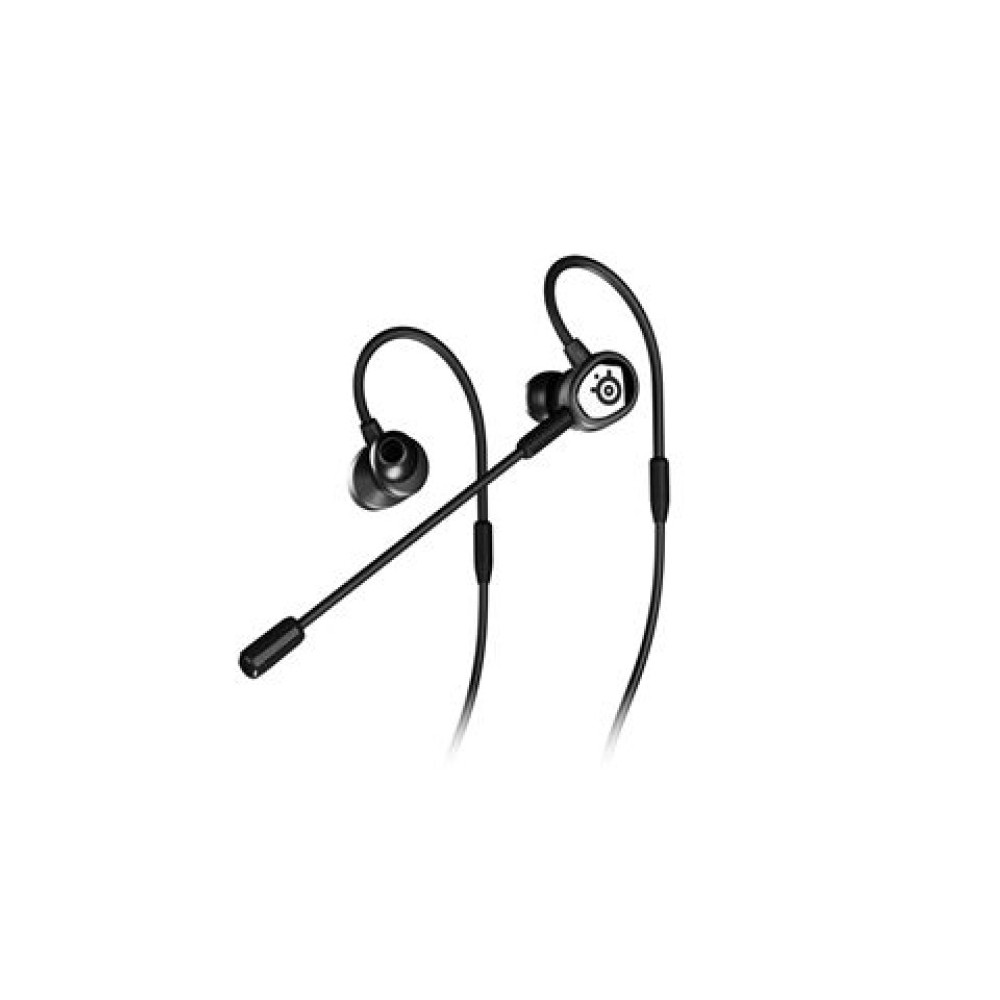
Best gaming IEM with a built-in microphone: SteelSeries Tusq
The SteelSeries Tusq is one of the few IEMs that have a dedicated boom mic. This is for those who want everything in one package. No need to have a dedicated mic in front of your face, just the boom mic to the side. The boom mic on the SteelSeries Tusq is also removable, so you aren’t stuck with it when you don’t need it. You aren’t stuck without a microphone either, as there is an inline mic for when you’re not using the dedicated boom mic. If you’re looking for pure mic quality, you’re always better off buying a dedicated microphone.
The best IEMs for gaming: Honorable mentions
Alternatives if the size or fit is unlikely to fit your ears, or a close second that might have done well, but did not do quite as well as the best in their category.
Comfortable fit • Para-aramid MMCX cable is replaceable • Good sound
MSRP: $149.95
The Sennheiser IE 200 lends some authority to your analytic listening sessions with its relatively subdued frequency response that works for casual listening too. That it's easy wearing for hours at a time is no small feat, and the sturdy over-ear cabling ensures a solid fit. With a price that's relatively affordable, it opens up a niche market to newcomer enthusiasts and pros.
田田中亮大Signed-in owner. This member signed in to publish, so their reviews count for points and show on their profile.Owner · 6–12 months↻ Would buy again
MSMayank SinghSigned-in owner. This member signed in to publish, so their reviews count for points and show on their profile.Owner · Over 2 years↻ Would buy again
Did this help you decide?1 of 1 found this helpful
The Sennheiser IE200 is commonly used in the music industry for monitoring, but its small size and great sound make it perform well across most game genres.
Bass heavy • Spatial width and depth • Flashy design • Separate cable with inline mic
MSRP: $69.99
Great for gaming, but only for those looking at a bass-rumbling casual action gaming experience. For music listeners, the bass may be too much even for some bass heads. For those who want the bass to take center stage, this IEM is for you.
The Kiwi Ears Cadenza are for those looking for high-fidelity audio under $50.
At $35 the Kiwi Ears Cadenza are a great value pick for those on a budget, and looking for a Dark but neutral leaning sound signature. For something relaxing and non-fatiguing, the Cadenza are good choice.
The Kiwi Ears Cadenza is for those looking for a warm-leaning earbud that is easy to listen to for long periods; however, it does get physically warm in the ear as well.
We live in a golden age for IEMs, and the Moondrop Aria 2 is an excellent set of in-ears. Though heavy, the product is durable, attractive, and sounds great. A good option for someone who has a DAP, these earbuds provide a very flexible wired listening experience.
AAjaySigned-in owner. This member signed in to publish, so their reviews count for points and show on their profile.Owner · Under a month↻ Wouldn’t buy again
The Moondrop Aria 2 is another good recommendation for action games if you’re looking for an IEM that has a little more spatial depth.
What to look for in a good gaming IEM
The first place to start when looking for a good gaming IEM is comfort. When looking for what makes an IEM comfortable, it is a combination of fit and sound tuning. You’ll need to know what size typically fits your ears, and what type of sound tuning you find distasteful. That lets you know what to avoid, making it easier to decide.
Comfort comes first. Something that sounds better doesn't matter when you're uncomfortable the entire time
When you’re looking to upgrade, you’ll need to consider why. Are you unable to hear the dialogue clearly? Do you have difficulty pinpointing the location of your opponents? There are a slew of points you should consider before making a purchase. Here are some that are worth looking over:
What connector do you need? USB-A, USB-C, or even 3.5mm?
Would you like an inline microphone?
Does the IEM have enough ear tip sizes to make a good seal?
Is the cable permanently attached? or is it easily replaceable?
What section of the tuning do you find fatiguing? Bass, mids, or treble?
Do you find it difficult to understand the dialogue in a busy scene?
Do important sound cues get overpowered?
Are you unable to tell the direction or distance from which a sound originates?
How long are you going to be wearing the IEMs?
Why you should trust me
Shiun Okada / SoundGuys
Wired IEMs are still some of the most used tools on stage or on stream
Not only have I been playing video games since I was a kid, but I’ve also been trying out and collecting audio gear for decades. I’ve reviewed dozens of IEMs and headphones here at SoundGuys, in addition to those I’ve owned for years. Currently, I own and rotate over 15 headphones and over 15 IEMs, ranging from budget picks under $20 to luxury models over $1000. After testing and owning an excessive number of audio gear, I can discern the strengths and weaknesses of the audio tuning of IEMs and headphones in both gaming and critical listening.
What makes a good IEM for competitive gaming is clarity above all else. This is because it won’t matter how accurate the spatial positioning is if you can’t even tell opponents are there in the first place. Passive isolation is a close second, as again, if you’re easily distracted, it will take more effort to parse out important sound cues.
Readers' poll
What matters most when you game with earbuds?
53 votes
When testing IEMs, I mainly use the competitive game I’m most familiar with and a casual one I’m currently playing. While I’ve played competitive games such as Dota 2, Overwatch, Counter-Strike, and Valorant, I’ve pretty much settled into Apex Legends. It’s a game that has the worst-case scenario you would face when playing a competitive game. I’m trying to listen for footsteps between multiple teams in the middle of gunfire, team chat, and many abilities. Not only that, there isn’t only one set of sounds for footsteps. The footsteps range from the typical boot thump to the clinking of metal brushing against the ground. To test the IEMs, I go through a few rounds of warm-up to familiarize myself with them and note their strengths and issues. To confirm the findings, I play some ranked games, where the stakes are higher, and opponents are actively trying.
As for gaming in general, it depends on the type of game. In general, most games sound better when the IEM’s sound tuning matches the game’s genre. For example, in cozy games, the main purpose is to relax by immersing yourself in another world. This is where comfort in both the physical and sound tuning aspects matters most. As for action games, you’ll want to feel hyped up and enshrouded by the action. That’s where you want a lot of impact in the bass, and a shallow spatial depth to keep you hyped through the action. The lab data also helps ensure that the decision makes sense for you. What I hear can differ from what you hear, so by looking at the lab data, you can see whether the tuning has any foibles you personally dislike. So depending on what type of game you like to play and how much the tuning matches your ears, your best IEM for gaming will vary.







Conversation
Read what readers said or add your take.