All products featured are independently chosen by us. However, SoundGuys may receive a commission on orders placed through its retail links. See our ethics statement.
I tried Sony’s revived Walkman headphones, and nostalgia only goes so far
Nov 7, 2026 — 4:30 AM ET

Measured in our lab
The bottom line
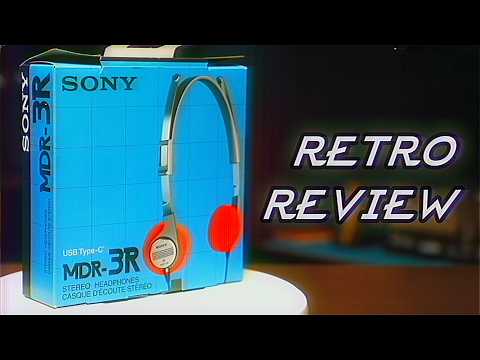
The Sony MDR-3R is a rebrand of the 1979 MDR-3, but with USB-C connectivity and a microphone added. One of the most important headphones of all time, it definitely shows how far headphones have come since the dawn of the 1980s.
What we like
What we don't like
Our assessment
Editor-scored from hands-on use, not measured- Isolation / Attenuation
- 0.5
- Durability / Build Quality
- 6.0
- Design
- 7.0
- Connectivity
- 8.5
- Portability
- 9.0
- Comfort
- 9.0
- Features
- 5.0
- Value
- 5.0
- Product release date
- November 5, 2026
- Original price
- $59.99
- Weight
- 38g
- Model number
- MDR-3R
- Waterproof
- Not rated


Retro fans have been eating good these last few years with a resurgence of 80s-era style making a comeback. But when Sony brings back the OG Walkman’s headphones, the MDR-3, is there a place for them in 2026? Or is the Sony MDR-3R merely a novelty item for nostalgic music fans? Let’s take a listen.
This article was published on November 7, 2026, and this is the first version of the article. Updates will follow as the market changes.
What’s it like to use the Sony MDR-3R?
The Sony MDR-3R definitely scratches an itch that’s hard to describe, but it’s plain to see how far headphones have come in the last 46 years just on performance alone.

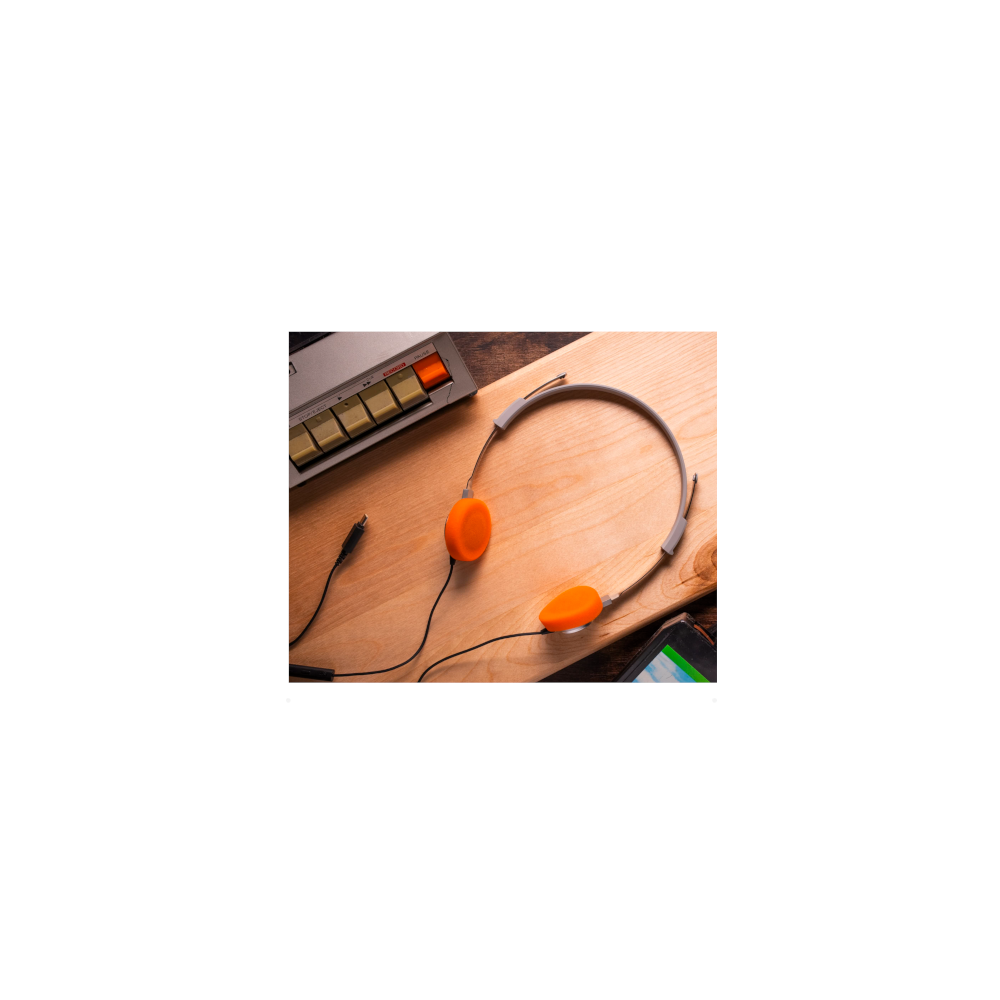
For those of you not rocking out in the early 80s, the Sony MDR-3R — based on the original MDR-3 — is quite different than most of the popular headphones on the market now. Instead of thick padding, heavy components, and a large profile: the Sony MDR-3R is the complete opposite in just about every way. The band is plastic, allowing the metal strips holding the yoke of the speaker housings to slide to fit without any notches or clasps. Each speaker housing can move a bit to fit your ear, and each driver element is hidden by a foam pad that’s very easy to remove and replace. The y-shaped cable hanging from the headphones isn’t removable, and terminates in a USB-C plug rather than the venerable old 3.5mm TRS.
Sony made some tasteful updates to the design of the original MDR-3 for the Sony MDR-3R, like using slightly different foam for the pads — mercifully less scratchy than the originals. If you don’t like the orange pads, there’s also blue alternatives in the packaging. Additionally, there’s a mic remote hanging from the left ear’s wire that contains controls for volume, and play/pause. Like most older products, the Sony MDR-3R doesn’t have any ingress protection, so you take these into the rain at your own risk. I definitely wouldn’t work out in these, though I know many will anyway.

Like the originals, the metal band of the Sony MDR-3R is mercifully thin and light, allowing the product to retain its ultra-light 38g mass. That’s about one seventh the weight of the Sony WH-1000XM6! Quite possibly the biggest selling point of this style of headphones is the comfort — assuming you don’t mind things actually resting on, or touching your ears. This ultra-light design came about as an intentional contrast to the extremely large and heavy headphones of the late 70s and early 80s, specifically to get people to buy into more portable music machines. Now that ANC headphones are mostly above 200 grams, it’s not hard to see the appeal of an ultra-light set of headphones.
Many of the people I know who have tried these highlight the fact that it’s easy to forget you’re wearing them. And if I’m being honest, I think that’s where a lot of the fervent praise for these headphones online is coming from. With wireless models, the weight of headphones has rubber-banded back to the heavy end of things over the last 20 years or so, and there’s a lot of folks out there looking for something ultra-light like they were used to in their youth.

And that highlights the appeal of the Sony MDR-3R: nostalgia. It looks, feels, and functions like something similar to what many grew up with, and it definitely scratches that itch. But in the long term, there will be more than a few people who start to notice that the tradeoffs of using the Sony MDR-3R are significant, and there are good reasons why people left this style of headphone behind. Namely, the lack of noise attenuation and near-impossibility of getting good bass out of an unsealed fit.
How does the Sony MDR-3R connect?
The Sony MDR-3R connects to its sources over USB-C, and that’s it. There’s no adapter for analog sources, nor is there any wireless capability. Though that seems like a good thing, just be aware that some older devices with USB-C ports may not support the headphones, or there might be other annoyances waiting for you. For example, I was unable to use the Sony MDR-3R with a Samsung Galaxy S24 despite there being no reason it should have been an issue.

Additionally, because the headphones have their own DAC within the electronics, digital audio players like Sony’s more modern Walkman devices will not work the way you expect them to with the Sony MDR-3R. For example, you’ll likely get full output by default, or have odd behavior with the Sony MDR-3R. But your computer or smartphone should be totally fine, provided they don’t have bizarre permissions issues.
Finally, you do not need an amp for USB-C headphones like the Sony MDR-3R, as it pulls power from the source device while plugged in. The headphones handle everything.
What’s it like to listen to the Sony MDR-3R?
One of the main reasons people started to move away from this headphone style in the first place was the emergence of ANC and wireless headphones — and it’s painfully obvious when using the new Sony MDR-3R. Though it seems like comic overkill to test a product like this, it’s important to know what you’re getting into before you ring up your credit card balance.
Reviewer’s notes

Editor’s note: this review uses a hover-enabled glossary to describe sound quality based on a consensus vocabulary. You can read about it here.
Can you use the Sony MDR-3R for phone calls?
One of the weirdly-good bright spots of the Sony MDR-3R is the microphone, as most wired headphones excel with mic sound quality. If you take calls at home a bunch, this might not be a bad fit for you.
Sony MDR-3R microphone demo (Ideal conditions):
How does the microphone sound to you?
Sony MDR-3R microphone demo (Office conditions):
Sony MDR-3R microphone demo (Street conditions):
Sony MDR-3R microphone demo (Windy conditions):
Sony MDR-3R microphone demo (Reverberant space):
Though the microphone isn’t amazing at noise rejection, under ideal conditions the mic is quite good. Wired headphones tend to behave this way, so no surprises here.
Should you buy the Sony MDR-3R?

I like the Sony MDR-3R. But I don’t recommend getting it unless you’re a collector or just really keyed into on-ear headphones for nostalgia’s sake. There are more performant headphones of a similar style that have been made in the last few years, and can be found for less money than the Sony MDR-3R commands. Though the MDR-3R isn’t what I’d call expensive, it’s definitely comparatively pricy to the competing FiiO, Koss, and Moondrop options of a similar build. The Koss, in particular, is a set of headphones that have been in production since the 80s with a few interruptions and updates for exactly the reason you’d expect: The MDR-3 may have made the style popular, but the Koss PortaPros really won the competition for best ultra-light on-ears a long time ago.
Would you buy headphones based on the nostalgia factor alone?
But hey, some people just want to try out something new, or look like their favorite TV and movie characters that use the retro equipment. I’m not here to judge: just lay out things as they are. There’s no issue with getting the Sony MDR-3R for nostalgia’s sake, but I would strongly recommend any of the JLab Rewind Wireless Retro ($24 at Amazon), Moondrop Old Fashioned, FiiO EH11, or Koss Porta Pro ($59 at Amazon) over the Sony MDR-3R if you care even a little bit about value.
Conversation
Read what readers said or add your take.