All products featured are independently chosen by us. However, SoundGuys may receive a commission on orders placed through its retail links. See our ethics statement.
3 microphones you should get instead of the Shure SM7dB for podcasting
Jun 12, 2026 — 6:00 AM ET


The Shure SM7dB is practically synonymous with podcasting. It’s everywhere, and it sounds good without too much fuss. The SM7dB addresses the complaint of the original SM7B by adding a built-in preamp while maintaining its original feature set with the same robust all-metal design. The recordings you capture tend to be clear, and the cardioid polar pattern effectively attenuates most background noise.
But at $499, the SM7dB costs a lot and can blend into the background since it’s terribly common. If you’re looking for a podcasting microphone that doesn’t cost as much, stands out more, and still sounds great, here are some alternatives.
The Shure SM58 ($109) is used as much as the SM7dB


This microphone is used just as much, if not more, than the SM7dB, especially for vocals. If you need a mic that’s almost as good as the SM7dB without the massive price tag, the Shure SM58 is a staple in live vocal performances to this day. At $110, it costs a fraction of the SM7dB. While it doesn’t have the same gravitas, it gets pretty close in sound. If you want to dip your toes into podcasting without spending too much, the SM58 is a great choice at a lower price point. It’s also built like a tank. I’ve seen the SM58 thrown around, dropped, and kicked, and it still works.
The SM58 is great for podcasters, vocalists, and even recording instruments.
While the SM58 doesn’t have all the features of the SM7B, it’s not a deal-breaker. The difference is there’s no pre-amp, which isn’t a problem since the SM58 isn’t as gain-hungry. There isn’t a high-pass filter or a presence boost switch. Most people don’t even engage with these features. They’re nice to have but aren’t mandatory, especially if you’re just starting your podcasting journey. You can even buy up four SM58s for the price of a single SM7dB.
The AKG P420 ($159) is a great condenser microphone alternative

Don’t dismiss condenser microphones, thinking they don’t attenuate noise as well as a dynamic microphone. The AKG P420 is a great-sounding condenser microphone that can attenuate background noise very well. In the cardioid polar pattern, it works similarly to the SM7dB. It even has different pickup patterns, such as omni and figure-8. You still get the high-pass filter, but instead of a preamp, you get a -20db pad. The -20 dB pad reduces the mic’s sensitivity, which is useful for loud sound sources you can’t turn down.
Because the P420 is a condenser microphone, it requires phantom power. However, most microphone interfaces have this feature, so it’s not a deal-breaker. The microphone even looks much more impressive than the SM7dB. The AKG P420 features a full-metal build and a shock mount. So if you’re planting it to a microphone arm on your desk, it doesn’t capture the sound as badly. At $199.99, the AKG P420 is much more versatile and half the price of the SM7B.
The SE ELECTRONICS Dynacaster DCM8 ($299) is basically an SM7dB that adjusts to your voice
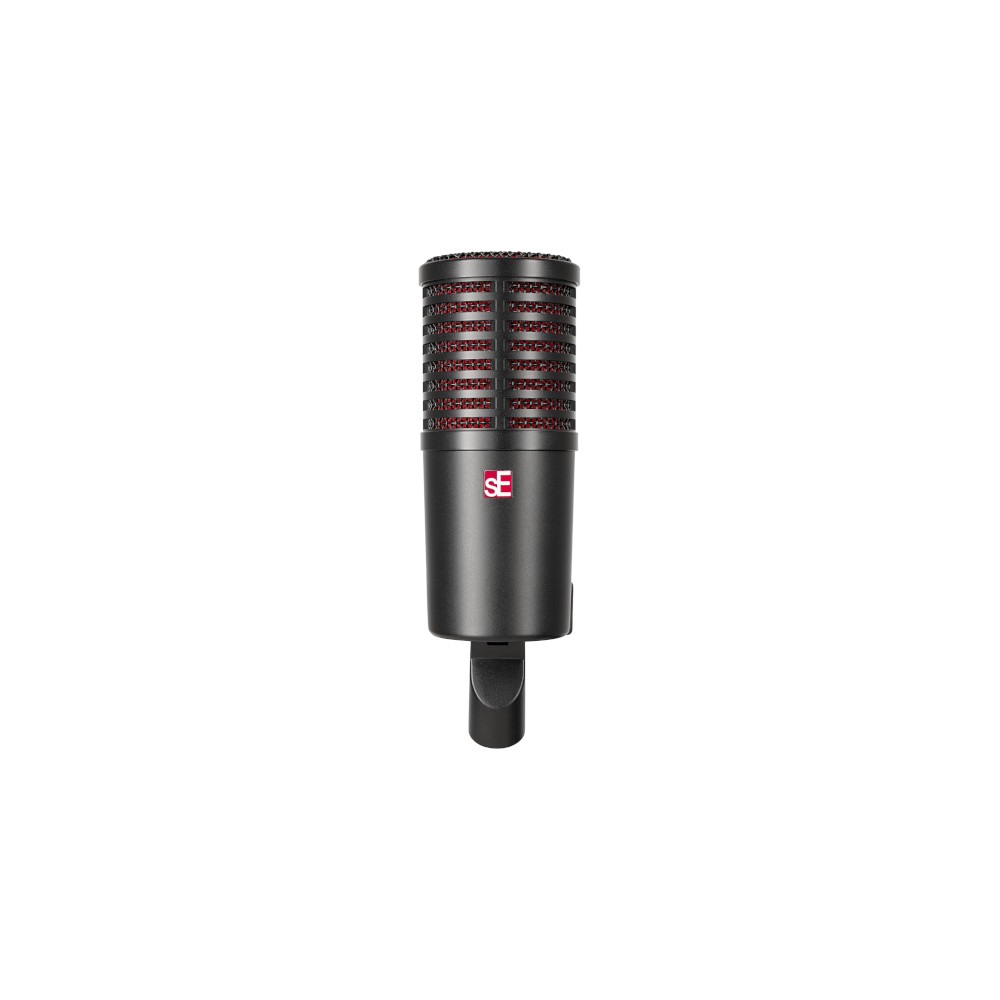
Some microphones sound similar and have more features than the SM7dB. The SE ELECTRONICS DynaCaster DCM8 is a microphone with a similar build to the SM7dB. The Dynacaster is also a dynamic microphone, and it even has more features. It has on-board switches that allow you to adjust the sound. You can make it sound brighter or darker with the individual bass and treble switches. Just like the SM7dB, it has a built-in preamp.
At $299.99, it’s a great value, and you can make it sound dark, similar to the SM7dB. The DCM8 has a similar layout, but is distinctly different. You can add a pop filter on top to make it look a little closer to the Shure, but even without the pop filter, the DCM8 does very well in rejecting plosives. Given all the features and versatility the DCM8 offers, I’m surprised I haven’t seen it more in podcasts.
Thank you for being part of our community. Read our Comment Policy before posting.