All products featured are independently chosen by us. However, SoundGuys may receive a commission on orders placed through its retail links. See our ethics statement.
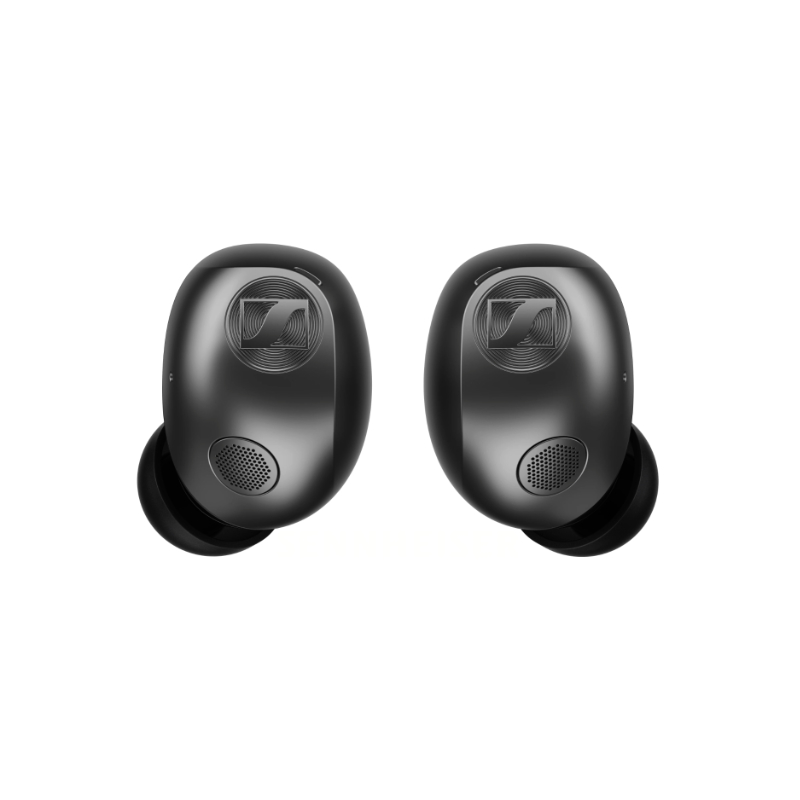
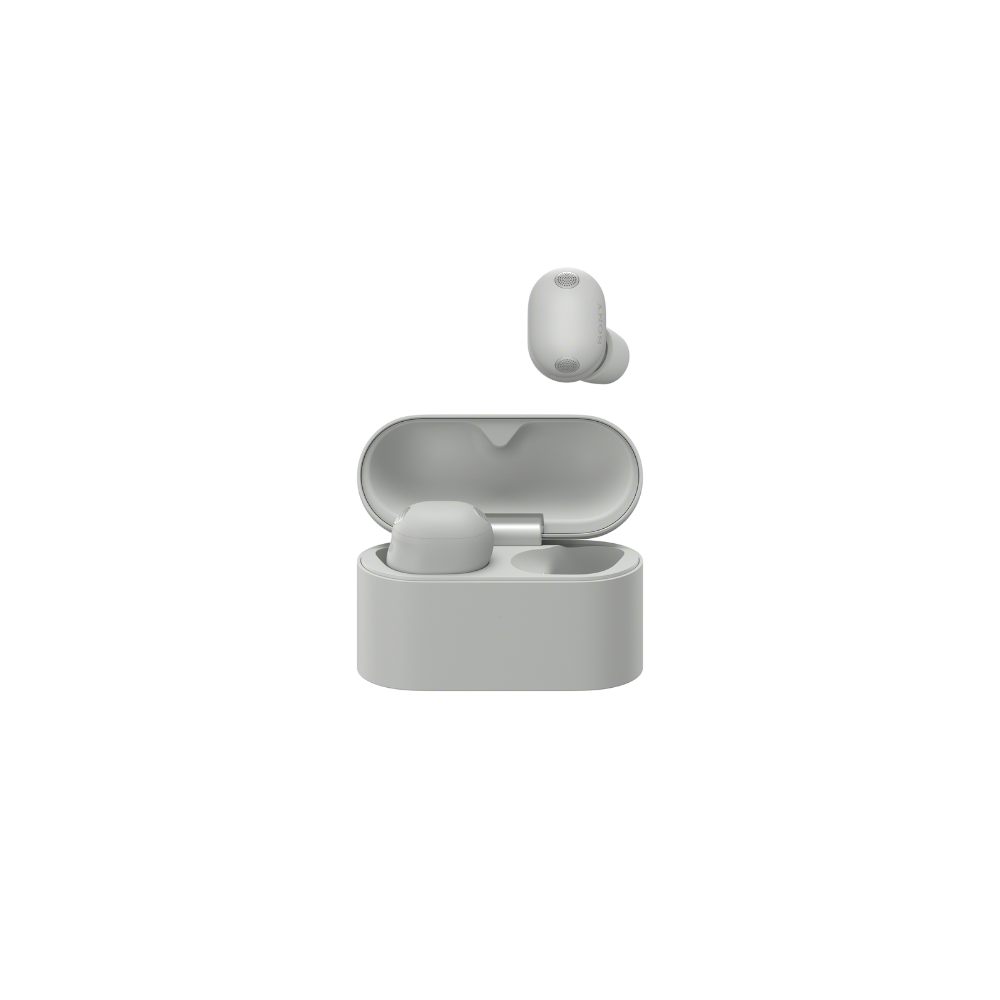
I tested the Sennheiser MOMENTUM 5 TWS against the Sony WF-1000XM6, and the loser is the one I'd buy
Sep 10, 2026 — 5:00 AM ET


If you’re spending $300 on earbuds, you want them to still be worth $300 a couple of years from now. That’s really what makes this matchup interesting. Sure, the Sony WF-1000XM6 is the safer and arguably better pair of earbuds overall. They have better tuning out of the box, longer battery life, and stronger noise canceling performance. But even though the Sennheiser MOMENTUM True Wireless 5 loses most of those rounds, it’s still the one I’d buy, because it’s the only one of the two you can put a fresh battery into when the old one gives up.
Sony sounds better out of the box
Both of these get the important stuff right. Bass strength is a little overemphasized on the Sony, but the midrange is even, and the treble avoids any wild swings in output. There’s one narrow dip in the mids on the XM6 that looks odd on a chart, but it isn’t going to spoil your music, and it disappears entirely once you turn ANC off.
For people who just put their earbuds in and press play, Sony's tuning is friendlier.
The Sennheiser takes more liberties. Bass through mids is very good. The highs are where it gets into trouble: there isn’t enough output around 3kHz, the region that carries most of the presence of voices and lead instruments, and there’s too much output higher up around 6kHz. The audible result is that “s,” “sh,” and “z” sounds can turn shrill, and some room reverb sounds off. On most tracks, you won’t care. On a mix with loud, forward vocals, it’s the first thing you’ll notice, and once you’ve heard it, you can’t stop hearing it.
The fix is easy enough. Knock the 6kHz band down in the Smart Control Plus app, and the problem largely goes away. But that’s an eight-band graphic EQ, not a parametric EQ, so you’re pushing broad chunks of the frequency range around rather than targeting the exact narrow spike causing the trouble. And most people never open the EQ screen at all. For people who just put their earbuds in and press play, Sony’s tuning is definitely friendlier.
Battery life versus battery lifespan
In our standardized battery test, the Sony WF-1000XM6 ran 9 hours and 41 minutes. The Sennheiser MOMENTUM True Wireless 5 managed 6 hours and 17 minutes. On paper, that’s a rout.
In practice, it’s a gap most people will never hit. Unless you’re listening for six straight hours a day without touching the case, both of these get you through a workday with charge to spare. Where the numbers start to matter is year two and year three, when the cells have degraded and your once all-day earbuds are suddenly a two-hour proposition.
A $300 product with a three-year hard stop is a $100-a-year product. A $300 product you can keep alive is just a $300 product.
That’s the point where these two products stop being comparable. Sennheiser’s batteries are replaceable by you, in both the earbuds and the charging case, with a small screwdriver. Sony’s are not. When the XM6’s cells are done, the earbuds are done, and the only move left is buying another pair.
We’ve made this argument before about the Momentum 5 headphones, and it applies even harder to earbuds, which live in pockets, get charged constantly, and have tiny cells that degrade faster than the big ones in a set of over-ears. A $300 product with a three-year hard stop is a $100-a-year product. A $300 product you can keep alive is just a $300 product.
Noise canceling: a decision, not a knockout
Sony wins here, too. The XM6 cancels more noise than the Momentum True Wireless 5, and as you can see in the chart above, it looks decisive.
To my ears, the difference isn’t as drastic. The range where most genuinely irritating noise lives, such as voices, cabin drone, and general room noise, is also the hardest range for any earbud to cancel, and neither product runs away with it there. Sony builds its lead in the very lowest and very highest frequencies, which is real but less noticeable day-to-day. With a good seal from the right ear tips, the gap between them narrows significantly.
Both are more than good enough for a commute, a busy office, or a flight. Call it a win on points rather than a knockout.
The mics are a wash
Sennheiser and Sony both have long histories in professional recording, and it shows. Rather than take my word on which sounds better, you can listen to our sample recordings of the same set of test phrases below. Listen to the ones that match where you actually take calls, but both perform well enough that you shouldn’t be disappointed either way.
Sennheiser MOMENTUM True Wireless 5 microphone demo (Ideal conditions):
Sennheiser MOMENTUM True Wireless 5 microphone demo (Office conditions):
Sennheiser MOMENTUM True Wireless 5 microphone demo (Street conditions):
Sony WF-1000XM6 microphone demo (Ideal conditions):
Sony WF-1000XM6 microphone demo (Office conditions):
Sony WF-1000XM6 microphone demo (Street conditions):
The rest of the specs
A few differences worth knowing, none of which are a major dealbreaker on their own:
| Sennheiser MOMENTUM True Wireless 5 | Sony WF-1000XM6 | |
|---|---|---|
Durability rating | Sennheiser MOMENTUM True Wireless 5 IP54 | Sony WF-1000XM6 IPX4 |
Bluetooth | Sennheiser MOMENTUM True Wireless 5 6.0 | Sony WF-1000XM6 5.3 |
High-quality codec | Sennheiser MOMENTUM True Wireless 5 aptX Lossless | Sony WF-1000XM6 LDAC |
Broadcast audio | Sennheiser MOMENTUM True Wireless 5 Not yet | Sony WF-1000XM6 Auracast (LE Audio) |
Equalizer | Sennheiser MOMENTUM True Wireless 5 8-band | Sony WF-1000XM6 10-band |
The IP ratings are closer than they look. Both handle water the same way; Sennheiser simply also carries a dust rating, and Sony doesn’t. Codec-wise, aptX Lossless and LDAC are two routes to the same goal of sending more audio data over Bluetooth, and which one helps you depends entirely on what phone you own. Sony’s advantage is Auracast, part of the newer LE Audio standard, which lets you tune into audio broadcasts in places like airports, gyms, and theaters. The Sennheisers are still waiting on that, but they told us it would come eventually via a future firmware update.
Both companion apps are thorough. You can remap controls, adjust sound, and dig through toggles on either one.
So which one should you buy?

If you’re going by performance alone, buy the Sony WF-1000XM6. It’s the better-tuned, longer-lasting, better-isolating product, and you can probably find it discounted by now.
But a product isn’t only the sum of its test results. If you’re tired of throwing out perfectly good electronics because a sealed battery gave up, the MOMENTUM True Wireless 5 is currently one of the only ways out, and the EU rules arriving in 2027 mean it’s a head start rather than a gimmick. The only other earbuds with the same idea are the Fairphone Fairbuds, which don’t hold up against either of these in terms of sound quality or features.
Sony wins the fight. Sennheiser wins the decade.
Noise cancelation
User-replaceable battery
Shareable EQ presets
Thank you for being part of our community. Read our Comment Policy before posting.