All products featured are independently chosen by us. However, SoundGuys may receive a commission on orders placed through its retail links. See our ethics statement.
Sennheiser HDB 630 vs Sony WH-1000XM6: Battle for the best audiophile wireless headphones
Nov 21, 2025 — 11:10 AM ET
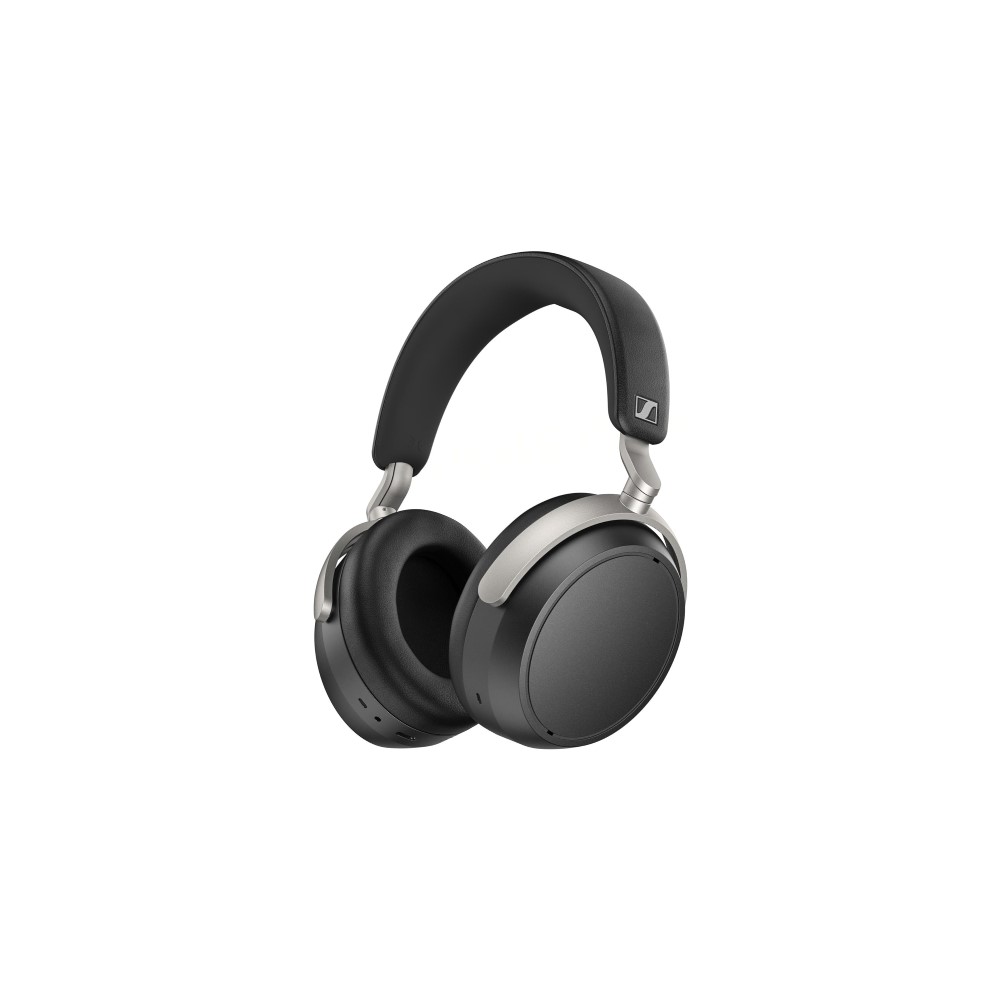





If you’re looking for the best of the best wireless headphones, you might be torn between the Sennheiser HDB 630 and the Sony WH-1000XM6. You’re essentially choosing between audiophile-leaning tuning and a connectivity Swiss Army knife (Sennheiser) versus class-leading ANC and a deep feature set (Sony). We’ve listened to both, measured both, and spent some time using both out in the wild. Here’s how the Sennheiser HDB 630 vs Sony WH-1000XM6 compare on every front to help you decide which is right for your ears.
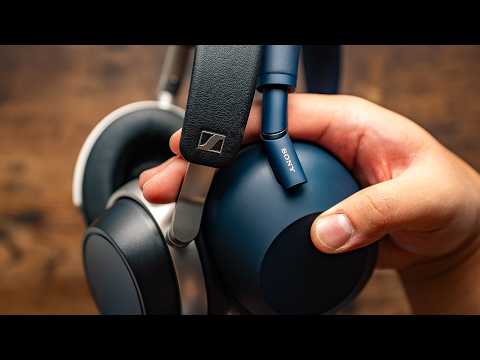
- November 21, 2025: We added our video comparison to the article and added a reader poll.
What’s it like to use the Sennheiser HDB 630 compared to the Sony WH-1000XM6?
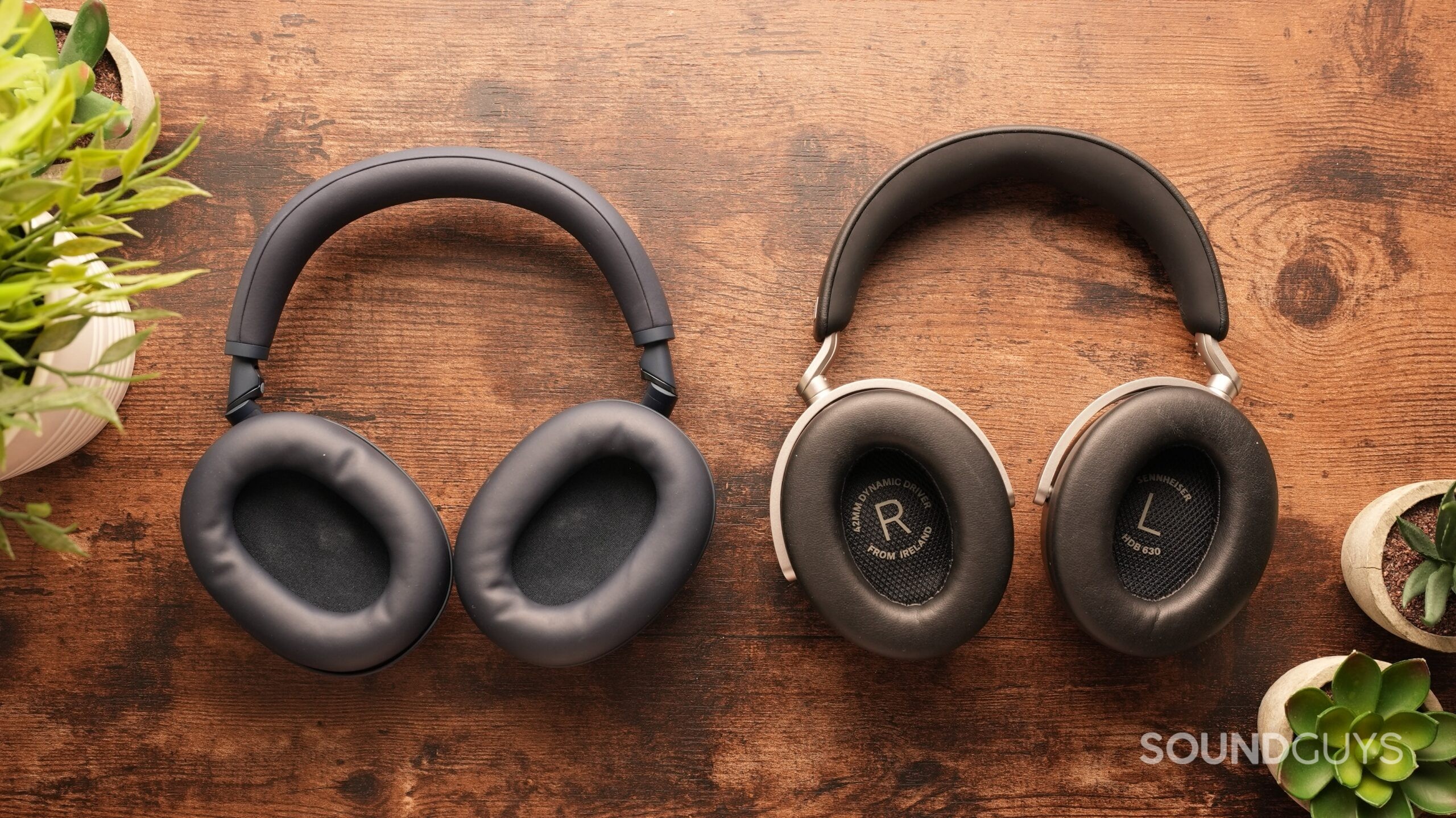
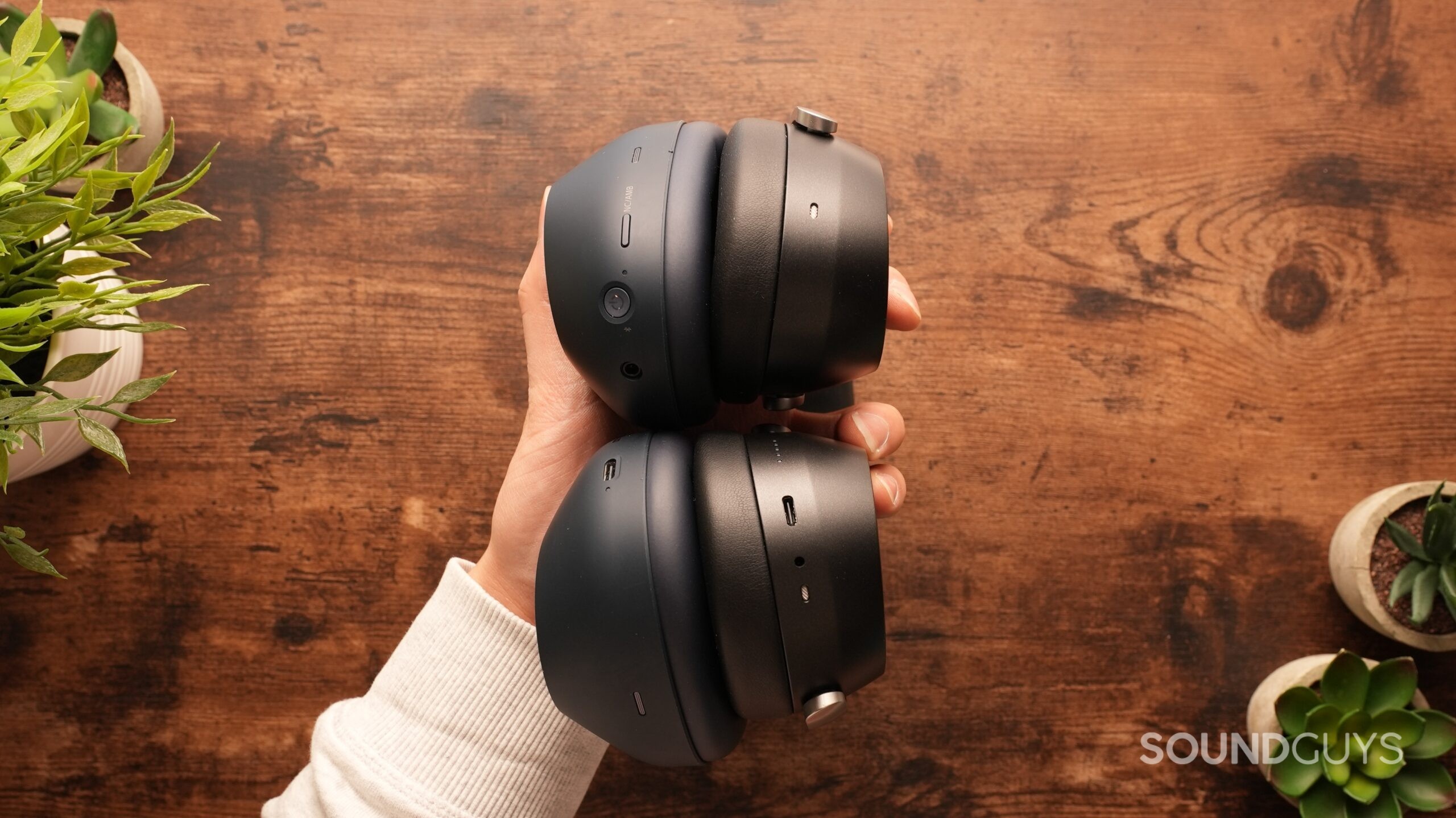
The HDB 630 feels premium and substantial at 311g, with deep, plush pads and thick leather-like cushioning that I can wear all day without hot spots. The matte shells and sturdy yokes fold flat into a durable, fabric-covered hard case with dedicated pockets for the dongle, adapter, and cables. Touch controls (swipes, taps, pinches) are intuitive; if gestures stop responding, toggling the control switch in the app resolves the issue.
The WH-1000XM6 are lighter at 254g and more compact thanks to the new fold-up hinge (a welcome fix over the XM5). Comfort is good, but the pads are thinner than I’d like, and the ANC mic protrudes from inside the mesh, which can brush against the ear if your fit isn’t perfect. The snap-shut soft case is minimalist. Physical buttons, plus a touchpad, handle playback and ANC/passthrough. Neither pair has an ingress protection rating, so keep both out of the rain.
Do the Sennheiser HDB 630 or Sony WH-1000XM6 have more features?

Sennheiser’s Smart Control Plus app is a power-user playground, featuring five parametric EQ filters with peak and shelving options (and a bypass toggle), geofenced Sound zones that auto-switch ANC/transparency by time and location, connection management, Find Headphones, control customization, and even a hearing test. Note that Sound Zones and the hearing test require creating a Sennheiser account, though basic app functions don’t.
Sony is no slouch either with a feature-packed Sony Sound Connect: a 10-band custom EQ with presets to choose from, 360 Reality Audio (plus upmixing capabilities), Speak-to-Chat, head gestures, DSEE Extreme, advanced Bluetooth options, and volume limiting. Sony nails convenience features, but it notably omits USB-C audio passthrough—something the HDB 630 supports natively.
How do the Sennheiser HDB 630 and Sony WH-1000XM6 connect?
This is where the HDB 630 shine for mixed setups. You get Bluetooth 5.2, analog 3.5mm, USB-C digital audio up to 24-bit/96kHz, and an included BTD 700 USB-C dongle that enables aptX Adaptive—great if your phone or laptop doesn’t natively support it, such as an iPhone. Pairing the dongle is a one-time hassle (pair both in pairing mode and prune old devices in the app), then it’s smooth sailing.
The WH-1000XM6 uses Bluetooth 5.3 with LDAC, AAC, SBC, and LC3, plus LE Audio features, including Auracast receiving support. You can also opt for an analog connection using the 3.5mm cable. However, there’s no USB-C audio. In my testing, forcing LDAC to 660kbps balanced stability and quality. Multipoint works but uses lower-bitrate codecs.
Is battery life better on the Sennheiser HDB 630 or Sony WH-1000XM6?
Battery is a big Sennheiser win. In our testing, the HDB 630 lasted 53 hours and 46 minutes with ANC on, easily clearing the threshold for a 9.9 battery score. Sennheiser advertises ~60 hours of use with ANC—consistent with its strong track record.
Sony’s battery is still excellent: we measured 37 hours, 14 minutes on a charge. Sony claims 3 hours of playback from a 3-minute top-up, charging over USB-C (charging only). Both will breeze through a work week, but the HDB 630 should go that much longer.
Do the Sennheiser HDB 630 or Sony WH-1000XM6 block noise better?
Loading chart ...
I would say Sony takes it by a hair, or two. The WH-1000XM6 combine very strong isolation with a responsive ANC system that handles sub-1kHz noise impressively and adapts quickly. In our lab testing, the XM6 reduced the loudness of outside noise by an average of 87%—among the best we’ve tested in over-ear headphones. Fit matters (especially with glasses interrupting the seal), but when seated well, these reduce outside loudness to class-leading levels.
The HDB 630 have effective ANC, just not at Sony’s level. Fit-dependent, we measured roughly 80–84% loudness reduction. While that is a comparable average to Sony, the HDB 630 has a noticeable shortcoming in comparison to the XM6 from 300-1.5kHz, where many of the sounds we hear on a day-to-day basis reside. While the gross average is good, the experience most people will have will be poorer as a result. Still, their deeper pads isolate better even before ANC kicks in, which helps.
Do the Sennheiser HDB 630 sound better than the Sony WH-1000XM6?
I’d pick the HDB 630 for a more natural presentation with controlled treble strength and balanced bass strength—they’re one of the best-sounding ANC headphones I’ve used out of the box. There’s some underemphasis around 1.5 to 3kHz and past 6kHz that can make instruments like violins and guitars sound slightly less detailed than you might prefer, but the parametric EQ lets me fine-tune these areas gracefully.
Sony’s tuning is a touch dark, with extra bass and a slight high-frequency lift that enhances presence and perceived attack. There’s a noticeable peak around 10kHz that can make cymbals and hi-hats sound slightly shrill to some listeners, and unfortunately, Sony’s EQ doesn’t let you adjust this specific frequency band. That said, it’s a very listener-friendly response overall and avoids overly boomy bass.
Multi-Dimensional Audio Quality Scores (MDAQS)
Hold up! Something’s missing: In our quest to make background upgrades over the last month or so, we’ve been running validations on a new version of MDAQS, which should be live shortly. Until then, sit tight, and we’ll update the article when the latest figures become available.
- Timbre (MOS-T) represents how faithfully the headphones reproduce the frequency spectrum and temporal resolution (timing information).
- Distortion (MOS-D) represents non-linearities and added noise: higher scores mean cleaner reproduction.
- Immersiveness (MOS-I) represents perceived source width and positioning: how well virtual sound sources are defined in three-dimensional space.
Objective Measurements
Loading chart ...
The HDB 630 tracks closely to our preference target, with slightly underemphasized uppermost octaves; treble strength is modest, and bass is not overemphasized. With ANC off, there’s a small bump around ~80Hz and a dip around 200–400Hz. The WH-1000XM6 adds bass strength through lows/low mids and shows good treble extension (I noted some upper-treble peaks that can push brilliance in atmospheric tracks). With ANC off, the sound can get a bit bassier; ensure the ANC mic isn’t touching your ear.
Do the Sennheiser HDB 630 or the Sony WH-1000XM6 have a better microphone?
Sony’s 6-mic beamforming array, combined with an AI-trained voice model, delivers consistently strong call quality, including in windy conditions—among the best we’ve tested in this class. The HDB 630s acquit themselves well in tough conditions, too, but they can struggle more with wind. If you take a lot of calls on the go, Sony is the safer bet.
Sennheiser HDB 630 microphone demo (Ideal conditions):
Sony WH-1000XM6 microphone demo (Ideal conditions):
Sennheiser HDB 630 microphone demo (Windy conditions):
Sony WH-1000XM6 microphone demo (Windy conditions):
Which microphone sounds better to you?
Sennheiser HDB 630 vs Sony WH-1000XM6: Price and availability
- Sennheiser HDB 630 — $499.95 | Released September 22, 2025
- Sony WH-1000XM6 — $449.99 | Released May 15, 2025
Which headphones would you buy?
Should you get the Sennheiser HDB 630 or the Sony WH-1000XM6?

Get the Sennheiser HDB 630 if you prioritize sound quality, all-scenario connectivity (USB-C audio, 3.5mm, and the aptX Adaptive dongle), marathon battery life, and powerful in-app EQ tools. You’re trading away top-tier ANC for better timbre control and versatility.
Choose the Sony WH-1000XM6 if you want excellent ANC, a stellar microphone, and a rich feature set (360 Audio, Speak-to-Chat, LE/LC3, Auracast receiving). You lose USB-C audio, but you gain some of the best real-world noise reduction and call handling, with measured sound quality that most listeners will love.
I would say that if you commute in very noisy environments or frequently take calls on the go, Sony is the practical choice. However, if you prioritize sound quality with EQ tools, USB audio, and battery life, the Sennheiser HDB 630 is worth the extra $50.
Which headphones would you buy?
Thank you for being part of our community. Read our Comment Policy before posting.