All products featured are independently chosen by us. However, SoundGuys may receive a commission on orders placed through its retail links. See our ethics statement.
 1 / 8
1 / 8Soundcore
Soundcore Sleep A20
No one has reported on this one yet.
Be the first. We ask a few quick questions about living with it, then check the review before publishing.
Own the Soundcore Sleep A20?
Be the first owner to write in — three answers, four quick reads, shown under a pseudonym. Sign-in needed to publish.
Key specs
Form Factor
Most commonLow-profile earbuds80%Eye mask with speakers20%
Low-profile earbuds is the most common — on 80% of the 5 sleep headphones we've cataloged (of 5).
Battery Life Wireless
10 hBelow average10 h
8 h14 h
below average for sleep headphones — based on 5 of 5 we've cataloged.
Sleep Timer
YesMost commonTrue100%
True is the most common — on 100% of the 5 sleep headphones we've cataloged (of 5).
Bluetooth Version
5.3Most common5.360%5.440%
5.3 is the most common — on 60% of the 5 sleep headphones we've cataloged (of 5).
Design
- Form Factor
- Low-profile earbuds
- Is Washable
- Yes
- Weight
- 53 g
Battery
- Battery Life Wireless
- 10 h
- Charging Method
- USB-C
- Full Charge Minutes
- 90 min
Features
- Sleep Timer
- Yes
- Companion App
- IOS + Android
- Built In Sounds
- Yes
Connectivity
- Bluetooth Version
- 5.3
- Bluetooth Codec
- SBC, AAC
- Connection Type
- Bluetooth
Build
- Material Chassis Primary
- Rubber
Identity
- Model Number
- A6611
Microphone
- Microphone
- No
Release
- Date
- 2024-05-02
- Msrp Usd
- 149.99 USD
- Year
- 2024
Sound
- Frequency Response
- 20-20000 Hz
- Frequency Response High Hz
- 20000 Hz
- Frequency Response Low Hz
- 20 Hz
Lab data
How we test ›Objective measurements from the SoundGuys test lab — overlay other models to see how this one compares.
Soundcore Sleep A20SoundGuys Headphone Preference Curve
Measured frequency response (dB relative) against the SoundGuys Headphone Preference Curve. When the measurement goes above the dashed line, that frequency is louder than our preference curve, and when it goes below: it's quieter. Use the curve for comparison purposes only, as your taste may vary.
| Frequency (Hz) | Response (dB) |
|---|---|
| 20 | 22.2 |
| 25 | 26.7 |
| 32 | 21.0 |
| 40 | 21.1 |
| 50 | 11.5 |
| 63 | 15.9 |
| 80 | 1.6 |
| 100 | 8.5 |
| 125 | 14.2 |
| 160 | 6.5 |
| 200 | 6.8 |
| 250 | 7.3 |
| 315 | 3.8 |
| 400 | 0.7 |
| 500 | 0.1 |
| 630 | 2.3 |
| 800 | 6.3 |
| 1000 | 6.6 |
| 1250 | 1.5 |
| 1600 | 1.4 |
| 2000 | 4.7 |
| 2500 | 7.4 |
| 3150 | 3.0 |
| 4000 | 1.5 |
| 5000 | -3.5 |
| 6300 | -11.0 |
| 8000 | -10.0 |
| 10000 | -15.6 |
| 12500 | -13.6 |
| 16000 | -16.1 |
| 20000 | -19.3 |
Soundcore Sleep A20
Passive isolation (dB) with ANC off — how much ambient noise the fit blocks on its own. Higher on the chart means more attenuation.
| Frequency (Hz) | Attenuation (dB) |
|---|---|
| 21 | 3.5 |
| 26 | 3.3 |
| 33 | 2.4 |
| 41 | 1.6 |
| 52 | 4.9 |
| 65 | 3.7 |
| 82 | 4.3 |
| 103 | 3.9 |
| 130 | 2.8 |
| 163 | 4.8 |
| 205 | 5.5 |
| 259 | 6.0 |
| 325 | 6.0 |
| 410 | 4.7 |
| 516 | 7.7 |
| 613 | 7.8 |
| 772 | 12.3 |
| 972 | 15.5 |
| 1220 | 17.1 |
| 1540 | 18.5 |
| 1940 | 22.4 |
| 2440 | 27.3 |
| 3070 | 29.2 |
| 3870 | 29.1 |
| 4870 | 28.7 |
| 6130 | 28.1 |
| 7720 | 28.7 |
| 9720 | 35.6 |
| 12200 | 25.6 |
| 15400 | 26.5 |
| 19400 | 27.3 |
SoundGuys review
Isolation6.4
Battery life8.0
Comfort & fit9.0
Connectivity5.0
Design7.2
Portability5.0
The verdict
The Anker Soundcore Sleep A20 earbuds are comfortable and stay in place for side sleepers, and have a long battery life. Still, they are held back by mediocre sound quality and a lack of ANC.
✓Liked: Comfortable, Multiple ear tip and wing sizes to stay secure, Excellent battery life, Comprehensive app
✕Could be better: No active noise cancellation, Unimpressive sleep-sound presets
Owners
How we verify ownersNobody who owns the Soundcore Sleep A20 has written in yet.
Owner reviews are not paid for, not solicited from specific owners, and not rewritten by us: at most we proofread typos, which is shown on the review’s own page and which the author can undo. The commission SoundGuys may earn on this page comes from retail links, never from owner reviews.
Own the Soundcore Sleep A20?
Three answers, four quick reads, one sentence nobody tells you before buying. Shown under a pseudonym. Sign-in needed to publish.
Questions from readers
What readers ask about the Soundcore Sleep A20, answered by the people who own it.
Nobody has asked the owners yet.
Ask the first question →Features & Opinions
More from the team ›Commentary and deep dives from the SoundGuys editorial team.
Two years later, I'm still waiting for a real Soundcore Boom 3The Soundcore Boom 2 is still one of the best values in portable speakers, but I can't wait for the successor. Dave CarrVideo Producer/WriterThis is the only Bluetooth speaker I trust to take campingFrom ocean paddling to alpine lakes, here's why the Soundcore Boom 3i became my camping companion.Dave CarrVideo Producer/WriterSkip the $129 Bose SoundLink Micro: Here are 2 look-alikes I'd buy for lessYou don't have to spend a lot of money to get a great ultra-portable Bluetooth speaker. Here's two I'd recommend instead.Dave CarrVideo Producer/WriterBest Bluetooth speakers to buy instead of JBLJBL speakers are popular, but they’re not your only option.Dave CarrVideo Producer/WriterI've reviewed headphones for over a decade: Here are 5 things I wish they did differentlyHeadphone companies: help me help you
 Christian ThomasEditor-at-large5 ways headphones are going to change in 2027Here's where things are headed.Christian ThomasEditor-at-largeWired vs wireless headphones: Which should you buy?Wired headphones do not automatically sound better.
 Tom TriggsContributor
Dave CarrVideo Producer/WriterThis is the only Bluetooth speaker I trust to take campingFrom ocean paddling to alpine lakes, here's why the Soundcore Boom 3i became my camping companion.Dave CarrVideo Producer/WriterSkip the $129 Bose SoundLink Micro: Here are 2 look-alikes I'd buy for lessYou don't have to spend a lot of money to get a great ultra-portable Bluetooth speaker. Here's two I'd recommend instead.Dave CarrVideo Producer/WriterBest Bluetooth speakers to buy instead of JBLJBL speakers are popular, but they’re not your only option.Dave CarrVideo Producer/WriterI've reviewed headphones for over a decade: Here are 5 things I wish they did differentlyHeadphone companies: help me help youChristian ThomasEditor-at-large5 ways headphones are going to change in 2027Here's where things are headed.Christian ThomasEditor-at-largeWired vs wireless headphones: Which should you buy?Wired headphones do not automatically sound better.Tom TriggsContributorMore Sleep Headphones
See our top picks ›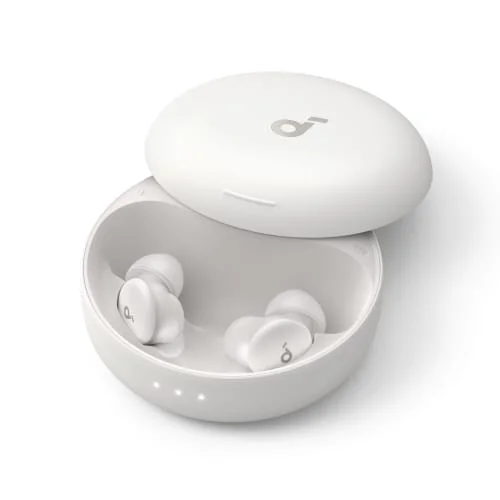
Sleep Headphones
Soundcore Sleep A30
7.4/10SoundGuys scoreRead our review ›
$199.99at Amazon
Buy on Amazon