


All products featured are independently chosen by us. However, SoundGuys may receive a commission on orders placed through its retail links. See our ethics statement.

Linsoul
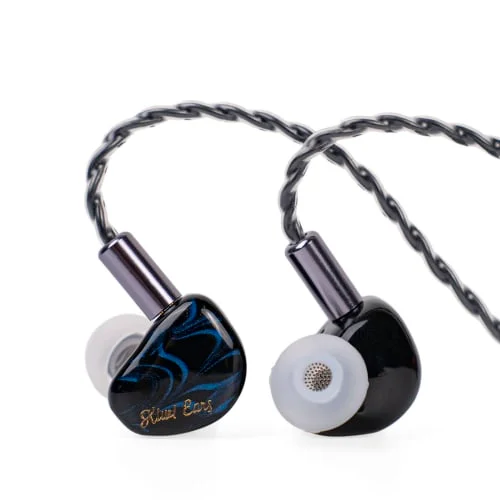
Linsoul Kiwi Ears Cadenza 10mm Beryllium
Sound
4.8/ 5
SoundMDAQS OverallMDAQS Overall — measured in the SoundGuys lab.
See the lab data ↓Frequency response · Isolation · Audio quality
No one has reported on this pair yet.
Be the first. We ask a few quick questions about living with it, then check the note before publishing.
Own the Linsoul Kiwi Ears Cadenza 10mm Beryllium?
Be the first owner to write in — three answers, four quick reads, shown under a pseudonym.
Key specs
Build
- Material Chassis Primary
- Resin
Connectivity
- Cable Type
- 3.5mm single-ended, 2-pin detachable
- Connection Type
- Wired-3.5mm
Design
- Color Options
- Blue, green, purple, red
- Ear Tip Sizes Included
- S, M, L
- Earbud Form Factor
- In-ear
- Detachable Cable
- Yes
Features
- Inline Controls
- No
Microphone
- Microphone
- No
Release
- Msrp Usd
- 35 USD
Sound
- Driver Count
- 1
- Driver Size
- 10 mm
- Driver Type
- Dynamic
- Frequency Response
- 20-20000 Hz
- Frequency Response High Hz
- 20000 Hz
- Frequency Response Low Hz
- 20 Hz
- Impedance
- 32 Ω
- Sensitivity
- 110 dB/mW
Lab data
How we test ›Objective measurements from the SoundGuys test lab — overlay other models to see how this one compares.
Compare with
0 of 4 overlay slots used
Linsoul Kiwi Ears Cadenza 10mm BerylliumSoundGuys Headphone Preference Curve
Measured frequency response (dB relative) against the SoundGuys Headphone Preference Curve. When the measurement goes above the dashed line, that frequency is louder than our preference curve, and when it goes below: it's quieter. Use the curve for comparison purposes only, as your taste may vary.
| Frequency (Hz) | Response (dB) |
|---|---|
| 20 | 5.2 |
| 25 | 4.7 |
| 32 | 4.0 |
| 40 | 3.1 |
| 50 | 2.2 |
| 63 | 1.1 |
| 80 | 0.1 |
| 100 | -1.1 |
| 125 | -1.9 |
| 160 | -2.3 |
| 200 | -3.3 |
| 250 | -4.0 |
| 315 | -4.5 |
| 400 | -5.5 |
| 500 | -4.9 |
| 630 | -2.0 |
| 800 | -1.4 |
| 1000 | 0.1 |
| 1250 | 2.0 |
| 1600 | 4.4 |
| 2000 | 6.8 |
| 2500 | 9.2 |
| 3150 | 9.8 |
| 4000 | 9.2 |
| 5000 | 6.8 |
| 6300 | 3.2 |
| 8000 | 3.4 |
| 10000 | 1.6 |
| 12500 | 4.6 |
| 16000 | -6.5 |
| 20000 | -22.6 |
Linsoul Kiwi Ears Cadenza 10mm Beryllium
Passive isolation (dB) with ANC off — how much ambient noise the fit blocks on its own. Higher on the chart means more attenuation.
| Frequency (Hz) | Attenuation (dB) |
|---|---|
| 21 | 8.0 |
| 26 | 6.1 |
| 33 | 5.3 |
| 41 | 6.2 |
| 52 | 6.0 |
| 65 | 8.4 |
| 82 | 5.4 |
| 103 | 6.7 |
| 130 | 6.8 |
| 163 | 8.9 |
| 205 | 9.3 |
| 259 | 8.7 |
| 325 | 10.0 |
| 410 | 12.5 |
| 516 | 8.6 |
| 613 | 9.0 |
| 772 | 15.0 |
| 972 | 16.8 |
| 1220 | 23.3 |
| 1540 | 23.7 |
| 1940 | 27.3 |
| 2440 | 30.7 |
| 3070 | 32.3 |
| 3870 | 25.4 |
| 4870 | 26.2 |
| 6130 | 25.6 |
| 7720 | 21.5 |
| 9720 | 34.4 |
| 12200 | 18.6 |
| 15400 | 28.8 |
| 19400 | 26.6 |
Linsoul Kiwi Ears Cadenza 10mm Beryllium
4.9
3.6
3.4
4.8
Multi-Dimensional Audio Quality Scores (1–5), modeled from the measured response. Higher is better across timbre, distortion, and immersiveness — add other models to see where this one lands.
SoundGuys review
Isolation7.0
Comfort & fit8.0
Design7.0
Portability8.0
Value7.0
The verdict
At $35 the Kiwi Ears Cadenza are a great value pick for those on a budget, and looking for a sound signature that doesn't over-emphasize bass or treble. For something non-fatiguing, the Cadenza are good choice.
✓Liked: Price, Color options, Sound
✕Could be better: Gets warm in ear, Lacking some detail, Design not as eye-catching as expected
Owners
How we verify ownersNobody who owns the Linsoul Kiwi Ears Cadenza 10mm Beryllium has written in yet.
Owner notes are not paid for, not solicited from specific owners, and not edited by us. The commission SoundGuys may earn on this page comes from retail links, never from notes.
Own the Linsoul Kiwi Ears Cadenza 10mm Beryllium?
Three answers, four quick reads, one sentence nobody tells you before buying. Shown under a pseudonym.
Video reviews and comparisons for this product.
More Cables & adapters
See our top picks ›


