All products featured are independently chosen by us. However, SoundGuys may receive a commission on orders placed through its retail links. See our ethics statement.
Nothing's Headphone (1) Pro has three drivers, better ANC, and one odd compromise
Sep 28, 2026 — 9:00 PM ET


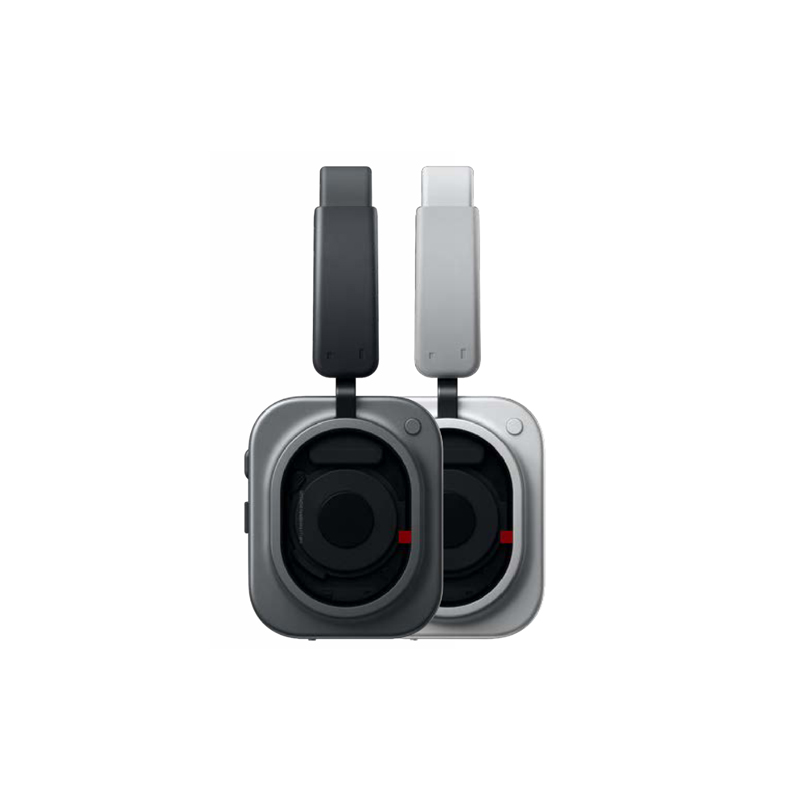
- The Nothing Headphone (1) Pro keeps the familiar transparent design but upgrades the materials with aluminum, titanium, glass, and scratch-resistant 9H Panda Glass.
- The biggest upgrades are inside, including a three-driver audio system, improved ANC with 10 microphones, a physical Flat EQ switch, and upgraded spatial audio with head tracking.
- The headphones cost $399 and promise 30 hours with ANC, oddly lower than the Headphone (1)’s 35-hour claim.
Nothing’s first pair of over-ear headphones already looked unlike pretty much anything else on the shelf, and Nothing isn’t messing with that formula too much for its second attempt. The Headphone (1) Pro is now official, and from the outside, it’ll look familiar at a glance. Most of what’s changed is happening where you can’t see it.
That doesn’t mean Nothing has left the design completely alone. The transparent sections on each earcup are still here, giving you a peek at some of the hardware underneath, but the materials have been upgraded. The frame is made from aluminum, while titanium and glass also make an appearance. Nothing is even using 9H Panda Glass over those transparent windows, which should hopefully mean they don’t end up covered in scratches after a few months of being thrown around.
There’s more behind the glass this time

The more interesting changes, though, are happening with the audio hardware. Instead of relying on a single driver to do most of the work, the Headphone (1) Pro uses three. A 40mm dynamic driver handles the bass, another dynamic driver covers the rest of the range, and an xMEMS driver handles the higher frequencies.
Think of it as splitting up the workload. The same driver no longer has to deal with the deep thump of a bassline and the details of a cymbal at the same time. This setup helps the headphones cover a 20Hz to 40kHz frequency range while improving detail and reducing distortion, particularly when you turn up the volume.
Of course, three drivers don’t automatically mean better sound. Tuning matters just as much, and we’ll need to actually listen to the Headphone (1) Pro before knowing whether all of this makes a noticeable difference. Still, it’s an interesting upgrade than making the existing driver a little bigger.
Nothing has also been working on keeping the outside world out. The Headphone (1) Pro now uses 10 microphones, with Nothing moving some of them and tweaking the ear cushions to improve the seal around your ears. The company claims average noise reduction is 5dB stronger than on the Headphone (1), with ANC now covering a 40% broader frequency range.

That second figure could be the more useful upgrade in everyday life. Constant sounds such as an airplane engine or AC hum are relatively easy territory for modern ANC headphones. It’s the messier stuff: people chatting next to you at a coffee shop, traffic outside, or the general chaos of a busy commute where better coverage could make a bigger difference.
And when you actually want to hear your music without much tinkering, Nothing has added one of my favorite ideas on these headphones. There’s now a physical Flat EQ switch on the left earcup. Flip it, and the headphones immediately move to a neutral sound profile. So you can dial in a bass-heavy EQ for a workout, then hit the switch when you get home and want something more natural. You don’t have to open an app or remember which EQ preset you were using.
Nothing worked with London’s Metropolis Studios on these audio features, and the Flat EQ switch isn’t the only result. You can create custom EQs, while Dynamic Spatial Audio now offers five different profiles and uses head tracking to adjust the sound as you move. While Spatial Audio can be great for a movie or the right track, it’s also one of those features that doesn’t sound as impressive in real life. We’ll have to hear how Nothing’s implementation holds up.
One number doesn’t quite add up

As for the battery, Nothing has put a 1,060mAh battery inside the Headphone (1) Pro and claims up to 30 hours of listening with ANC enabled. Turn ANC off, and that figure jumps to 68 hours. Whereas a full charge takes around two hours. Thirty hours isn’t terrible, but here’s the strange part: the Headphone (1) was officially rated for 35 hours with ANC turned on. In our testing, it actually lasted much longer, around 43 hours.
So, at least on paper, the new Pro model has worse ANC battery life than the cheaper headphones it sits above. Maybe those extra drivers and more capable noise cancelation need more power, or perhaps the Headphone (1) Pro will once again comfortably beat Nothing’s own estimate. Either way, we’ll be paying close attention to this number when we test them.
The rest of the package is about what you’d expect from premium headphones in 2026. There’s Bluetooth 6.1, Google Fast Pair, and multipoint connectivity, so you can stay connected to your laptop and phone at the same time. It also supports LDAC, plus Hi-Res Audio over both wired and wireless connections.
All of this comes at $399, with the Headphone (1) Pro available in black and white. That price pushes Nothing straight into the premium ANC headphone fight, where established options such as the Bose QuietComfort Headphones (2nd Gen) are already waiting.
That makes the Headphone (1) Pro an interesting second swing from Nothing. The transparent design will probably get them noticed first, but this time, there’s more going on than the looks. However, the bigger question is whether they’ll sound good enough to justify $399, especially when their predecessor already gave us surprisingly good battery life.

Thank you for being part of our community. Read our Comment Policy before posting.