All products featured are independently chosen by us. However, SoundGuys may receive a commission on orders placed through its retail links. See our ethics statement.
Nothing Ear (note) has to prove the charging case isn't just another gimmick

Nov 25, 2026 — 1:45 PM ET


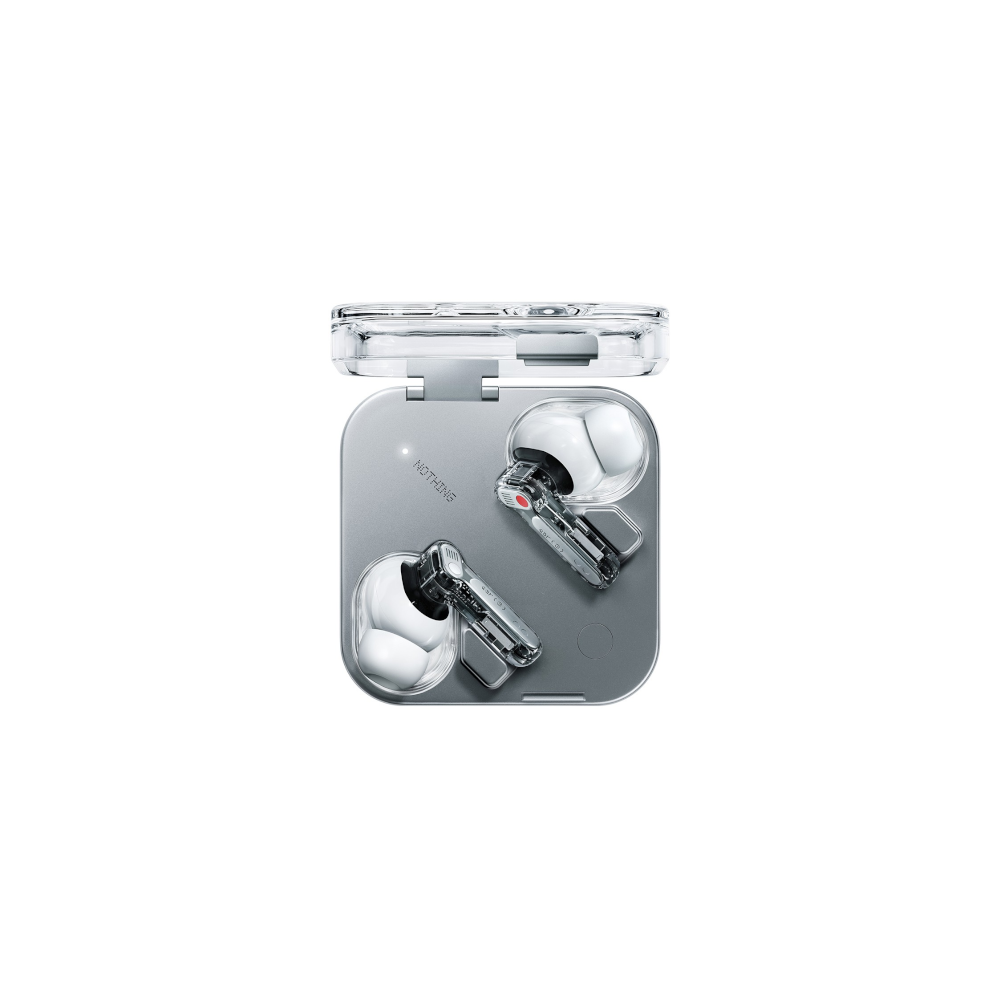
- Nothing has revealed the Ear (note), a new pair of earbuds with an AI notetaker built into the charging case.
- It builds on the Nothing Ear (3)’s Super Mic, which in my testing was awkward to use and only transcribed automatically on Nothing phones.
- The Ear (note) launches December 8, but Nothing hasn’t shared pricing yet.
Nothing has given us a first look at its latest audio product, the Ear (note). The company calls it its first AI-native device: a pair of earbuds with a charging case that doubles as a recorder, complete with a TALK button and a new RECORD button that Nothing says draw on the familiar controls of a retro Walkman.

Nothing says the Ear (note) can transcribe, summarize, and act on in-person conversations, calls, online meetings, and even your own thoughts “without requiring an additional device or new behaviours.” The company frames it as the start of building “the hardware context layer of AI.”
I’ve heard part of this pitch before. When I reviewed the Nothing Ear (3) last year, its headline feature was Super Mic: press TALK on the charging case, hold it near your mouth, and the case mic picks up your voice instead of the earbuds. It’s the obvious ancestor of the Ear (note), and it fell short of exactly that promise. Holding a charging case up to your face like a walkie-talkie is awkward, and no firmware update can fix that.
What the Ear (note) appears to change
In a preview with Bloomberg, Nothing co-founder Carl Pei showed a charging case with built-in microphones for recording in-person meetings, while the earbuds handle phone calls. A dedicated RECORD button now sits alongside TALK, which suggests recording a conversation and speaking into the case are finally treated as separate jobs.
Nothing also says audio hasn’t been neglected, calling the Ear (note) its “best in-ear audio experience to date,” with Hi-Res Audio support and high-quality audio capture. Those are big claims, and I’m eager to test them in our lab. We also don’t know the pricing or phone compatibility yet, though some of Pei’s comments suggest a subscription may be involved.
Nothing isn’t first this time
Nothing likes to be early, but it’s arriving in a category that already exists. Plaud, best known for its NotePin and Note recorders, announced the $249.99 Plaud One Explorer Edition in August: AI earbuds with a 4G-connected case that can record and summarize conversations without a nearby phone. Viaim already sells $200 earbuds that transcribe calls, with extra recording built into the case. The Ear (note) has to do more than look good on a desk. It has to be a better recorder than products built to be recorders first.
What the Ear (note) needs to fix
Super Mic’s shortcomings make a handy checklist for what would make the Ear (note) a real step forward, rather than the same idea in a nicer case.

First, the case needs to record on its own. Super Mic needs at least one earbud in your ear to work, so the Ear (3) case can’t just sit on a table and capture a conversation. If the Ear (note) can, Nothing has fixed the biggest flaw. If you still have to hold it up to your mouth, that “no new behaviours” promise won’t hold up.
Second, it needs to work with more than Nothing’s own phones. Super Mic recordings transcribe automatically into Essential Space, which only exists on Nothing phones. I got similar results by pairing it with Samsung’s voice recorder and Interpreter, but that’s a workaround most people won’t bother with. App support was patchy too: Super Mic worked with Zoom, Teams, and WhatsApp, but not standard Android camera apps, and recording video introduced audio lag.
AI features shouldn't come at the cost of the basics.
Third, it needs to sound clean, because a transcript is only as good as the audio behind it. On the firmware I tested (1.0.1.59), Super Mic clipped less than the earbud mics, but voices still came through muffled and robotic. Nothing has since added a “Natural Mode” in a firmware update, which partly fixes the muffled sound, though results still depend a lot on how far and at what angle you hold the case from your mouth.
Then there’s everyone else in the room. The Ear (3) case lights up when Super Mic is live, and a device built to record conversations needs an indicator that’s just as obvious, especially since recording laws vary by location.
Finally, the price has to make sense. Super Mic added roughly $30 over the previous model, Plaud’s earbuds already sit at $249.99, and a subscription on top would change the math. And the Ear (note) still has to be a good pair of earbuds. The Ear (3) earned an 8.1 from us despite bass-heavy tuning and around five hours of battery with ANC on. AI features shouldn’t come at the cost of the basics.
The bottom line
Super Mic felt like a solution looking for a problem, though it did work well for voice memos. The Ear (note) at least picks a real one: capturing and making sense of conversations, something people already pay dedicated gadgets to do. Whether Nothing has solved it or just given the walkie-talkie a new name, we’ll find out once units arrive for testing.

Conversation
Read what readers said or add your take.