All products featured are independently chosen by us. However, SoundGuys may receive a commission on orders placed through its retail links. See our ethics statement.
The Nothing Ear (3a) nearly doubles the Ear (a)'s noise canceling, but there's a catch you'll hear
Jul 21, 2026 — 5:00 AM ET


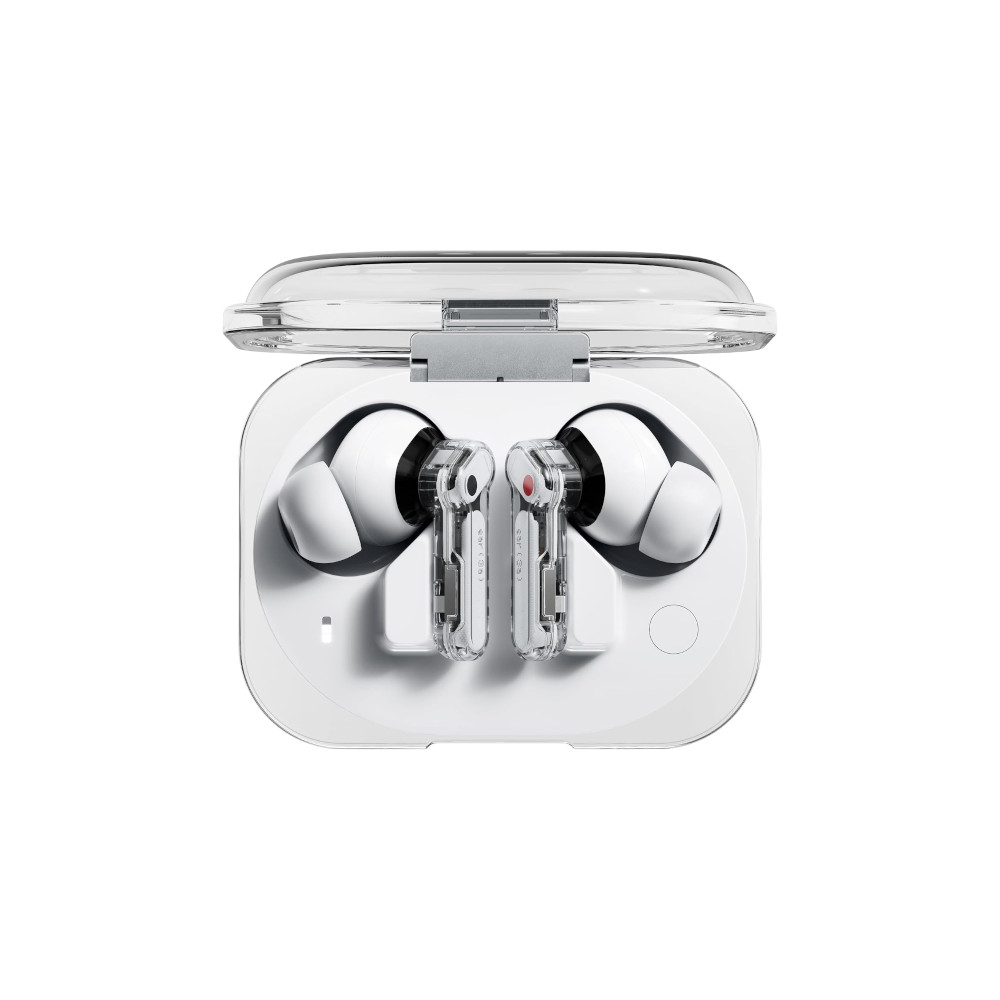
Two years ago, the Nothing Ear (a) earned a spot on our best budget earbuds lists by being good at everything and great at nothing. Now Nothing is back with the Ear (3a) at the exact same $99 price, and on paper, it looks like the sequel every budget product deserves: better noise canceling, a newer Bluetooth version, and more features than some flagship earbuds. But after testing both in our lab, the story is a bit messier than a clean generational win. Nothing fixed the old model’s biggest weakness and, in the same stroke, undid the thing it quietly did best.
Noise canceling is greatly improved
This is the biggest difference I noticed almost immediately. Active noise canceling (ANC) uses microphones to detect outside sound and play an inverted signal to cancel it out, and the Ear (a) was never particularly good at it. In our testing, the older buds reduced the loudness of outside noise by about 57% on average — enough to take the edge off traffic, but not much more.
The Ear (3a) cuts down outside noise by an average of nearly 81%, which is a huge improvement; it’s the difference between earbuds that muffle a bus engine and earbuds that mostly remove it. Nothing also added denser mesh material over the microphones to fight wind noise, which held up in my testing.
Neither model matches the best noise canceling earbuds at higher frequencies — sounds like nearby chatter still sneaks through more than I’d like on both. But if ANC is the reason you’re shopping, the comparison here isn’t close. It’s the single biggest advantage for the Ear (3a).
The default sound took a step backward
The Ear (a) shipped with a default sound that I liked for the most part: a modest bass boost with a few flaws, like quiet upper highs that robbed cymbals of their shimmer. When we ran it through the Multi-Dimensional Audio Quality Scores (MDAQS) — an algorithm that predicts how a panel of around 200 listeners would rate a product from 1 to 5 — it earned an impressive 4.7 overall in its default state. For $99 earbuds, that’s a tuning you could live with untouched.
In contrast, the Ear (3a) ships with dramatically over-emphasized bass, even on its default “Balanced” preset. The mids are under-emphasized against it, with a dip just under 226Hz, which makes the bass sound even louder and can leave vocals and guitars fighting to be heard whenever a kick drum shows up. Most people will find the overall sound dark and boomy out of the box. The panel scores stay solid — above 4.6 on the default preset — but my ears and our measurements agree: this is a tuning most listeners will want to change, where the old model’s was one most listeners could leave alone and enjoy out of the box.
The good news is the new EQ can rescue it
If the story ended there, this would be an easy “keep the old ones” verdict. Thankfully, it doesn’t, because Nothing also gave me an escape hatch. The Ear (a) offered only a basic three-band equalizer: sliders for bass, mids, and treble, with no way to target specific problem areas. Whatever you thought of its sound, you were mostly stuck with it.
The Ear (3a) includes an eight-band parametric equalizer in the Nothing X app, letting you pick exactly which frequencies to boost or cut and by how much. You can also browse and download EQ presets shared by other users, so you don’t need to understand any of this to benefit from it. Taming the default bass takes a few minutes of tinkering, and what’s left afterward is arguably the more capable set of earbuds, if you’re willing to do some work.
To save you that work, we’ve done it for you. If you want a quick fix, open the Simple tab of the equalizer and set Bass to -5, Mid to +1, and leave Treble at 0 — that alone reins in most of the boominess. For a more complete correction, we built a custom SoundGuys profile in the Advanced equalizer that pulls down the low-end emphasis and evens out the rest of the response. You don’t have to recreate it by hand: scan the QR code above with the Nothing X app, and it will load straight onto your earbuds.
Everything else is close to a wash

Beyond ANC and sound quality, these are recognizably the same earbuds. Both cost $99, share the same pinch-to-control stem design, carry an IP54 rating for dust and water resistance, support the LDAC codec for higher-quality streaming on compatible Android phones, and connect to two devices at once with Bluetooth multipoint. Both also have fairly excellent microphones for the price — call quality was a strength of the Ear (a), and the Ear (3a) keeps it while offering better wind handling.
Battery life is effectively a wash, too. The Ear (a) lasted 8 hours and 49 minutes in our standard testing, while the Ear (3a) reached about 10 hours — though a finicky wear sensor forced us to run that test with ANC off, so the numbers aren’t directly comparable. Either way, both comfortably outlast a workday of listening sessions.
The Ear (3a) does pull ahead on extras: Bluetooth 6.0, LE Audio support, and a nifty Audio Snapshot feature, which saves a clip of whatever you’re hearing when you pinch both earbuds. While fun, it may not be enough on its own to decide your purchase.
So which one should you buy?
If you’re buying today at full price, get the Ear (3a). The noise canceling improvement is meaningful, the EQ tools make the sound issues solvable, and everything else holds steady. Just go in knowing that the first thing you will likely want to do is open the app and turn the bass down.
If you can find the Ear (a) heavily discounted as retailers clear stock — and you’d rather have earbuds that sound right immediately with no app homework — the older model remains a perfectly good buy, provided you are okay with compromised noise canceling capabilities.
And if you already own the Ear (a)? I’d say upgrade only if the weak ANC has been bothering you. Otherwise, The Ear (a) still does everything The Ear (3a) does, and they sound better out of the box if you don’t want to touch the EQ.

ANC
LDAC
Thank you for being part of our community. Read our Comment Policy before posting.