All products featured are independently chosen by us. However, SoundGuys may receive a commission on orders placed through its retail links. See our ethics statement.

I tested the JBL Pulse 6, and I have an $80 question
Oct 17, 2026 — 5:00 AM ET
JBL Pulse 6
Weight: 1,490.0g


The JBL Pulse 6 is here with a significant redesign, including a new lantern-style handle and ambient lighting features that make it feel even more like a bedside lamp than a traditional portable Bluetooth speaker. Along with its usual colorful light show, the Pulse 6 even offers a dedicated bedside mode and a sleep timer to help you wind down at night.
But at $329.95, the Pulse 6 costs $80 more than its predecessor, despite keeping the same 40W rated output. That’s a pretty substantial price jump, and all those lighting tricks don’t change the fact that it still needs to perform as a speaker. So are the new features enough to justify the premium, or would your money be better spent on a more conventional Bluetooth speaker? Let’s find out in this JBL Pulse 6 review.
What’s it like to use the JBL Pulse 6?

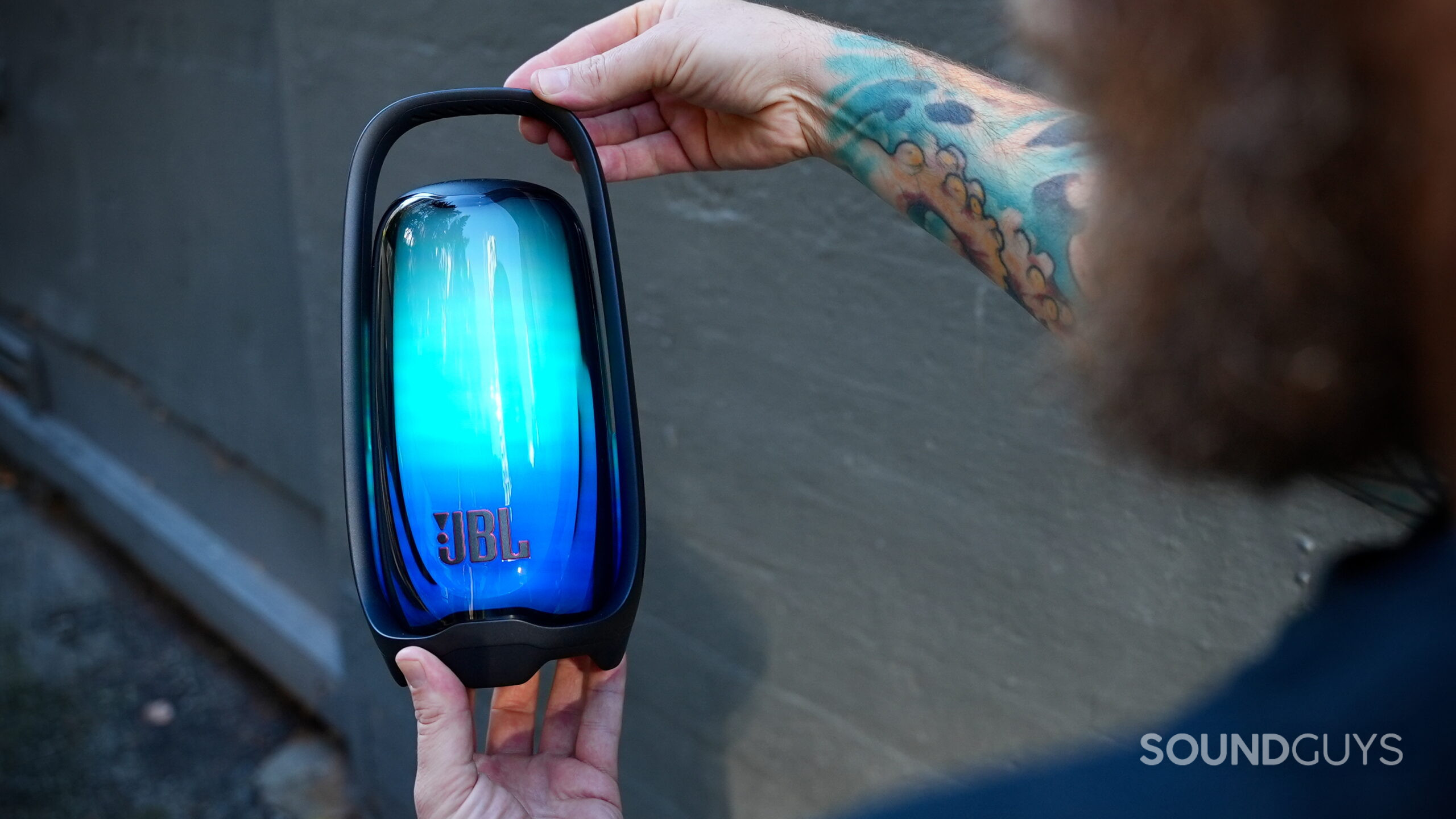
The JBL Pulse 6 gets a pretty substantial redesign, most notably with the addition of a large integrated handle, reminiscent of those old-timey lanterns you’ll find in something like Red Dead Redemption 2. I much prefer it to the small strap on the Pulse 5, which often left me grabbing the transparent housing whenever I wanted to move it around. Of course, that meant leaving fingerprints all over the light show. The new handle makes carrying the Pulse 6 around much easier, and despite its larger appearance, it weighs just 1.49kg (3.27 lbs), only 20 grams more than its predecessor. It also gets an upgraded IP68 dust- and water-resistance rating, so you don’t have to worry too much about dirt or rain if you decide to bring it along on a camping trip or a late-night park hang.
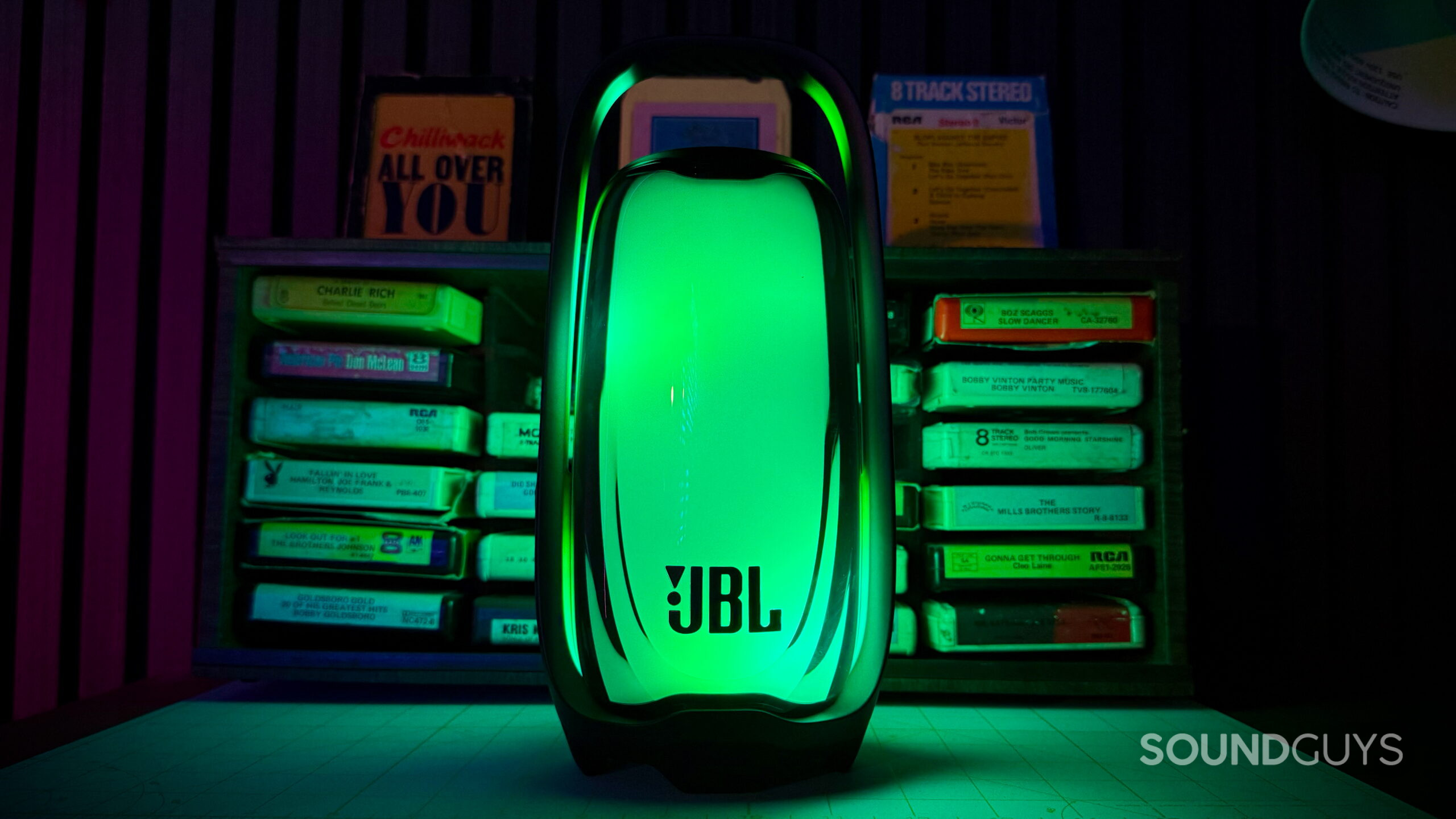
Underneath that new design, JBL hasn’t changed everything. The Pulse 6 has the same 40W rated output as the Pulse 5, along with a passive radiator on the bottom and an upward-firing driver at the top. The bottom passive radiator no longer lights up, but JBL has added lighting strips along the sides that follow the handle’s profile. These add another dimension to the light show, particularly with the campfire effect, where the light appears to travel upwards like flames. Combined with the lantern-style handle, it really sells the whole campfire aesthetic.
And that’s where I think the Pulse 6 makes the most sense: as a bedside lamp first and a portable Bluetooth speaker second. You can double-tap the speaker when music isn’t playing to activate a softer bedside light, and there’s a new Sunset Mode that gradually dims the lighting over a timer of up to 60 minutes before stopping your music. I can see the appeal of having one device handle both music and bedside lighting, although how useful these additions are will depend on whether you actually incorporate them into your routine.
The physical controls are relatively straightforward, with dedicated buttons for playback, volume, Bluetooth pairing, and lighting adjustments. I appreciate having the basics available without needing to reach for my phone, especially when I’m just moving the speaker around the house. Of course, you’ll still need the JBL One app to fine-tune the lighting, but the physical controls cover most everyday tasks.
What are the key features of the JBL Pulse 6?
The JBL Pulse 6 works with the JBL One app, which is where you’ll find most of its extra features. You can choose from different light show themes, customize their colors, and adjust the brightness and speed of the animations. There’s plenty to play around with here, and I appreciate that you can fine-tune the lighting rather than just cycling through a handful of presets, although you can still do that via the physical controls. The app also includes a few EQ presets and a 7-band custom EQ for adjusting the speaker’s sound to your preferences.
If you really want to lean into the Pulse 6’s new role as a bedside companion, the app also includes Mood Sounds, with options like a crackling fireplace, ocean waves, and rain. You could set the lighting to a warm red or orange, turn on the fireplace sounds, and fall asleep to the glow and sounds of a makeshift campfire. Or switch things up with blue-green lighting and the sound of ocean waves. The catch is that you can’t customize the Mood Sounds themselves. For example, the rain preset includes thunder, whether you want it or not, while the forest sounds come with various animal noises that you can’t turn off individually. It’s a shame JBL doesn’t give you more control here, especially when the lighting is so customizable.
Still, pair it with Sunset Mode, and you’ve got a pretty neat bedtime setup. It’s a use case for the Pulse 6 that makes it feel more like a bedside companion than a rough-and-ready Bluetooth speaker like the JBL Charge 6, which you’d toss in your bag for a day at the beach.
How does the JBL Pulse 6 connect?
The JBL Pulse 6 connects to your device wirelessly via Bluetooth 6.0 and supports SBC, AAC, and LC3 codecs. Additionally, like most other portable speakers in JBL’s lineup, it offers wired listening, including support for lossless audio via USB-C. Handy to have, but Bluetooth speakers—especially ones with a single upward-firing driver—aren’t exactly designed for critical listening, so don’t expect some magical audio transformation when listening over USB-C.
The Pulse 6 also supports Bluetooth multipoint, allowing you to connect two devices simultaneously. I confirmed this by connecting my phone and computer, and the speaker automatically switched from music on my phone to a YouTube video on my computer when I pressed play. Handy if you’re regularly jumping between devices.
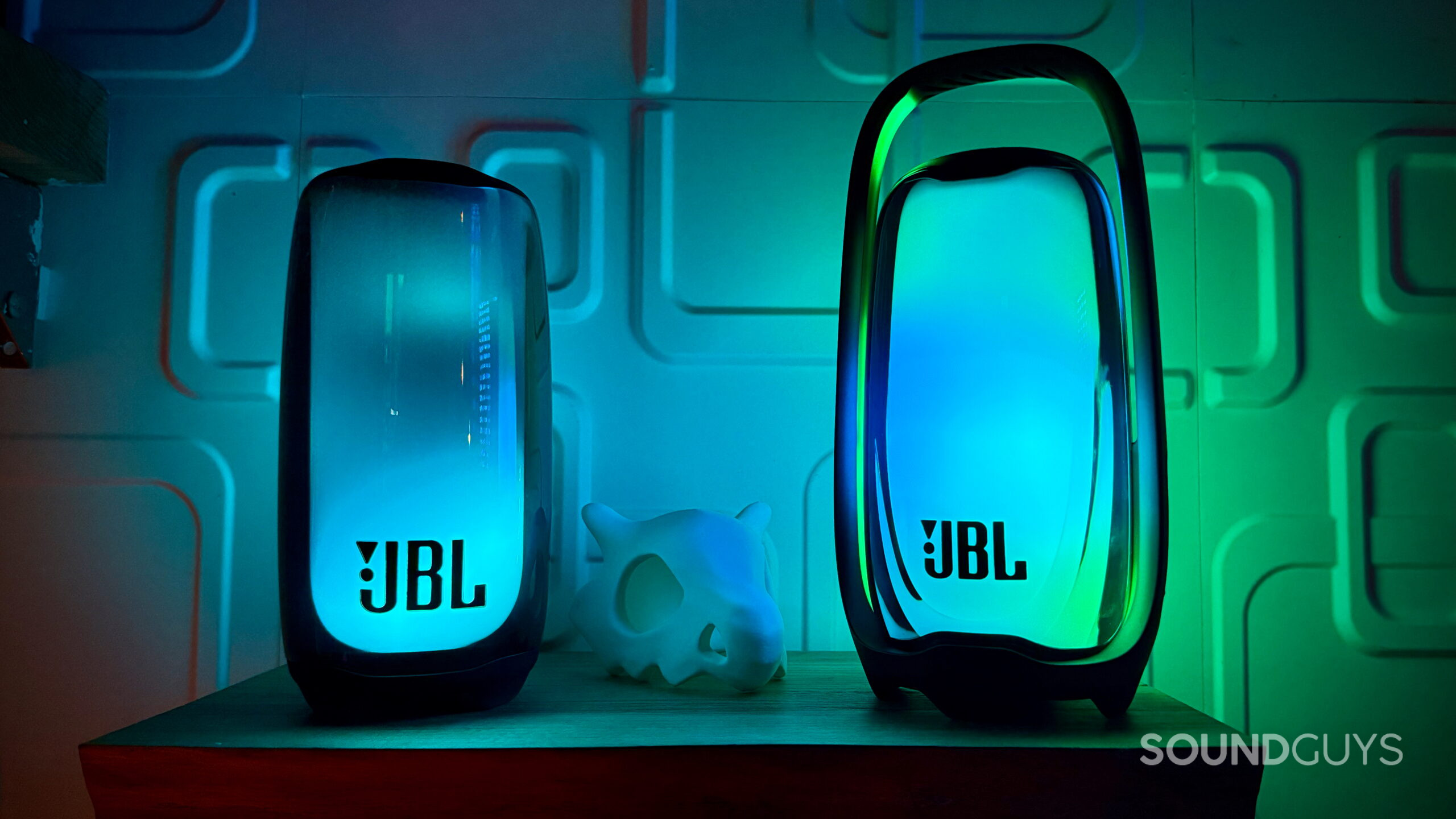
More importantly, the Pulse 6 is now Auracast-ready, meaning it can link up with other compatible JBL speakers for synchronized mono playback, from the Go 5 to the Xtreme 5 to the PartyBox 720. Of course, you also have the option of pairing a second Pulse 6 for stereo playback. Just keep in mind that Auracast isn’t backward-compatible with JBL’s older PartyBoost system, so you won’t be able to pair the Pulse 6 with speakers like the Pulse 5 or Charge 5.
How long does the JBL Pulse 6’s battery last?
JBL claims up to 12 hours of battery life for the Pulse 6, which is a little underwhelming for a $330 Bluetooth speaker. We haven’t independently tested that figure, but it’s worth remembering that all those lighting effects use power, too. And as with any portable speaker, battery life will depend on your listening volume and what you’re playing. You’re more likely to get close to that 12-hour figure listening to podcasts at quieter volumes than blasting EDM with an intense light show running.
The good news is that JBL encourages you to leave the Pulse 6 plugged in if you’re using it as a dedicated bedside companion. Given how much of its appeal revolves around ambient lighting and winding down at night, I suspect that’s where a lot of these speakers will end up anyway.
How does the JBL Pulse 6 sound?
Reviewer’s notes
Editor’s note: this review uses a hover-enabled glossary to describe sound quality based on a consensus vocabulary. You can read about it here.
No, the JBL Pulse 6 doesn’t have a built-in microphone, so you can’t use it for hands-free phone calls or voice assistant commands.
Should you buy the JBL Pulse 6?
There’s a lot to like about the JBL Pulse 6. It looks fantastic, feels durable, and the new lantern-style handle is a welcome improvement over the Pulse 5. The customizable light show is still impressive, and the new bedside features give it a practical purpose beyond just looking cool. If you’re after a speaker that doubles as an ambient light for your bedroom, I can certainly see the appeal.
But at $329.95, it’s hard to justify the $80 price increase when the sound performance is barely an improvement over its predecessor. The new 7-band EQ is a welcome upgrade over the Pulse 5’s 3-band EQ, but there’s only so much you can do with essentially the same driver design. As mentioned, you could buy two Charge 6 speakers for less when they’re on sale. If you want something with more bass strength for outdoor parties, a discounted JBL Xtreme 5 makes more sense.
File the JBL Pulse 6 under the 'wait till it goes on sale' folder.
I think the bigger challenge JBL faces now is that the Pulse lineup’s light show isn’t quite as unique as it once was. Plenty of cheaper Bluetooth speakers, like the Soundcore Boom 2 ($129.99 at Amazon) or Boom 3i ($129.99 at Amazon), now offer customizable lighting, even if they don’t look quite as impressive.
Ultimately, I enjoyed using it as a bedside companion, but unless you’re specifically buying it for the design and lighting features, I think there are better ways to spend $330.
File the JBL Pulse 6 under the “wait till it goes on sale” folder.
Thank you for being part of our community. Read our Comment Policy before posting.