All products featured are independently chosen by us. However, SoundGuys may receive a commission on orders placed through its retail links. See our ethics statement.
Don't buy a portable Bluetooth speaker until you know these 5 things
Jun 12, 2026 — 7:00 AM ET


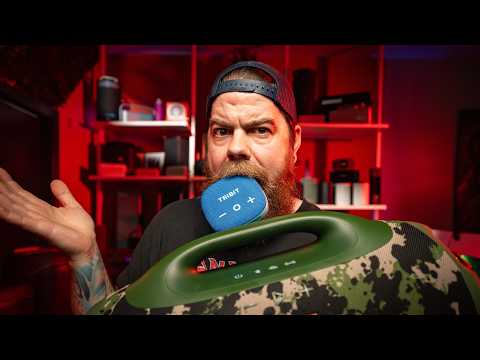
I test Bluetooth speakers for a living. That means I’ve spent a lot of time listening to everything from tiny clip-on travel speakers to massive party speakers so big they’re a two-person lift. First-time buyers tend to make the same mistakes over and over again, and I get it. The features and sound descriptions are right there on the box, and they look authoritative.
The thing is, some of the most important factors never show up on a spec sheet at all. So before you hit the buy button on your first portable Bluetooth speaker, here are five things worth knowing.
What's the most important factor when buying a portable Bluetooth speaker?
Bigger speakers usually sound better

If sound quality is your top priority, bigger speakers usually sound better. Larger enclosures have room for bigger drivers, larger passive radiators, and potentially more of them, allowing them to move more air. More air movement can translate to stronger bass and a fuller overall sound.
That doesn’t mean a small speaker can’t sound good. Some of the best compact speakers I’ve tested deliver impressive sound for their size. Still, when you compare two similarly designed speakers from the same lineup, the larger model usually has the advantage.
Manufacturers keep finding ways to squeeze better sound out of smaller enclosures, but physics still wins in the end.
Now, that doesn’t mean everyone should buy the biggest speaker they can find. One of the best things about a small speaker like the JBL Go 5 or the Soundcore Select 4 Go is that you’ll actually take it places. It fits in a pocket, weighs almost nothing, and you won’t think twice about throwing it in a bag for a hike or a beach day.
The trick is matching the speaker to how you actually plan to use it. If you need one speaker to do everything, buy the biggest one you can while still keeping it portable enough for your needs. If portability isn’t a concern, don’t compromise on size just for the sake of it. And if your budget allows, there’s nothing wrong with owning a small speaker for bike rides, park hangs, and a bigger one for the backyard. Dedicated tools for dedicated jobs.
Manufacturers keep finding ways to squeeze better sound out of smaller enclosures, but physics still wins in the end.
Not all IP ratings are created equal

Almost every portable Bluetooth speaker comes with some level of water resistance these days, which is great. But it’s worth looking past the marketing and understanding what the IP rating on the box actually means.
An IP rating tells you how well a speaker handles dust and water. Most of my favorite portable speakers carry an IP67 or IP68 rating, meaning they’re protected against both dust and water to some extent. That’s what you want if you’re regularly at the beach, camping, or hanging around a pool.
That said, some speakers only cover water resistance. The Soundcore Boom 2 is a good example. It carries an IPX7 rating, which means it can survive water submersion, but the X indicates dust resistance was never tested. For most people, that’s not a dealbreaker, but if you’re regularly listening somewhere sandy, it’s worth knowing before you buy.
The good news is that most portable speakers today offer enough protection for everyday use. Just don’t assume every IP rating is created equal.
Battery life claims don’t tell the whole story

Battery life is often a deal-breaker for many new buyers, and rightfully so. You don’t want your speaker dying mid-party. So when a speaker advertises 20 or 24 hours of battery life, think of that as a best-case scenario. Manufacturers typically measure battery life at moderate volume levels under controlled conditions. Start cranking the volume, playing bass-heavy music, or running LED lighting, and that number is going to drop fast.
In my experience, volume has the biggest impact. Background music while you’re working at your desk is one thing. Keeping a rowdy backyard barbecue going all afternoon is another. The easiest way to think of it is like this: The harder a speaker works, the faster it drains.
The harder a speaker works, the faster it drains.
The JBL Charge 6 is a good example. JBL advertises up to 24 hours of battery life. In my testing at a level closer to party volume, it lasted about 13.5 hours. That’s still plenty for most situations, but it shows how different real-world use can be from what’s printed on the box.
None of this means manufacturers are being dishonest. It’s just that your listening habits matter as much as the hardware. Treat battery life claims as ballpark figures rather than guarantees.
“Stereo” doesn’t always mean what you think it does

Many portable Bluetooth speakers advertise stereo sound, but that doesn’t always mean what you’d expect from a traditional stereo setup.
The first thing to know is that some popular speakers are actually mono. The JBL Flip 7 and Bose SoundLink Flex, for example, each use a single woofer and a single tweeter. They combine the left and right channels into a single output, so while they can still sound great, you’re not getting a true stereo image.
Sometimes the best upgrade is just buying the same speaker twice.
Other speakers use separate left- and right-channel drivers in a single enclosure, sometimes with a dedicated woofer for a 2.1-style layout, like the JBL Xtreme 5 or Soundcore Boom 2. Those speakers can deliver better instrument separation, which is definitely an improvement over a mono speaker. The catch is that all those drivers are still packed into a relatively small box, so with the left and right channels sitting only a few centimeters apart, the effect is far less convincing than two speakers placed several feet apart.
That’s where stereo pairing comes in. Most portable speakers let you connect two identical units, one handling the left channel and the other handling the right. I’ve said it before, and I’ll say it again: Sometimes the best upgrade is just buying the same speaker twice. Run them in proper stereo, and you’ll get a more convincing stereo image than any single speaker can offer, regardless of how many drivers are packed inside it.
A single speaker can still sound great. Just don’t expect it to replace a proper dual-speaker setup.
Your speaker will sound different everywhere you use it

This is the lesson that surprises people the most. One of the first things I notice when reviewing a Bluetooth speaker is how dramatically it can sound different from one environment to the next.
One of the best examples I can think of happened while I was camping beside a river. Back at camp, my speaker sounded great. But once I moved closer to the water, it suddenly had to compete with the constant sound of the river. Later that evening, the wind picked up, and that changed things again. The speaker hadn’t changed at all, but the environment around it had.
The space around a speaker plays a huge role in what you actually hear.
That’s one reason I never judge a speaker after listening in just one location. The space around a speaker plays a huge role in what you actually hear. Put a speaker near a wall, and the bass gets a boost from the sound reflecting back toward you. Move that same speaker to the middle of a field, and a lot of that bass just disappears into the open air. It’s the same speaker, it just sounds like a different one.
People absorb sound, too. A speaker that sounds plenty loud in an empty room can struggle to cut through once it’s surrounded by a dozen people talking at a barbecue.
None of this is the speaker’s fault. It’s just doing its best in a completely different environment. So before you decide a speaker sounds amazing or disappointing, try moving it around.
So, which portable Bluetooth speaker should you buy?

The good news is that portable Bluetooth speakers have never been better. It’s genuinely difficult to buy a bad one from a reputable brand these days.
If you’re still not sure where to start, think about how you’ll actually use your speaker. If you’re constantly on the move, prioritize portability. If sound quality matters most, buy the biggest speaker you’re willing to carry. From there, look for a solid IP rating, treat battery life claims as estimates, and don’t get too caught up in marketing terms like stereo. If you need a few recommendations to get started, check out our guide to the best Bluetooth speakers.
Most importantly, remember what portable Bluetooth speakers are designed to do. They’re not meant to replace a hi-fi stereo system or studio monitors. They’re designed for beach days, backyard barbecues, camping trips, and hanging out with friends. The best speaker isn’t necessarily the one with the longest spec sheet; it’s the one you’ll actually enjoy using.
Thank you for being part of our community. Read our Comment Policy before posting.