All products featured are independently chosen by us. However, SoundGuys may receive a commission on orders placed through its retail links. See our ethics statement.
I stopped streaming music on my phone and switched to a classic iPod. It fixed my focus.
Jul 10, 2026 — 5:30 AM ET


At no point in history has access to music been this easy, this affordable, and this abundant. With a single tap on a smartphone, services like Spotify or Apple Music grant us instant access to nearly every song ever recorded. It’s safe to say that this ease of access is an absolute modern-day miracle.
The problem isn't music streaming, it's what you're streaming your music on.
However, lately, I’ve realized that this infinite jukebox glitch has also been ruining my relationship with music and focus. And let’s be real: for most of us, music and focus go hand in hand. In fact, I’d go so far as to say that it is a critical aspect of my daily productivity and serves as the background score for how I work. And yet, the modern smartphone-based listening experience is more disruptive than conducive to my focus. So, I decided to fix that.
Would you trade music streaming for improved focus?
Streaming isn’t broken, smartphones are

I don’t know about you, but for me, instead of serving as a relaxing backdrop or a focus aid during my workday, streaming from smartphones has become an active source of distraction. Call me old school, but when I popped in a cassette or CD, I’d just let it run its course while I sat down with my math homework. Today, however, I find myself trapped in an endless cycle of skipping tracks, hunting for the perfect playlist and YouTube channel, and letting Spotify’s dubious algorithmic decisions dictate my work session. All, while my phone nudges me with emails, WhatsApp texts, Slack pings, and to-do list reminders. It’s chaotic.
In my opinion, the fundamental problem with modern music streaming isn’t audio quality — with the prevalence of lossless streaming, that’s a solved problem. Nor would I say that it is pricing. As expensive as streaming is getting, it’s still a steal compared to buying individual albums. The problem is your source, more specifically, your smartphone.
When your music player is also your inbox and to-do list, getting into a flow state can be an absolute challenge.
When your music player is also where you do work, your communication hub, and your primary source of social communication, music ceases to be an independent experience. It just can’t be. On a typical afternoon, I would start a curated electronic music playlist on Spotify, determined to get through a couple of hours of deep work. Fifteen minutes into the playlist, a change in tempo would invariably break my concentration, prompting me to pick up the phone to skip ahead. You pick up the device and catch a notification badge on Slack or an unread message. A quick second track change turns into a few minutes of aimless scrolling, and a few more minutes of getting back into a flow state. All that time adds up.
The turning point came when I looked at my weekly screen time and noticed just how much of it was driven by simply trying to manage my audio. Every time a song did not perfectly match the vibe I was going for while trying to meet a deadline, I reached for my phone. That single action inevitably opened the floodgates to notifications, emails, and social media pings. Self-control is a tough skill to master, and I’m going to be real here: I’m not the best at it. I keep my phone on silent mode, but if I see a notification shade crammed with messages and updates, I’m going to reach for them.
Even if you resist the temptation of other apps, streaming apps themselves are optimized for distraction, cloaked under the guise of discovery. The endless carousels of recommendations, new releases, and personalized mixes can be fatiguing.
And that’s before we get to the appalling experience of listening to music using the free tier of a streaming service. You can forget about any semblance of a flow state when you’re being subjected to jarring advertisements.
So, in an effort to bring back some sanity to my workflow, I decided to run an experiment. I completely stopped streaming music on my smartphone, got myself an iPod, and committed to only listening to offline music. The results were profound.
Reclaiming my focus, one click at a time

Why an iPod, you ask? For one, iPods are having a bit of a moment, so it’s fairly easy to get your hands on them. At a time when most modern digital audio players have moved to touchscreen-based interfaces, the iPod’s famously simple scroll wheel interface remains appealing. Moreover, the slab of metal and plastic still looks charming, plus the iPod was my first music player, so there’s a hint of nostalgia involved, too. But there are plenty of budget DAPs from the likes of FiiO, Sony, and Surfans that start well under $100, and ship with modern conveniences like Bluetooth and USB-C, and don’t require hunting the used market.
The immediate practical benefit of switching to a dedicated music player like the iPod is the tactile nature of the controls. The iPod’s user experience is so dead-simple that you can work your way around the interface without even looking at the screen. So, even if I do need to swap around tracks in a playlist or even an album that I’m listening to, I can do that without breaking my flow. No biometric unlocks needed, and, obviously, no notifications to bother you.
Removing notifications and disturbances from music listening removed the biggest distractions from my work day.
Yes, the iPod Classic can play videos and has a few games, too, but even I, with my nostalgia-tinted glasses, am not going to get sucked into a rabbit hole of watching anime on it. Basically, by more or less eliminating that screen interaction entirely, I removed the primary gateway where I used to lose my train of thought.
But, there’s more to it. For one, there’s a certain intentionality required by an offline-only medium. Because an iPod relies on music that you own, curate, and decide to place in your library, you simply do not have the luxury of an endless discography that can take you down rabbit holes. What’s on your iPod is what you can listen to.
If you want to refresh your library, you have to connect it to a computer, acquire some new music, and deliberately choose what goes on the iPod. This might sound like a massive step backward in terms of modern conveniences, but it serves as an excellent filter. If an album isn’t worth syncing over, it probably isn’t worth distracting me during a deep work session either.
Decision paralysis is a real problem

Decision paralysis is a real problem. Look at how often you end up just scrolling through Netflix, unable to decide what to watch. What I quickly discovered after making the switch to the iPod was that a curated library is great when you just want background listening, and often even for active listening. Press play and let the iPod choose for you, or pick out one of a dozen playlists or filter by a genre. Irrespective of what you choose to do, it doesn’t take more than three clicks or so to get anywhere in the interface, and you’re good to go. When you have access to a virtually limitless catalog, the pressure to find the absolute perfect song for your exact current mood is exhausting. You end up spending more time scrolling through menus and skipping tracks than you do actually enjoying the music. I know I do.
A curated library beats an endless catalog when you're trying to get your work done.
Now, I’m no psychologist, but it makes sense to me that if you remove the ability to micromanage and optimize your experience, your brain simply stops hunting for the next hit of dopamine from music. That’s certainly been my experience. I just hit play on some liquid drum and bass and get to work. The music plays entirely in the background, no distractions and definitely no interruptions. It’s quite liberating, honestly.
Uninterrupted listening lets you get back your focus
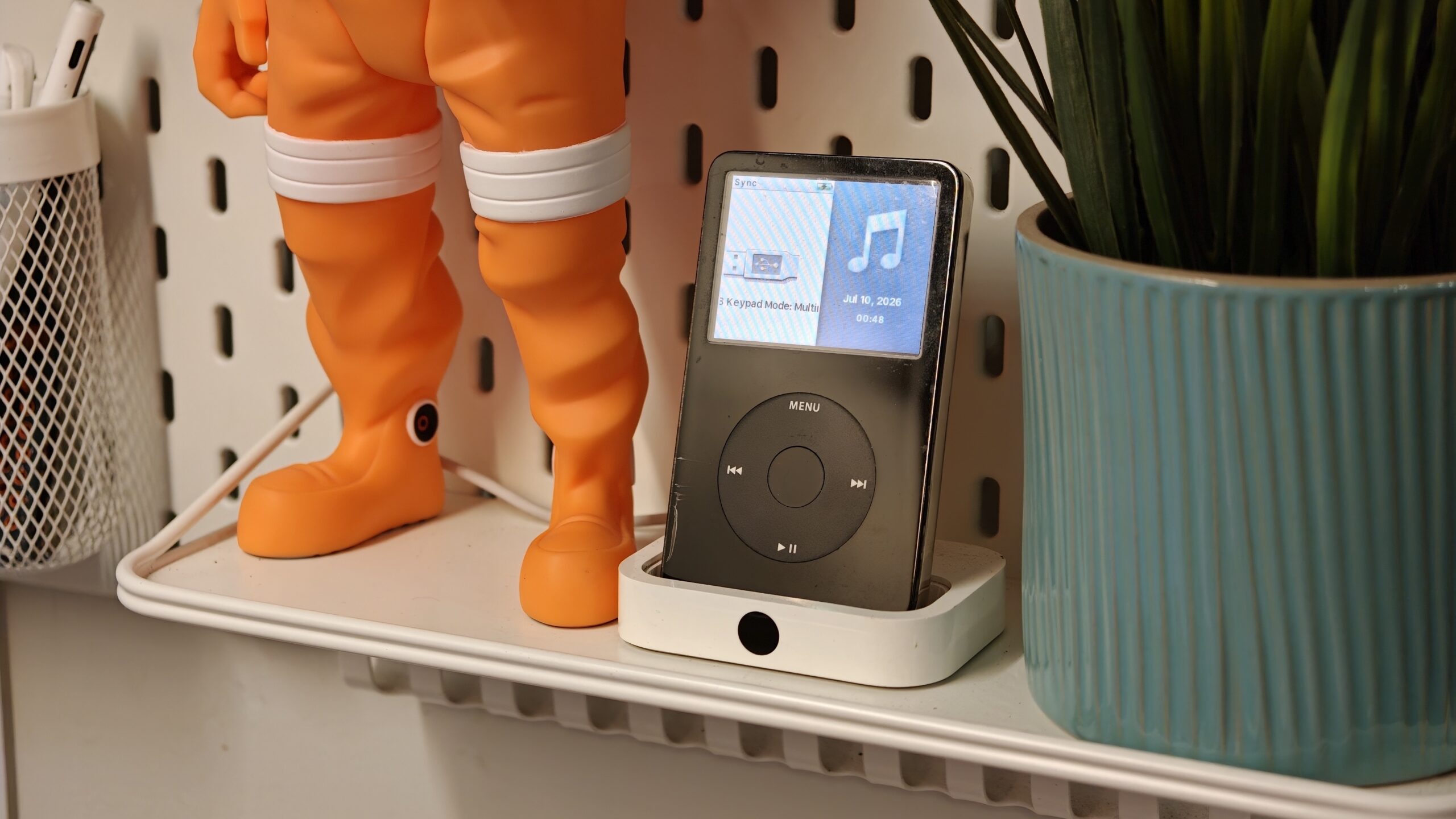
Perhaps the most rewarding part of this experiment has been a return to album-centric listening. Modern streaming is all about the latest viral track, with a hook optimized for Instagram. Me? I like concept albums. Letting Iron Maiden’s Seventh Son of a Seventh Son play in its entirety, or a curated set by my current favorite DJ, Smooth Brain Girlie, I can let myself get immersed in the ebbs and flows of the music as it was produced by the artist, not the algorithm.
Just enough friction makes the iPod, or any old-school music player, the best productivity tool around.
When I started letting these records run from front to back on a dedicated player without the temptation of switching to the next banger, I realized just how much depth I had been missing. Songs that I would have previously skipped on a streaming playlist because they started too slowly became some of my favorite tracks because I gave them the time to develop.
None of this was new to me. As a vinyl collector, this is what I seek in a listening session. But context matters, and it certainly was something I’d forgotten in the last decade of throwaway listening. Even if the music is serving as a backdrop to your study or work session, a well-produced album that flows together makes the experience better, and reinforces your focus instead of taking away from it. And when a 60-minute album ends, it serves as the perfect cue to stretch my legs and grab a coffee or glass of water.
The productivity benefits outweigh the hassle
Of course, this retro lifestyle is not without its fair share of compromises, and I can’t in good conscience say that going offline is as seamless as I make it sound. For one, you’re going to miss out on the social experience of modern-day listening. If someone sends you a Spotify link, sorry, your iPod or budget music player can’t play that. You’ll have to get back to your computer, acquire the track or album, and transfer it to your music player. There’s a lot of friction there.
The logistics of a physical music library are another thing to deal with. Sourcing high-quality digital files can be a chore, and a rather expensive one at that, unless you sail the high seas. You’ll also be giving up some of the performative gestures of modern music streaming. I’m talking about things like Spotify Wrapped that give you an infographic at the end of the year designed specifically for the gram.
But for me, those inconveniences are a small price to pay for the mental clarity switching to an offline music player has provided. The constant connectivity of smartphones makes it far too easy to lose focus in a busy workday. By trading access to a limitless library of music for a curated one, I was able to bring my attention back to the work at hand and restore focus. More than that, though, it helped me realize that sometimes, less choice is exactly what you need.
Thank you for being part of our community. Read our Comment Policy before posting.