All products featured are independently chosen by us. However, SoundGuys may receive a commission on orders placed through its retail links. See our ethics statement.

iFi Go Pod Max review: A high-end DAC for your IEMs
Dec 16, 2025 — 12:57 PM ET
ifi Go Pod Max
Case: g


If you’re already spending a couple of hundred dollars on IEMs, why limit yourself to listening on a desk? For twice the price, you can enjoy CD-quality music without being tied to anything with the iFi Go Pod Max. However, it costs $599, which is way more than most flagship wireless earbuds. Even if you do have the money to spend, is moving to Bluetooth good enough for your IEMS?
This article was published on Dec 16, 2025, and this is the first version of the article. Updates will follow as the market changes.
What I like about the iFi Go Pod Max

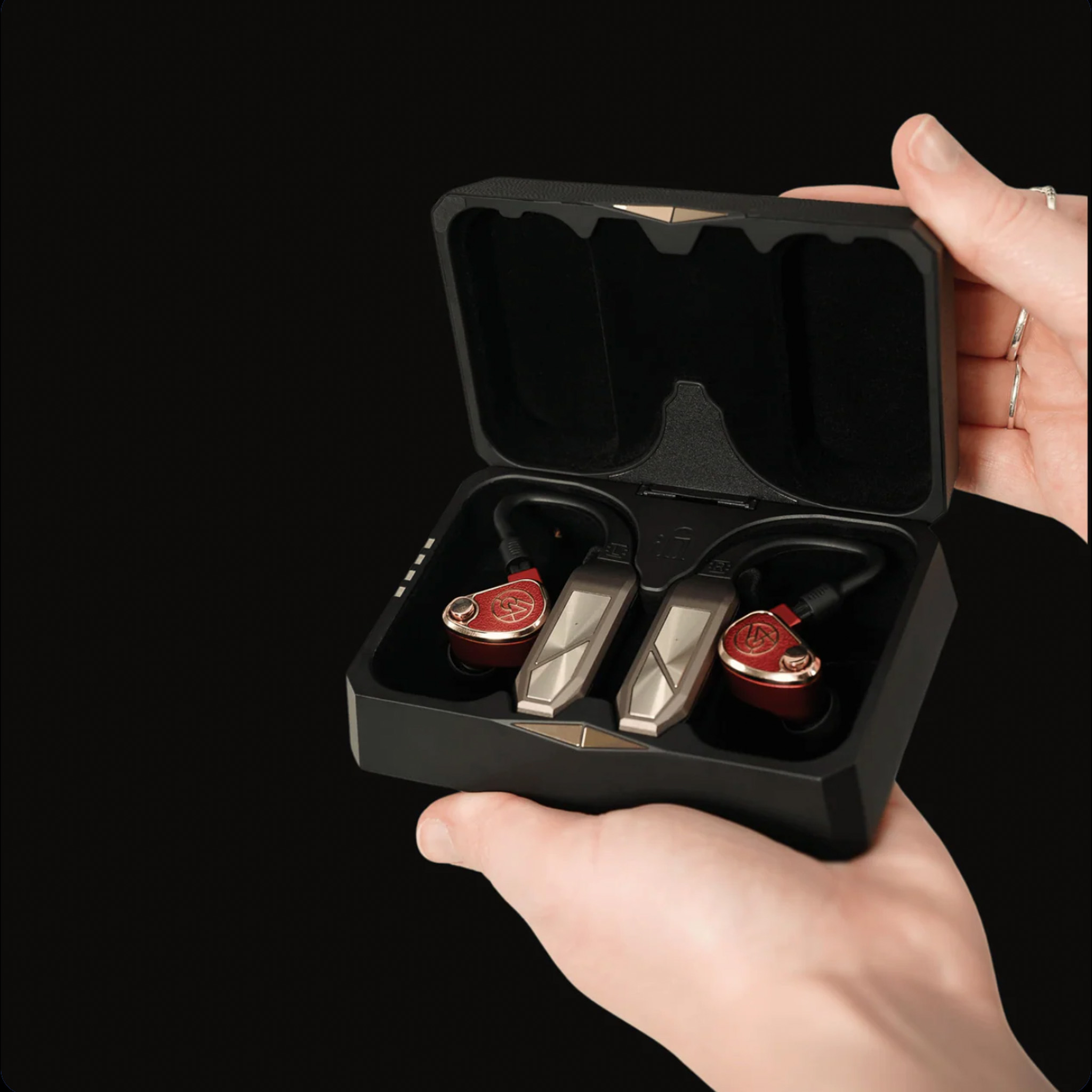
The iFi Go Pod Max is crafted from high-end materials. The charging case itself is large and imposing, and makes for a great conversation starter. It looks like a high-end treasure chest in the dungeons of a fantasy RPG. There are a lot of brass panels on the case. In line with the high-end nature of the box, it even features lights when you open it. The lights shine on from above, lighting your prized possessions. Honestly, that’s a really nice touch. There’s no need to fumble around, even when in the dark. I almost missed that when you close the case, it floods the inside with UV light, sterilizing the earhooks. If that wasn’t enough, the case also has wireless charging.
The charging case looks like a treasure chest from a fantasy RPG.
The battery life lasts 8 hours and 26 minutes in our standard testing. I haven’t had any issues where I run out of battery life while going out. It’s more than enough for a whole workday. Putting them back in the case from time to time extends the battery life enough for the commute back. For home use, I can listen to them all day.
The Bluetooth DAC earhooks themselves resemble the case, and the hooks are made of rubber. If you do pocket just the DACs, they magnetize to each other, making it hard to lose a single side. For fit, the rubber hooks are really comfortable to wear, since they’re thicker than cables and don’t dig into my ear. What I do like is that you can use both mmcx and 2-pin connectors. Many more IEMs use 2-pin connectors these days than MMCX. At least you don’t ever have to choose. You just pull off the earhooks and then swap them into the proper connector. But is there a sacrifice in sound quality when using Bluetooth instead of a wired connection?
You can use both MMCX and 2-pin connectors—no need to choose between IEMs.
For sound, it’s not exactly like a full desktop DAC. It’s to be expected. You won’t get the full audio spectrum through Bluetooth compression. The plus side is that you can achieve a CD-quality bitrate with aptX lossless. Given most environments, you would use a Bluetooth adapter, is out and about, or doing chores that make noise, the slight lack of detail and treble isn’t much of an issue, if at all. I couldn’t tell instantly without a side-by-side comparison. So how does it sound?
Compared to running a desktop DAC like the Fiio K11, there’s a slight lack in treble and depth in the stereo imaging. Using the Kiwi Ears Septet with the Go Pod Max, the most apparent part is the slight but noticeable lack of spatial depth easily noticed in tracks like “Flowers” by In Love with a Ghost and Nori. While there’s a slightly lower treble shelf, there’s a noticeable drop in the upper treble, making many metal instruments sound a little unnatural. The lack in the upper treble is especially noticeable in guitar tracks like “Mexicana” by Opal Ocean.
What I don’t like about the iFi Go Pod Max

There’s no going around the fact that the case is huge. Like iFi tends to do, they tread the line between a large, inconvenient form factor and being a portable device. The case is nowhere near pocketable, but it is still portable. Either I have cargo shorts, or I put it in a bag. Given the size, there isn’t a place to put the earhook replacements either. While the earhooks themselves are made of rubber, the body of the adaptor is metal, causing some discomfort after four hours and being painful enough to remove after six hours.
Too big to pocket, too heavy for running, and painful after six hours of wear.
While there are two earhooks for MMCX or 2-pin, there are too many variations of the 2-pin standard. It would have been nice to include the different versions. There are only really two versions of MMCX, so I wish that were included as well. While it isn’t the worst thing, since the 2-pin connector is mostly compatible with a lot of the 2-pin variants. The problem arises because the fit changes considerably depending on the IEM. If it doesn’t have the recessed connection, it gains some height. It can make the fit feel looser compared to the original cable earhooks.
The loose fit can occasionally cause issues with the connection. It mostly occurs on specific IEMs, such as the Sennheiser IE 600, which only experiences issues when I turn my head. There’s the Moondrop Chu II, which has a similar form factor to the IE 600, causing Bluetooth disconnections randomly. I haven’t had issues with the Kiwi Ears Septet and Campfire Audio Satsuma. It’s more of an issue when I’m trying to use the Go Pod Max while jogging outdoors. Not that the iFi Go Pod Max is meant for that.
The earhooks are a little heavy for a run, but they do fine on a walk. There is no water resistance, which isn’t great. But let’s be honest, this is for convenience. Going out in the rain and swapping IEMs isn’t going to be a common occurrence. I wouldn’t take these outside, except for a short walk.
While you aren’t left without a microphone, the onboard microphones aren’t great. Check out the sample below:
Should you buy the iFi Go Pod Max?

For a $599 price without IEMs, all signs point to the iFi Go Pod Max being the best option for indoor use. The case is large enough to cover a wireless charging pad and make a good conversation starter. It gives you swappable connectors, so you don’t have to choose between MMCX or 2-pin variants. While I did hit some connection issues, it’s dependent on the IEM. However, you get a full gamut of Bluetooth codecs from AAC all the way up to aptX Lossless.
For $600, it's a niche hi-fi solution for IEM enthusiasts, not a replacement for modern wireless earbuds.
I would recommend the iFi Go Pod Max to those who want to have a hi-fi solution while doing chores, without having to blast speakers. Whether you’re in the office or in the kitchen, there’s no need to tie yourself down. You don’t lose much audio fidelity, so you can use it for critical listening. It’s much better if you travel a lot and would like a portable hi-fi setup without having to lug around a DAC/AMP like the Fiio K11. If you need a portable desktop DAC, consider the iFi Hip DAC 3 instead. It’s more pocketable than the iFi Go Pod Max, and it also features a built-in battery, but it lacks Bluetooth.
For most people, it’s interesting, but not something I would recommend, as it lacks features you would get with modern earbuds like the AirPods Pro 3. The iPhone only uses the compressed AAC codec. Android phones don’t necessarily have aptX lossless either. At the time of writing, popular phones like the Samsung Galaxy series aren’t compatible with aptX lossless, with the highest specification being aptX HD. So, unless you absolutely adore a specific pair of IEMs, it’s not worth spending $599 on the iFi Go Pod Max over wireless earbuds like the Technics AZ-100.
iFi Go Pod Max review: FAQs
Any IEM will be good with the ifi Go Pod Max. We can't test all of the IEMs with theifi Go Pod Max, but it doesn't lose much in terms of sound fidelity.
The ifi Go Pod Max works on iOS and Android. However, you will be limited to the Bluetooth codec supported by the device.
Thank you for being part of our community. Read our Comment Policy before posting.