All products featured are independently chosen by us. However, SoundGuys may receive a commission on orders placed through its retail links. See our ethics statement.
Here's how I've kept my headphones alive for years
Aug 19, 2026 — 5:30 AM ET


Though I get to test hundreds upon hundreds of personal audio products, I actually don’t talk about what I own much — because it’s ancient by contemporary standards. Up until a year ago, I’d been keeping a set of ancient wireless headphones with a micro-USB port alive well past their operating life. Though I definitely didn’t always follow my own advice, here’s how I set myself up for success almost a decade ago.
I bought replacement pads first
Since my ancient Koss headphones disintegrated on me when I was a teenager, I’ve made it a habit to buy up spare parts and stash them in my computer drawer for the electronics in my life. Mobile phone screen protectors, extra USB cables, and — you guessed it — spare headphone pads. Though there’s not really any scarcity of them, if you wait too long, they’ll get sold out after a few years of your headphones’ obsolescence… or just become a lot more expensive to obtain as time goes on. When I saw pairs of replacement pads for my headphones for 20 bucks a pop: I bought 2 sets.
How long do your headphones last on average?
Assuming everything goes off without a hitch, your ear pads and band padding will disintegrate with normal use eventually. Most popular wireless headphones use that “vegan leather” nonsense or cloth that will succumb to skin oils, heat, and grime. If you want to keep your headphones in working order for the long haul, why not take the extra step and poke around to look at replacement pads? If you can’t find any, that should set off some alarm bells in your head that maybe these cans aren’t the ones to last you more than a couple years.

Some older models of headphones actually used earpads compatible with other models to bypass this. For example, the Sony MDR-V6 was everywhere, and you could even use those earpads on a select list of competing models. A quick search on Reddit should help you figure out if the headphones you’re about to buy are similar. You could also buy headphones from a brand that uses a similar design in all of its products, like Beyerdynamic. If you own headphones in that company’s DT over-ear line: you can just grab anything compatible — it’ll fit your headphones.
I protected the battery — and the charge port
The second part of your headphones that will eventually break is the power system in your wireless headphones. Whether it’s the charge port with its tiny solder points connecting it to the circuit board, or the battery itself giving up the ghost — these are the most likely things that will get you to ditch your headphones.

Keeping the charge port of your headphones working is difficult without buying extras, because every time you plug your USB cable into it, you’re likely putting disproportionately high strain on tiny little solder points. If those solder points crack or break altogether, you won’t be able to charge your headphones; so this is more important than it sounds. After getting frustrated with the microUSB port of my headphones, I picked up some of those magnetic USB cables that leave a contact plate inside the charge port. By transferring the main point of strain to something that’s supposed to come apart, the charging port survives to this day.
The battery, on the other hand, is a bit more complicated. Though I’ll happily rip apart anything I own to upgrade it — and have, many times — very few people cover how to replace batteries in contemporary headphones. It’s time-consuming and expensive! If you’re technically inclined, you could check iFixit’s lovely database, but changing the battery of most older headphones is going to require you to perform some surgery. Even though this will start to change in 2027, wireless headphones currently on the market, by and large, are tough to repair (wired ones, not so much). After replacing my first battery with a somewhat sketchy pickup from AliExpress, I learned more about battery hygiene to avoid this task in the future.

Ever hear the old adage, “An ounce of prevention is worth a pound of cure”? Well, the same is true here. By keeping the charge level between 50 and 80 %, I was able to extend the new battery’s operational life for much longer than the original one. Nowadays, several models of headphones and earbuds have the ability to enforce these charge habits automatically — and I’ll use them once I have headphones new enough for the feature.
I got comfortable with cleaning
As much as it sucks to clean your devices, headphones are one of those things that are prone to foreign object damage. Specifically, any gunk that can find its way to a part that shouldn’t be touched: the drivers and the electronics. You might not be aware that it’s even happening, because the holes in the chassis are pretty small.
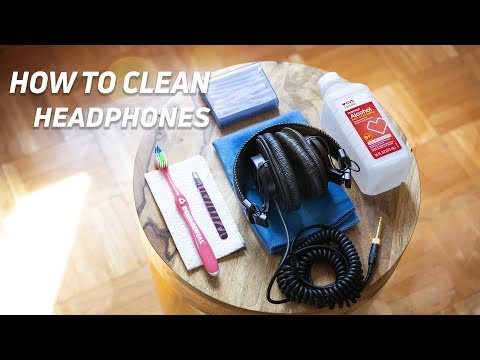
To clean my headphones, I give them a periodic wipedown with alcohol pads (of which we have thousands at home), and use either gentle bursts of compressed air or cleaning putty to get the gunk out of the cracks and crevices. It might seem like overkill, but do you know what those little holes around the outside of your headphones are? There’s a good chance that they’re microphones for the ANC unit. If you get too much gunk past the windscreen — or if you don’t have windscreens at all — you could have a bunch of crud rattling around on that mic affecting your headphones’ performance.
Similarly, if you don’t pop off the ear pads every now and again, you could find a buildup of hair, grime, and other crap on the actual speaker driver itself. While it won’t kill your headphones, it could cause annoying sounds. Some headphones have this happen so often that there are even fun nicknames assigned to the phenomenon. I’m not going to get into what I found when I opened up my headphones for the first time, but suffice to say, I learned pretty quickly that my headphones were far grosser than they looked from the outside.
All good things…
Of course, sometimes your headphones are just dead, and there’s no coming back. After eight years of almost daily use, I realized my ANC headphones (now falling apart on a monthly basis) weren’t worth repairing. I’d swapped the battery, I’d replaced the pads several times, and I’d even started printing replacement parts to hold the band together; but once I started re-soldering some broken contacts on the board inside… it was time to move on. My kids still use these headphones occasionally — they’re still operational enough — but they’re too fragile to be daily drivers anymore. If my kids break the headphones, it’s no sweat — they were dead anyway.

At a certain point, your headphones are just done. You could conceivably replace parts indefinitely, but few have the time, patience, and money to do that. When a new set is only a few bucks more than a repair costs, you tend to wonder aloud whether you’re truly giving into Gear Acquisition Syndrome, or simply making the best financial decision. And I’ll tell you from experience: just do the math. You’d be surprised how much shipping costs, taxes, and part scarcity can add up over time. As much as it sucked to buy a new set of headphones after my last one died, I’m glad I moved on.
Thank you for being part of our community. Read our Comment Policy before posting.