All products featured are independently chosen by us. However, SoundGuys may receive a commission on orders placed through its retail links. See our ethics statement.
I tested CMF’s milk carton speakers, and one is clearly the better buy
Oct 28, 2026 — 5:00 AM ET


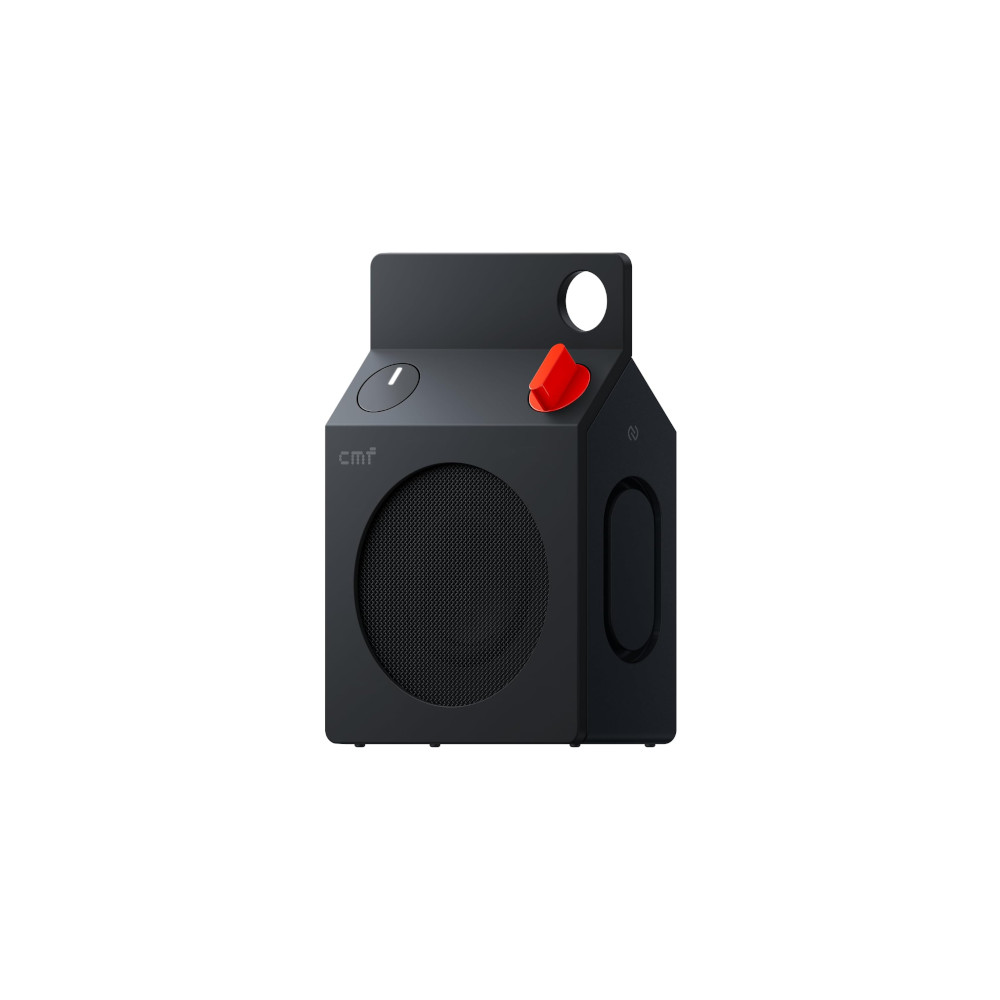
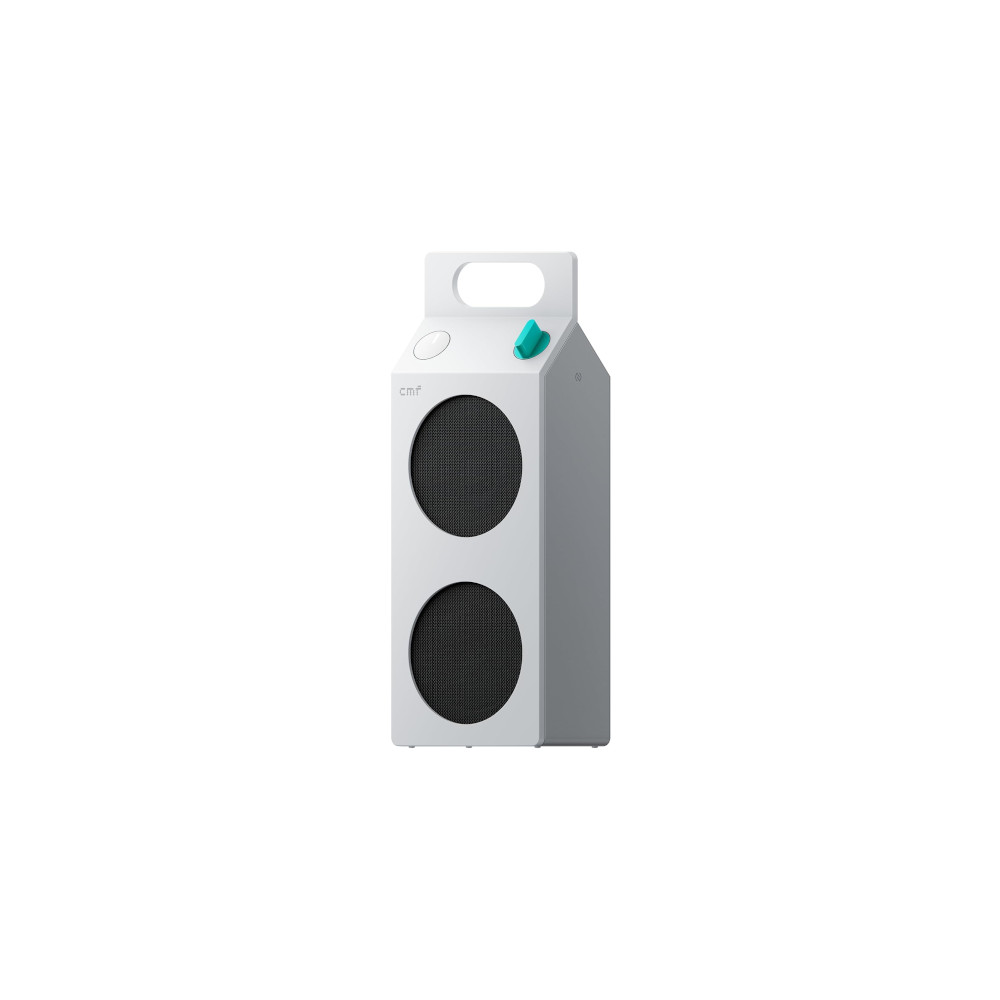
CMF, Nothing’s budget-friendly sub-brand, is known for its wild and colorful designs. This time, it’s looking to the dairy aisle for inspiration with its first two portable Bluetooth speakers, the $59 Speaker S and $109 Speaker M. Both take their design cues from milk cartons while packing in plenty of features for the money, including IP68 protection, Auracast, and up to 18 hours of claimed battery life.
It’s refreshing to see something that doesn’t look like a knockoff of every other Bluetooth speaker on the market, but a fun design only gets you so far. After spending a week with both speakers, I found that one makes a much stronger case for your money. Let’s get into it.
What’s it like to use the CMF Speaker S and Speaker M?

Spend enough time looking at Bluetooth speakers, and you’ll notice a lot of them look suspiciously alike. I’ve seen entire booths at CES filled with cheap speakers that look like someone copied a JBL and changed the logo, so it’s nice to see CMF doing something different. Instead of another generic cylindrical speaker wrapped in fabric, we get two little milk cartons. Sure, why not?
Now, both speakers have removable front panels and detachable control knobs, giving them that unmistakable CMF personality. There’s even a dedicated lock slider that keeps each faceplate in place. Slide it to unlock, and you can pull the panel off. Unfortunately, I noticed some scratches on the speaker housings after removing the faceplates, which isn’t ideal for something designed to come apart. CMF doesn’t have replacement faceplates available yet, either, so the customization options are pretty limited for now. You may as well just leave them on.
If you’re looking to take these on the go, the smaller Speaker S weighs just 334g and has a utility hook for attaching it to a bag, while the larger, 602g Speaker M gets more of a carrying handle. Both also have an IP68 rating for dust and water resistance, so a little rain shouldn’t be a problem.
I appreciate that CMF has kept things physical, too. Both speakers have dedicated power, Bluetooth pairing, and Auracast buttons, plus a removable knob for volume and playback. Turn it to adjust the volume, press it to play or pause, or double- and triple-press to skip tracks. It’s all pretty intuitive.
What are the key features of the CMF Speaker S and Speaker M?
For a couple of budget Bluetooth speakers, CMF has packed in quite a few features. Both work with the Nothing X app, where you can check battery levels, update the firmware, customize the controls, and adjust the sound.
There are four EQ presets to choose from: Balanced, More Bass, More Treble, and Voice. You can also create your own settings using a three-band EQ. On top of that, there’s Ultra Bass, Night Mode, Low Lag Mode, and Wide Soundstage, so there’s plenty to play around with.
I’m not entirely sold on Wide Soundstage, though. Both speakers offer a Fixed setting, but don’t expect it to magically recreate a proper stereo image. On the Speaker M, I found the difference pretty subtle. It was much more noticeable on the smaller Speaker S, where it brought the reverb forward on Tame Impala’s “The Less I Know the Better.” I didn’t particularly enjoy the result.
Both work with the Nothing X app, where you can check battery levels, update the firmware, customize the controls, and adjust the sound.
What’s more annoying is that enabling Wide Soundstage bypasses your EQ settings and disables Ultra Bass. Turn Ultra Bass back on, and Wide Soundstage automatically switches off. I’d much rather have the freedom to use these settings together.
Both speakers support Auracast, allowing you to connect the Speaker S and Speaker M in Party Mode for synchronized mono playback. For stereo, you’ll need two speakers of the same model. Party Mode also disables EQ, Ultra Bass, and several other settings, so you’ll have to give up some sound customization when connecting multiple speakers.
How do the CMF Speaker S and Speaker M connect?

Both CMF speakers use Bluetooth 6.0, supporting SBC, AAC, and LC3 (for Auracast) codecs. Neither has a 3.5mm aux input, but both support lossless audio over USB-C, with CMF claiming less than 60ms of latency. It’s a nice option to have, especially if you want to connect to a laptop, although I suspect most people will stick with Bluetooth.
You also get NFC pairing, Google Fast Pair, Microsoft Swift Pair, and multipoint connectivity, allowing you to connect your phone and computer simultaneously and seamlessly switch between them.
How long do the CMF Speaker S and Speaker M’s batteries last?

Interestingly, CMF claims up to 18 hours of playback from both speakers, despite the larger Speaker M offering 35W of advertised output compared with just 10W from the smaller Speaker S.
CMF bases its 18-hour estimate on AAC playback at 50% volume, using the Balanced EQ preset with Ultra Bass enabled. Of course, battery life depends on how you use your speaker. You might get close to 18 hours listening to podcasts at your desk, but cranking EDM at full volume is a much faster way to drain the battery.
How do the CMF Speaker S and Speaker M sound?
Both CMF speakers offer good clarity and plenty of treble strength, but while the Speaker S makes the most of its small size, the larger Speaker M falls short on bass strength and depth compared to other speakers in its class.
Reviewer’s notes
Editor’s note: this review uses a hover-enabled glossary to describe sound quality based on a consensus vocabulary. You can read about it here.
Neither speaker lists a built-in microphone, so don’t expect to take calls or use voice assistants through them. Not a big loss for a portable Bluetooth speaker.
Should you buy the CMF Speaker S and Speaker M?

I was genuinely excited to try these speakers because they look so different from everything else on the market. And for a first attempt, I think CMF is onto something.
For $59, the Speaker S is an easy recommendation. It offers good clarity, plenty of treble strength, and a decent amount of bass for its size. I love the design, and it’s a great little speaker for your desk or taking on the go. If you’re shopping around, the JBL Go 5 ($49.95 at Amazon) is worth a look, especially if you like built-in lights. It also has an IP68 rating. Or, if you just want something cheap and cheerful, the Soundcore Select 4 Go ($34.99 at Amazon) often drops to around $20 on sale.
I’d rather buy two Speaker S units for stereo than one Speaker M.
The $109 Speaker M is a tougher sell. Don’t get me wrong, it offers that same good clarity, and it’ll do just fine playing music for you and a few friends. But for nearly twice the price of the S, I wanted a bigger jump in bass strength and depth. The JBL Flip 7 ($149.95 at Amazon) costs more, but delivers noticeably more bass strength and depth. The Soundcore Motion 300 ($79.99 at Amazon) is another alternative worth considering, especially if you want stereo playback and LDAC support.
Personally, I’d rather buy two Speaker S units for stereo than one Speaker M.
Conversation
Read what readers said or add your take.