All products featured are independently chosen by us. However, SoundGuys may receive a commission on orders placed through its retail links. See our ethics statement.
Best earbuds and headphones for sleeping
Feb 9, 2026 — 12:30 PM ET


Increasingly, many people like to listen to music or a podcast to help them fall asleep. You’re probably one of them if you are here. Perhaps you sleep beside a loud snorer or live in an apartment with thin walls and a neighbor who parties all night. Thankfully, there are a growing number of purpose-built earbuds and headphones available to help you block out the noise and get some rest. Sure, you could wear whatever headphones or earbuds you have on hand, but often, unless you’re a perfectly still back sleeper, they can be wildly uncomfortable or difficult to wear when smothering a pillow. Here are the best earbuds and headphones for sleeping we’ve tested thus far.
Disclaimer
One major thing to note is that wearing headphones or earbuds while you sleep can be unsafe. Potential complications include ear infections and hearing loss because you're potentially putting pressure on something inside your ear, and you don't really know how loud your audio is while you're unconscious. If you accidentally turn the volume up in your sleep and it doesn't wake you up, you could sustain noise-induced hearing loss from being exposed to loud sounds for an extended period of time. So know that there are potential dangers, and try your best to mitigate them by being responsible with your headphones.
- February 9, 2026: We added the Soundcore Sleep A30 as the top pick for the best noise canceling earbuds for sleeping. We also updated the introduction and article format for readability.
- November 28, 2024: We added the Ozlo SleepBuds to the top picks.
- June 2, 2024: We added the Anker Soundcore Sleep A20 to the top picks.
The Quick Answer
For a quick guide to the best earbuds and headphones for sleeping that suit your needs and budget, check out our top picks below. For guidance on the best time to buy and price history, see the following sections for each pick.
The noise canceling earbuds for sleeping: Anker Soundcore Sleep A30
The best earbuds for sleeping on side: Ozlo Sleepbuds
The best fearplugs for sleeping: Loop Quiet 2
The best headphones for sleeping: Edifier W820NB Plus
The best wired earbuds for sleeping: Moondrop Chu II
Best noise canceling earbuds for sleeping: Anker Soundcore Sleep A30

The Soundcore Sleep A30 finally brings active noise cancelation to the sleep earbud category, addressing the biggest weakness of its predecessor—poor low-frequency isolation. Our testing confirms the ANC performs excellently in the 20-200Hz range where traffic, HVAC systems, and snoring typically occur, making these particularly effective for light sleepers sensitive to ambient noise. The ultra-low-profile design remains comfortable for side sleepers throughout the night, and the comprehensive accessory selection (four pairs of silicone tips, three pairs of memory foam tips, three pairs of ear wings) ensures a secure fit for most ear shapes.
Beyond noise blocking, the Sleep A30 offers impressive sleep-focused features, including adaptive snore masking that monitors and adjusts to your partner’s snoring in real-time, customizable AI-powered brainwave audio with spatial audio support, and extensive white noise options. However, the ANC comes at a cost: battery life drops to just 7.5 hours in our testing—short of a full night’s sleep—and the $229.99 retail price is steep compared to the ANC-less A20 at $149.99. If you can find these on sale closer to the $139-$199 range, they’re an excellent choice for side sleepers dealing with noisy partners or urban environments who prioritize active noise cancelation over maximum battery life.
Read our full Anker Soundcore Sleep A30 review
Best earbuds for sleeping on side: Ozlo Sleepbuds

The Ozlo Sleepbuds represent the spiritual successor to the beloved Bose Sleepbuds, engineered by the same team that created the original. At $299, they’re asking for a premium investment, but they deliver where it counts most: comfort and fit. The ultra-compact design features four sizes of ear tips with flexible silicone wings that stabilize in the concha, keeping the buds securely in place throughout the night even for restless sleepers. Side sleepers will appreciate the minimal pressure against the pillow, and the 9.5-hour battery life easily covers a full night’s sleep with four days of total charge from the case.
The key upgrade over the discontinued Bose model is the ability to stream your own audio content—podcasts, playlists, or audiobooks—alongside the built-in library of white noise and sleep sounds. The auto-switch feature is particularly clever, transitioning from your chosen audio to white noise after a set time so you can fall asleep to a podcast and finish it in the morning. Sleep tracking features are now live, rounding out the feature set. While passive isolation performs well against environmental noise like AC, conversations, and traffic (attenuating up to 40dB at higher frequencies), the lack of ANC means low-frequency sounds like snoring or bass-heavy noise may still come through. If you prioritize maximum comfort, the flexibility to play custom audio, and don’t mind the premium price for a polished sleep solution, these are an excellent choice—though budget-conscious buyers will find similar core features in alternatives like the Soundcore Sleep A20 at half the cost.
Read our full Ozlo Sleepbuds review
Best earplugs for sleeping: Loop Quiet 2
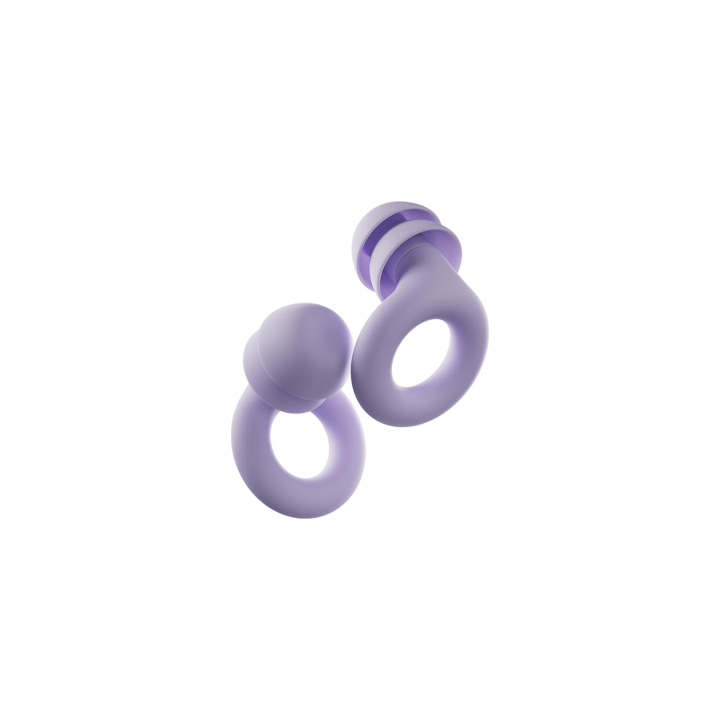
The Loop Quiet 2 are simple, effective earplugs designed to muffle unwanted noise during sleep, work, or travel. Our lab testing shows they reduce outside noise loudness by an average of 72.8%, which is sufficient to significantly quiet disruptive sounds like traffic, HVAC systems, and noisy neighbors. At $34.95, they’re an affordable alternative to electronic sleep earbuds for those who prefer passive noise blocking without batteries, apps, or charging cases.
The Quiet 2 Plus variant adds double ear tips that Loop claims improve isolation, though our testing found only marginal improvement (73.5% vs 72.8% reduction). Given the minimal performance difference, most sleepers will be fine with the standard single-tip version unless you want the option to experiment with both configurations. These are ideal for budget-conscious sleepers who want reliable passive noise reduction without the complexity or cost of active electronics.
Read our article on the best earplugs for sleeping for more options
Best headphones for sleeping: Edifier W820NB Plus

The Edifier W820NB Plus are budget-friendly over-ear headphones that punch well above their $80 price point for back sleepers seeking comfortable nighttime listening. The roomy ear cups and cushy headband provide excellent padding that creates a quality seal around the ears, delivering both comfort and effective passive isolation. Our testing shows strong ANC performance, particularly at nulling out low-frequency rumble around 100Hz (like engine noise or HVAC systems), while passive isolation handles higher-frequency sounds like conversations effectively.
The sound quality is impressive for the price, scoring 4.8 overall in our MDAQS testing—close to that of premium headphones like the Bose QuietComfort Ultra, which cost over four times as much. Battery life is excellent at nearly 32 hours with ANC enabled, and the headphones support wired audio via USB-C, making them versatile for both sleeping and daytime use. The main caveat is heat buildup in the well-sealed ear cups after about 30 minutes, which may bother warmer sleepers, and the non-folding design limits portability. Side sleepers should also note that while they won’t cause pain if you shift positions occasionally, the over-ear design is best suited for back sleepers. At $80, these offer exceptional value for anyone wanting comfortable, noise canceling headphones for nighttime listening without breaking the bank.
Read our full Edifier W820NB Plus review
Best wired earbuds for sleeping: Moondrop Chu II


For under $20, the Moondrop Chu II delivers exceptional value as a wired sleep earbud option with sound quality that punches far above its price point. The frequency response closely mirrors our headphone preference curve through the bass and midrange, ensuring balanced audio whether you’re listening to podcasts, audiobooks, or music to fall asleep. The over-ear cable design hooks around the back of your ear for a secure fit that’s less likely to dislodge during sleep, and the removable 2-pin cable means you can replace it if it gets tangled or damaged from nightly use.
These metal IEMs provide decent passive isolation that’s most effective against high-frequency environmental noise like conversations or traffic, though they lack the ANC capabilities of pricier sleep earbuds. At 8g per earbud, they’re heavier than typical wireless buds (4-6g), and some users may experience discomfort after a couple hours of wear, particularly where the anti-helix meets the concha. The low-profile design works reasonably well for back sleepers, though side sleepers should be aware of potential pressure points when pressing your ear into the pillow. The main trade-off is the wired connection—you’ll need a 3.5mm headphone jack (or a dongle), and there’s always the risk of the cable getting tangled in sheets. However, at this price point with removable cables and genuinely good sound quality, the Chu II are an excellent low-risk option for anyone wanting affordable wired earbuds for sleep.
The best headphones and earbuds for sleeping: Notable mentions

- Anker Soundcore Sleep A20 ($149.99 at Amazon): The predecessor to the A30, the Sleep A20 offers a more budget-friendly option at $149.99 with exceptional 14-hour battery life and the same comfortable low-profile design for side sleepers. However, the lack of ANC means poor low-frequency isolation, and the sleep sound presets are notably lower quality and muddier than the A30’s improved brainwave audio features.
- Anker Soundcore Life Q20 ($59 at Amazon): A more affordable yet slightly less comfortable option for noise canceling headphones for sleeping upright or on your back.
- 1MORE Z30 Sleep Earbuds($79.99 on Amazon): These are slightly more affordable than other earbuds and have an ergonomic fit. They don’t have ear wings, so they are slightly less secure and more likely to fall out of your ears. But they have a similar battery life and a companion app features.
What you should know about the best headphones for sleeping
Low-profile earbuds are best for side sleepers
When looking for earbuds to sleep in, you want to make sure they don’t stick out of your ears too much, so you can sleep in any position without pain. If you’re looking for earbuds for sleeping that double as everyday earbuds, finding something with a low profile is key. If you’re looking for headphones for only sleep use, headband-style headphones for sleeping are comfortable in any position.
Back sleepers have more options
Sleeping on your back obviously makes this easier since you don’t have to worry so much about your earbuds or headphones hurting your ears while you sleep. You can get away with pretty much any wireless earbuds or headphones if you’re a back sleeper, as long as they have ample battery life (over 8 hours) and fit comfortably on your ears. The world is your oyster, as you can consider more affordable headphones or top-of-the-line noise canceling earbuds.
Battery life should last you all night
You can wear wired headphones to bed, and our top pick is, indeed, a pair of wired earbuds. But if getting tangled in wires is a concern, wireless headphones are the way to go.
The caveat is that you don’t want your headphones dying on you while you’re sleeping unless you just need headphones to lull you to sleep for a short time. On average, adults should get at least seven hours of sleep a night, so your headphones should accommodate that and more. Some people take a while to fall asleep and need an hour of buffer time with their headphone battery life, and many people need more than just seven hours of sleep. Aim for headphones with a battery life of 10 hours at least, since that gives you enough time to fall asleep and can accommodate people who sleep closer to nine hours a night.
Mono and stereo listening
As a side sleeper, when I’ve slept in earbuds, I take out one of the earbuds so I can rest comfortably on the pillow while listening to music through one ear. If this is what you want to do with your earbuds, it’s a good idea to change your audio settings to mono, so you’re not just getting one channel of audio through your earbuds while you sleep. You can do this by going into the audio section of your phone’s accessibility settings. If you never move your head around at night, some earbuds have a single earbud listening mode that allows you to have mono sound through one earbud.
Noise canceling vs isolation
Passive isolation and ANC both keep sounds out of your ears to ensure a restful sleep, but they work in different ways. Passive isolation uses a physical barrier to keep sound out, so the fit of your ear tips or the seal of your headphones matters a lot. ANC cancels out noise using inverse frequencies to what’s going on around you—it will keep out droning noises your headphones can pick up and cancel out. Still, incidental noises are muffled better by passive isolation. The best way to keep sound out is with headphones or earbuds that have really good passive isolation, along with ANC.
How we test the best headphones for sleeping

At SoundGuys, we perform objective tests to measure things like frequency response, isolation, microphone quality, and more. We use a Bruel & Kjaer 5128 head and torso simulator (HATS) with an anatomically realistic ear canal and outer ear. After collecting all of this data, we score each product through various objective and subjective measures. When it comes to things we aren’t able to test hands-on, we do diligent research in order to find the products that best fit your needs.
How we choose the best headphones for sleeping
Based on our objective testing and uses of the products, we choose which products fit each criterion a person might need to fulfill. Our team confers with one another regarding the best products for a given category before presenting our list to you. It’s not over after we hit “publish,” though. We treat every article as a living document and update it as new and worthy products come out.
Why you should trust SoundGuys
Each writer at SoundGuys has accumulated years of experience reporting on the consumer audio market, and our staff adheres to a strict ethics policy. Our team doesn’t directly sell any products or have any personal financial stake in whether you make a purchase. We pride ourselves on transparently outlining objective facts while accounting for the subjective experience to contextualize an audio product’s performance. When we do misspeak, we correct and own up to it.
Frequently asked questions
Earplugs are a great option if you just want to block out noises while you sleep. Foam ear plugs are affordable and easy to use, and you can also find reusable silicone ear plugs.
A pair of headband-style headphones like the SleepPhones Wireless is probably the best option for people who tend to toss and turn since earbuds might easily become dislodged and over-ear headphones will get in your way.
Yes, it’s generally safe to sleep with your headphones, provided they are comfortable and do not pose a risk of causing physical harm (such as causing pressure sores or raising your volume levels too high). However, it’s important to keep the volume at a safe level to avoid potential hearing damage.
No, noise canceling headphones are not inherently bad for sleep. In fact, they can help create a quieter environment, which can be beneficial for sleep, especially in noisy environments. However, comfort is key, as poorly fitting headphones could disrupt your sleep or cause discomfort.
The Moondrop Chu earbuds excel as wired sleep companions with their secure fit, superior sound quality, and comfort, all at an affordable price.
If earbuds cause discomfort, you might want to consider a sleep headband. The Perytong Sleep Headphones, for instance, feature thin, flat speakers embedded in a soft, breathable headband. They provide a comfortable, pain-free alternative to traditional earbuds or the bulkiness of headphones, making them a great choice for side sleepers or those who find earbuds uncomfortable over time.
Both headphones and earbuds have their pros and cons for sleeping. Headphones typically offer superior sound quality and noise isolation, but they may not be comfortable for side sleepers due to their size. Earbuds are less intrusive and potentially more comfortable for various sleep positions, but they may not offer the same level of noise cancelation and can sometimes fall out during sleep. As a third option, there are also specially designed sleep headphones with a headband design. These are typically flat and soft, making them comfortable for all sleep positions, and they won’t fall out or apply too much pressure to your ears. The best choice ultimately depends on your personal comfort and sleep habits.
Thank you for being part of our community. Read our Comment Policy before posting.