All products featured are independently chosen by us. However, SoundGuys may receive a commission on orders placed through its retail links. See our ethics statement.
Sony 1000X The Collexion vs Sennheiser HDB 630: Which audiophile headphones are worth the splurge?
May 22, 2026 — 5:00 AM ET
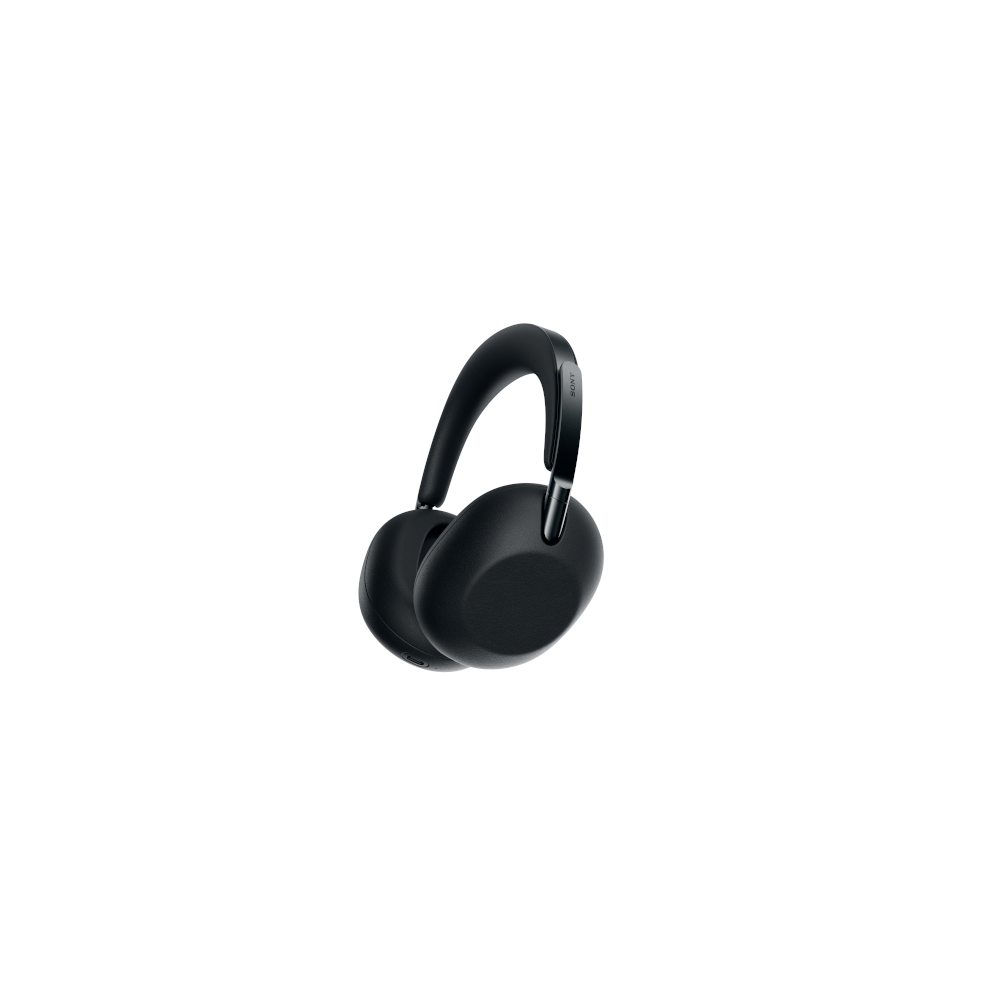
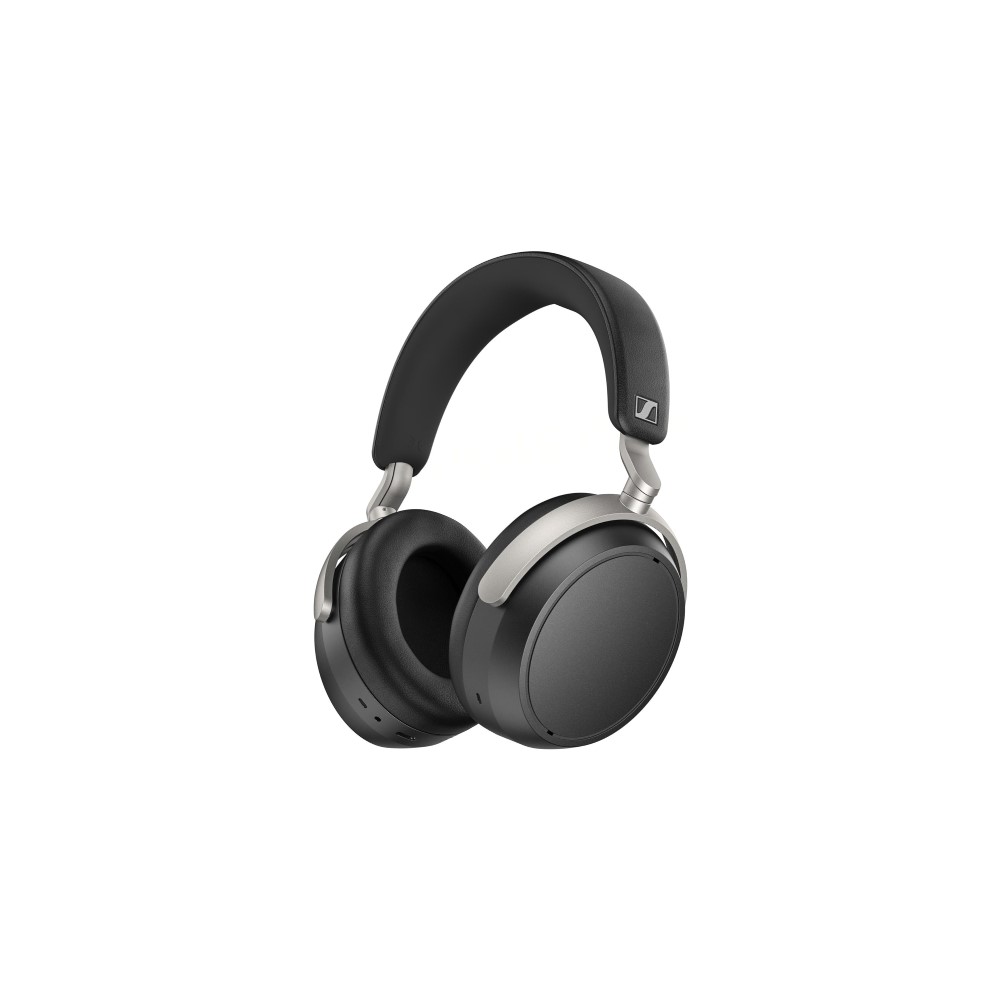



The Sony 1000X The Collexion and the Sennheiser HDB 630 are both premium ANC headphones that cost some serious coin. But spending more doesn’t always mean getting more of what you actually want — and at this price, figuring out which one fits your priorities could save you a lot of buyer’s remorse. Let’s break it all down.
This article was originally published on May 22, 2026, and this is the first version.
What’s it like to use the Sony 1000X The Collexion compared to the Sennheiser HDB 630?

The Sony 1000X The Collexion looks a lot like Sony’s previous ANC headphones at first glance, but the details are pretty different. The band is now predominantly metal, the earcups are leather-covered, and the folding hinge from the WH-1000XM6 has been replaced with a stainless steel swivel joint. That swivel is more durable, but it means the headphones can only lie flat — no folding up. Sony leaned into this with the carrying case design, using the gap between the band and earcups as a built-in handle. There are physical buttons on the left earcup to control ANC, upmixing, and power, and touch controls on the flat surface of the earcups for everything else.
The Sennheiser HDB 630, meanwhile, looks and feels like more conventional premium headphones: matte plastic body, lighter metallic band, and it also folds flat for travel. The hard-shell fabric case has pockets for the included cables, adapter, and BTD 700 dongle. Touchpad controls on the right earcup handle everything from volume to ANC toggling, though they can occasionally stop responding and need a quick toggle in the app to reset.
Both are comfortable, but the HDB 630 has a comfort edge in extended wear. The deep leather-like padding means it can go all day without fatigue. Sony’s extra earcup volume and padding are genuinely comfortable too, but getting the right fit can be fussier — if you can’t get it seated properly, the bass rolls off noticeably, and the passive isolation isn’t as great. Neither carries an ingress protection rating, so keep both away from rain and heavy sweat.
Do the Sony 1000X The Collexion or Sennheiser HDB 630 have more features?

The Sony Collexion headphones have more features overall. The V3 chip powers DSEE Ultimate, which uses AI to upscale lower bit-depth audio while also extending in the frequency domain — a step up from DSEE Extreme. There’s a dedicated upmixing button that cycles between movie, game, and music modes, plus a background music mode that makes your songs feel like they’re coming from across the room. There’s also scene-based listening to adjust ambient modes and volume based on your environment.
The Sound Connect app gives you a 10-band EQ, spatial audio controls, find-my, connection management, and a battery care setting that limits max charge to extend cell longevity. That last one is worth enabling.

The Sennheiser Smart Control Plus app doesn’t have the same breadth, but what it does offer is pretty thoughtful. The standout is the full parametric EQ: five filters, and unlike most implementations, you’re not limited to peak filters — you can add high and low shelf filters too. There’s also Sound Zones, which uses geofencing to automatically adjust headphone behavior based on your location — similar to Sony’s scene-based listening.
How do the Sony 1000X The Collexion and Sennheiser HDB 630 connect?

This is where the Sennheiser pulls ahead. The HDB 630 connects via Bluetooth 5.2 (with aptX Adaptive available through the included BTD 700 dongle), 3.5mm TRS, and USB-C with an internal DAC supporting up to 24-bit/96kHz.
The dongle is pretty useful — plug it into a computer or phone that doesn’t support aptX Adaptive, and you get dedicated hardware handling the wireless connection instead of relying on whatever’s built into your device. Getting it paired takes a bit of setup the first time, but once it’s done, it stays done.
The Sony Collexion uses Bluetooth 6.0 with SBC, AAC, LDAC, and LC3, includes Auracast support out of the box, and handles multipoint for up to two simultaneous connections. What it doesn’t do is USB-C audio. The port charges only, and your sole wired option is a 3.5mm TRS cable. At $649.99, that’s a frustrating omission, given that Sony’s processing power would be more than capable of making it worthwhile.
Is battery life better on the Sony 1000X The Collexion or Sennheiser HDB 630?
The Sennheiser HDB 630 ran for 53 hours and 46 minutes in our standardized battery test. The Sony Collexion lasted 26 hours and 15 minutes. That’s a fairly large gap.
If you travel frequently or go long stretches between charges, this matters a lot. It also matters for the long-term health of the battery cell: more charge cycles over a product’s lifespan means a shorter operational life, which is part of why enabling Sony’s battery care mode is a good idea.
Both headphones support fast charging, with Sony offering 1.5 hours of playback from a 5-minute charge, and Sennheiser delivering 7 hours of playback from a 10-minute charge.
Do the Sony 1000X The Collexion or the Sennheiser HDB 630 block noise better?
The Sony 1000X The Collexion is clearly better here. In testing, it attenuated an average of 86% of outside noise, just behind the best-in-class, and was particularly effective in the mids and upper bass, where most of the irritating everyday noise tends to live. It uses the same mic array and dedicated processing chip as the WH-1000XM6.
The HDB 630 cancels roughly 80–84% of outside noise, depending on fit, which is solid, but not at the level of the front-runners. A lot of that performance comes from the passive isolation of those deep pads rather than the ANC unit itself, which performs similarly to the older Sennheiser MOMENTUM 4 Wireless. The better seal of the HDB 630’s pads is what moved the needle over its predecessor, but the ANC processing itself hasn’t changed much. Even if you wear glasses, the deep padding still seals well enough to provide useful isolation.
Do the Sony 1000X The Collexion sound better than the Sennheiser HDB 630?
The short answer: the Sennheiser HDB 630 sounds better for most music genres, but the Sony 1000X The Collexion is more forgiving of what you throw at it once you’ve dialed in the EQ.
The HDB 630 is tuned close to a natural response out of the box — bass and highs are both on the moderate side, which makes for clean reproduction without listening fatigue. Most people will find it sounds a little understated at first. It isn’t — it just isn’t boosted in the places you’re used to having boosted. Once you spend some time with it, especially with the parametric EQ, it becomes clear this is a very good-sounding headphone.
The Sony 1000X The Collexion default tuning is more heavily editorialized: emphasized bass, a dip in the 700Hz–2kHz range, and rolled-off highs. That dip can make some instruments sound slightly off, particularly in conjunction with a notch at 7kHz. Getting the fit right also matters a lot here — bass rolloff from a poor seal makes things worse. When it’s seated well and EQ’d, it sounds good across most content. The “Clear” and “Hard” presets are solid starting points, and we recommend spending time with the 10-band EQ.
Objective Measurements
Sony’s frequency response shows a lot more bass emphasis than our house curve calls for—over 10dB above it in the sub-bass, gradually coming down to meet it around 300–400Hz. From there, it tracks reasonably well through the mids, climbs through the presence region, and dips around 10kHz. The Sennheiser stays much closer to the curve throughout: bass is only slightly elevated, there’s a mild dip through the 200–800Hz range, and it rolls off more steeply above 10kHz than the Sony does. Neither is perfect, but the HDB 630 needs less correcting.
How would most people rate the sound from 1 to 5?
Both headphones sit comfortably in the “very good” range that most listeners would rate positively.
The MDAQS algorithm predicts how a group of approximately 200 listeners would rate sound quality on a 1.0–5.0 scale.
- Timbre (MOS-T) represents how faithfully the headphones reproduce the frequency spectrum and temporal resolution (timing information).
- Distortion (MOS-D) represents non-linearities and added noise: higher scores mean cleaner reproduction.
- Immersiveness (MOS-I) represents perceived source width and positioning: how well virtual sound sources are defined in three-dimensional space.
With ANC on, the two headphones are close: the Sennheiser HDB 630 scores 4.6 overall, while the Sony 1000X The Collexion scores 4.5 out of 5overall. Sony’s edge in Immersiveness is notable (4.5 vs 4). Turn the Sony’s ANC off, and the overall score rises to 4.8 — the ANC unit appears to introduce some artifacts that the algorithm picks up on, even though there’s no corresponding increase in measured THD.
Do the Sony 1000X The Collexion or Sennheiser HDB 630 have a better microphone?
Both headphones use multi-mic arrays with active noise suppression, and neither is exceptional for calls.
Sony has a modest edge in ideal conditions, though its aggressive noise suppression can thin out the sound of your voice in ways that are noticeable to callers. Sennheiser handles punishing real-world conditions well, with wind being its main weakness. Take a listen to our sample recordings below.
Sony 1000X The Collexion microphone demo (Ideal conditions):
Sennheiser HDB 630 microphone demo (Ideal conditions):
Sony 1000X The Collexion microphone demo (Wind conditions):
Sennheiser HDB 630 microphone demo (Wind conditions):
Should you get the Sony 1000X The Collexion or the Sennheiser HDB 630?

These headphones are both good and both expensive, with the Sony 1000X The Collexion at $649.99 and the Sennheiser HDB 630 at $499.95. That’s a $150 gap that’s worth factoring in at this price tier. Overall, I would say Sony offers the better ANC headphone, but Sennheiser is the better-sounding one.
Get the Sony 1000X The Collexion if:
- You want a stronger ANC performance
- You want comfortable headphones with premium materials
- Your music library would benefit from upmixing and AI audio upscaling
Get the Sennheiser HDB 630 if:
- You want better sound quality with a parametric EQ
- You need USB-C audio or aptX Adaptive via the included dongle
- Battery life matters to you
- You want to save $150
Both headphones are more than the sum of their specs. Sony asks you to accept shorter battery life and no USB-C audio for the sake of ANC performance and features. Sennheiser asks you to accept weaker noise canceling for the sake of better sound, battery life, and more flexibility. Which trade-off you’re willing to make depends on your priorities.
Carrying case
ANC
App
Thank you for being part of our community. Read our Comment Policy before posting.