All products featured are independently chosen by us. However, SoundGuys may receive a commission on orders placed through its retail links. See our ethics statement.
I didn't think open-back headphones with noise canceling made sense, then I tried the Audio-Technica ATH-AL5NC
Oct 24, 2026 — 4:00 AM ET

Measured in our lab
See all lab data →All lab data →The bottom line
The Audio-Technica ATH-AL5NC are rare wireless open-back headphones that turn down the world around you without cutting you off from it. The noise reduction and leakage reduction both work, and battery life is excellent.
What we like
What we don't like
Our assessment
Editor-scored from hands-on use, not measured- Isolation / Attenuation
- 2.3
- Durability / Build Quality
- 6.0
- Design
- 6.0
- Connectivity
- 9.0
- Portability
- 6.0
- Comfort
- 5.0
- Features
- 8.0
- Value
- 6.0
- Product Release date
- September 9, 2026
- Original price
- $279
- Weight
- 240g


The Audio-Technica ATH-AL5NC are the most interesting wireless headphones I’ve used this year, because they shouldn’t make sense. They’re open-back, meaning the ear cups let air and sound pass straight through, yet they have a noise-reduction mode. Why try to quiet the world with headphones that are built to let it in?
Open-back headphones usually exist for sound quality. Letting air move freely past the drivers reduces the resonances and bass buildup that a sealed ear cup creates, so music tends to sound more natural. The catch is that you hear everything around you (fans, air conditioning, traffic), and everyone around you hears your music. That’s why open-backs normally live at a desk in a quiet room, and why wireless ones are so rare. The ATH-AL5NC are Audio-Technica’s first, and noise reduction is their attempt to get them out of the house.
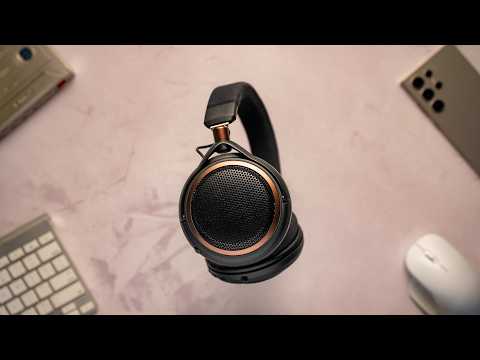
What open-back noise reduction feels like
Don’t expect the cone of silence you’d get from closed headphones like the Sony WH-1000XM6. Here, the world just gets quieter. Voices stay clear enough to follow, so I’m never straining to decode muffled speech, and I can still keep tabs on what’s happening around me. Honestly, I prefer it. It feels more natural than total silence.
Quieter surroundings, and you can still hear the barista mispronounce your name.
There are two modes. Home mode is the lighter one, aimed at fan noise or street sounds drifting through a window: you can still hear them, but they stop being distracting. Airplane mode is stronger. The hum around me nearly disappears, and walking through the city sounds like walking through it at midnight.
The measurements back that up. As you’d expect from an open-back design, passive isolation is practically non-existent, with only a slight drop in treble noise. Turn on airplane mode, though, and the headphones cut the perceived loudness of outside noise by about 55%. Nearly all of that reduction happens in the bass, which is exactly where train rumble and air conditioner hum live. High-pitched sounds come through mostly untouched.
Sound leakage reduction actually does something

The other trick here is sound leakage reduction, which tackles the other half of the open-back problem: everyone hearing your music. I didn’t expect it to work at all, but it does make a noticeable difference. At max volume, the people near you hear far less with it on. It doesn’t stop leakage entirely, but it’s enough that you could use these in a library without becoming that person. And if you’re somewhere that quiet, you’ll probably have the volume down anyway.
Battery and features
Audio-Technica claims up to 50 hours with noise reduction on and 75 hours with it off. I used them for about three days before I got a low battery warning. There’s also a 3.5mm headphone jack, so you can keep listening when the battery dies, but noise reduction only works with charge left in the tank.
The Audio-Technica Connect app adds a low-latency mode for gaming and video, plus soundscapes (calming background noise) with a sleep-style timer that fades them out. Between those and the noise reduction, I’m half convinced these were designed for studying. You also get a five-band EQ and a parametric EQ, which offer more control than most headphone apps. You’ll want it.
The sound needs work out of the box
My first listen worried me. Voices were hard to hear, and podcasts took more concentration than they should. It sounded like the speaker was talking through a thin pillow. Kick drums had their initial hit but not much of the low thump that follows, and cymbals were odd: the ringing after a crash was louder than the crash itself.
The frequency response chart lines up with what I heard. Compared to our preference curve, there’s a dip around 3 to 4kHz, which is where much of the clarity in voices lives, so vocals lose presence. The upper treble is over-emphasized, which explains that loud cymbal tail. The bass is actually under-emphasized compared to our curve, but a dip around 450Hz leaves the midrange so weak that the bass still covers it up. The problem isn’t too much bass. It’s too little midrange strength.
The catch: you have to choose between EQ and leakage reduction
Here’s the real problem. The app won’t let you adjust the EQ while sound leakage reduction is on. So you choose between custom sound and the feature that keeps you from bothering people.
Oddly, turning leakage reduction off improves the sound on its own. Voices get much clearer, the bass stops covering the midrange, and there’s a bit more bass depth. It’s still not enough bass for my taste, so the Bass Boost preset ended up being the best option.
There’s another wrinkle: EQ only lives in the app, and the setting didn’t seem to stay on the headphones. Noise reduction modes get a dedicated button on the ear cup, but EQ doesn’t, so if you switch between your phone and computer, you may lose your settings.
Comfort quirks

With noise reduction on, I felt like I had to pop my ears every 30 minutes, much like during takeoff on a plane. It reminded me of the early days of noise canceling headphones. And with ambient rumble gone, quiet passages reveal a light hissing from the headphones themselves. It’s easy to ignore after a while, but it’s there.
Fit could be an issue, too. I normally wear headphones a notch or two above the smallest setting, but these were most comfortable at the very smallest. If you have a small head, they may simply be too big.
Should you buy the Audio-Technica ATH-AL5NC?
The ATH-AL5NC takes me back to when noise canceling first caught on: a clever idea with some rough edges, including that same pressure feeling. But wireless open-back headphones are rare, and ones with useful noise reduction are rarer still. I’d happily keep a pair at home just for that.
They’re for people who like the buzz of a café but find it a bit too loud. You get quieter surroundings and can still hear the barista mispronounce your name. Just turn off sound leakage reduction, set the Bass Boost preset, and you’re good to go.
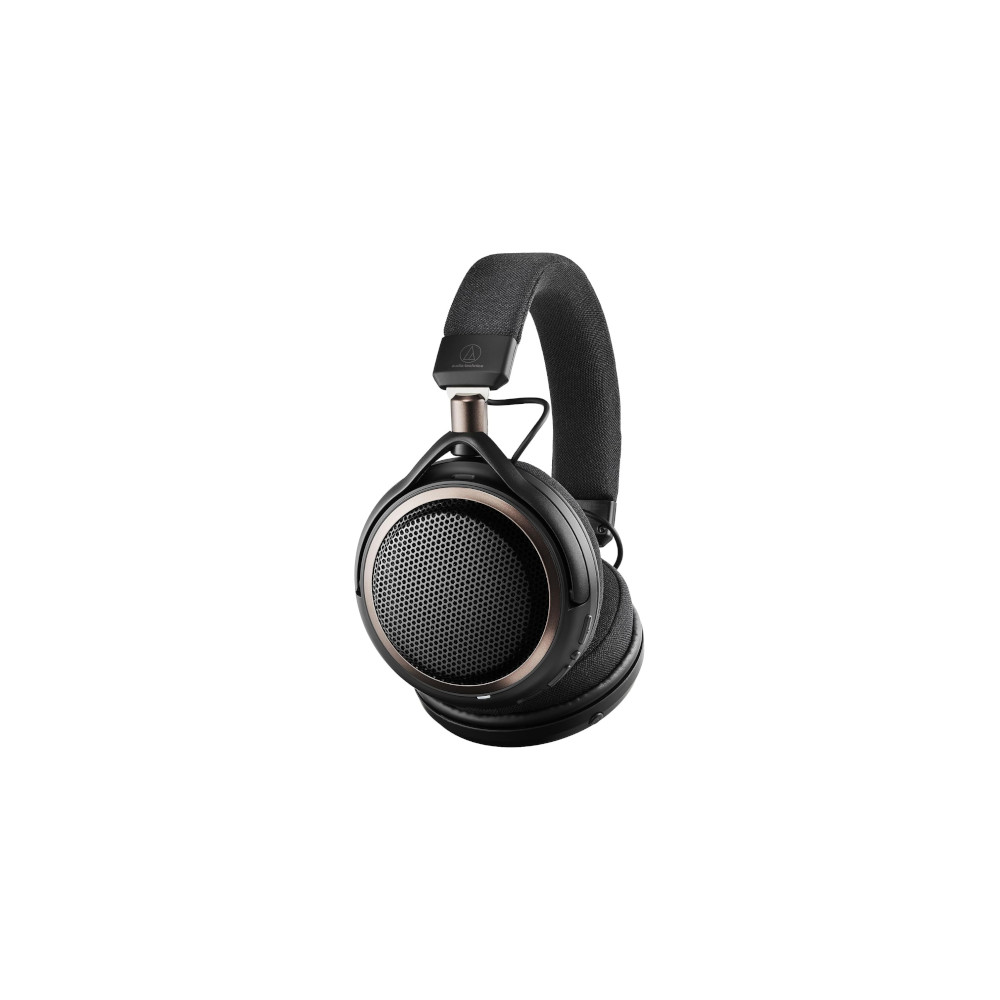
Conversation
Read what readers said or add your take.