All products featured are independently chosen by us. However, SoundGuys may receive a commission on orders placed through its retail links. See our ethics statement.
Shokz expands its clip-on earbuds with the OpenDots 2 and affordable OpenDots Air
Jun 4, 2026 — 12:00 PM ET


- Shokz launches two new clip-on open-ear earbuds: the OpenDots 2 ($199.95) and the lighter, cheaper OpenDots Air ($129.95)
- The OpenDots 2 adds Bassphere 2.0 acoustics, MirrorPitch, a third (bone-conduction) call mic, IP57 water resistance, and Bluetooth 6.1 over the original OpenDots, at the same price
- The OpenDots Air drops to $129.95 but gives up wireless charging, Dolby Audio, and a microphone to get there
Clip-on earbuds, the kind that pinch onto the rim of your ears instead of plugging into them, have exploded in popularity over the past year, so Shokz doubling down doesn’t surprise me. The brand made its name with bone-conduction sports headphones, moved into open-ear earbuds with the ear-hook OpenFit line, and then launched its first clip-on, the original OpenDots. Now it’s splitting that into a two-tier lineup, with the OpenDots 2 and the lighter, cheaper OpenDots Air.
They enter a crowded corner of the market, alongside other clip-ons like the Sony LinkBuds Clip, Bose Ultra Open Earbuds, and HUAWEI FreeClip 2, all chasing the same buyers. Shokz has a longer open-ear history than most of them, though, and it’s undercutting them on price. The company says it was the success of the first OpenDots that pushed it to take the design beyond sports into everyday listening.

If you haven’t worn an open-ear pair, the trade-off is almost always the same: because the bud sits outside your ear instead of sealing it, you lose the isolation a normal pair of wireless earbuds would give you. But you get to remain aware of traffic and the people around you, which is the whole appeal for commuting, working out, or training.
Compared to last year’s original OpenDots, not everything with the 2 is new. The two share the same $199.95 price, dual 11.8mm drivers, 40-hour battery rating, and Qi wireless charging. The biggest changes are two new audio technologies, Bassphere 2.0 and MirrorPitch. Bassphere 2.0 packs two 11.8mm drivers into each bud to act like one larger 16mm driver, and Shokz says a redesigned internal structure cuts distortion by 70% while delivering more bass and volume. The bass has real punch for an open-ear pair, and it stayed clean as I turned things up. Vocals come through with clarity, and they get loud enough to enjoy music while you still hear what’s around you. MirrorPitch angles the sound outlet to reflect audio toward your ear canal for what Shokz calls more focused sound, and there’s upgraded Dolby Audio on board too.

The other big change is on calls. The OpenDots 2 adds a dedicated bone-conduction microphone alongside two regular ones. Shokz’s running headphones use bone conduction to play music through your cheekbones; here, it does the reverse, picking up the vibrations of your own voice to give the noise-reduction system a clean reference for what to keep and what to cut. Shokz says calls stay clear in wind up to about 12 mph. Call quality is usually where open-ears fall short, so it’s the one I most want to put through our lab. Aside from that, the OpenDots 2’s other upgrades include better water resistance (up from IP54 to IP57), Bluetooth 6.1 instead of 5.4, faster quick charging, and new force-sensor pinch controls to cut accidental taps. They’re comfortable, too — small and light enough that there’s little pressure on the ear, even after a while.
The OpenDots Air isn’t as impressive, but it retains a lot of the core performance. They have a simpler design, weigh just 6 grams per bud, feature dual 11.8mm drivers with the older Bassphere tuning, and DirectPitch to limit sound leakage to people near you. Side by side, the OpenDots 2 clearly sounds better; the Air is fine, but I did notice a slight gap in quality. You still get four EQ presets, Bluetooth 6.1, multipoint, the same force-sensor controls as the flagship, and up to 36 hours of battery life. But it leaves out a lot: no wireless charging, no Dolby Audio, two mics instead of three, and lower IP55 water resistance. Whether the $70 saving is worth it comes down to how you’ll use them. Both also top out at the SBC and AAC codecs, with no higher-resolution option.
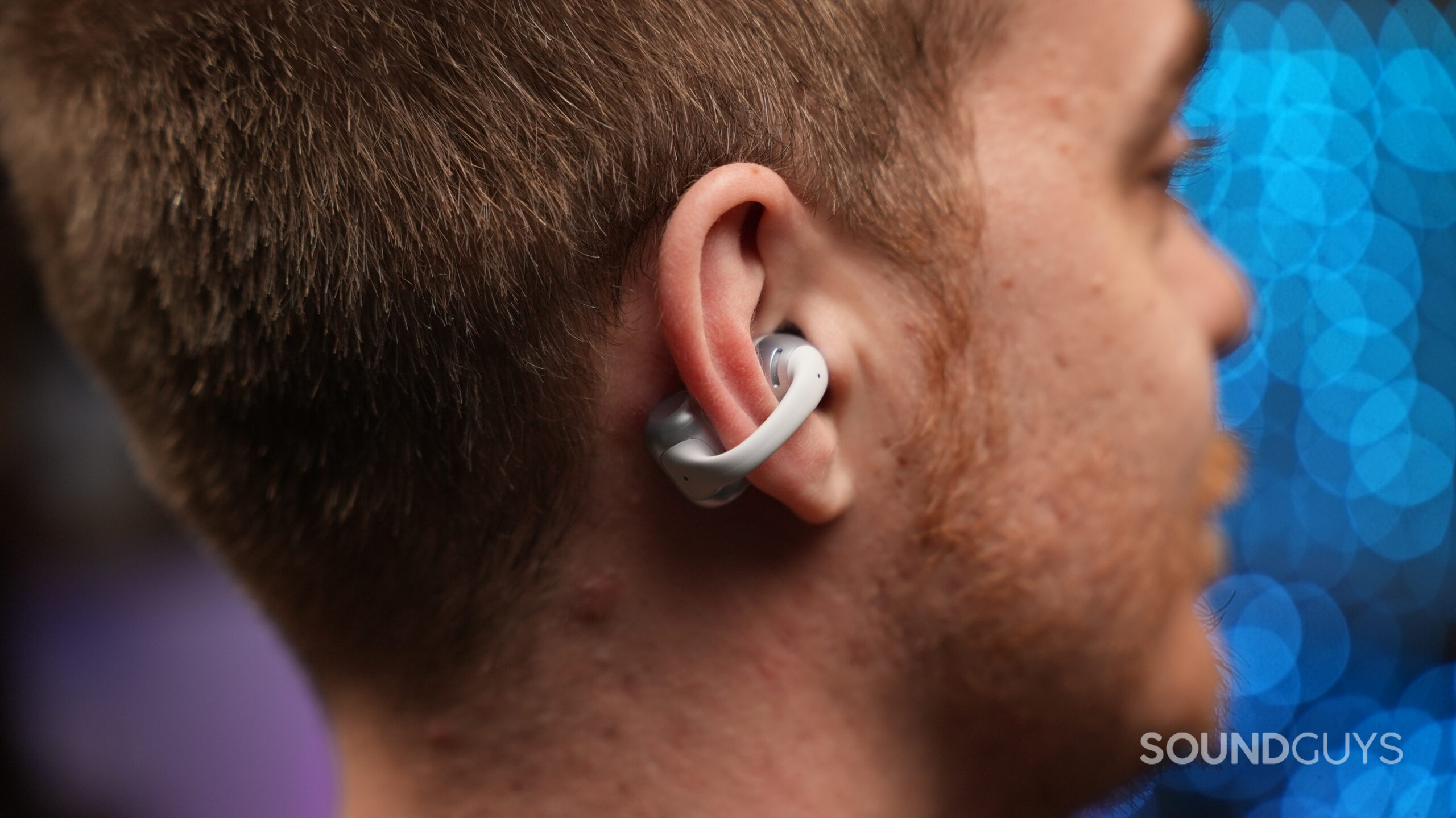
Both go on sale today for $199.95 and $129.95. If you want the most complete pair, the OpenDots 2 is the easy pick — same price as the model it replaces, and better in most of the ways that count. The Air is worth it only if you care more about price and function than features. Either way, what I’ve heard so far is promising; the OpenDots 2 sounds like a real step up, not just a spec bump.
Thank you for being part of our community. Read our Comment Policy before posting.